


Etched Glass Flagon
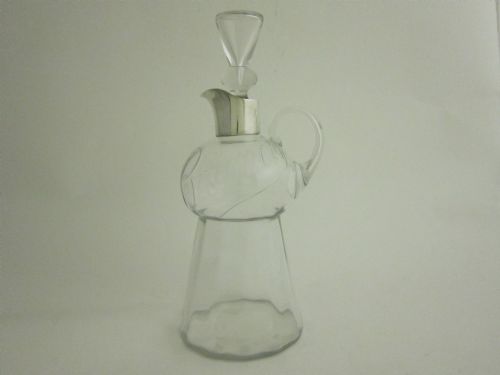
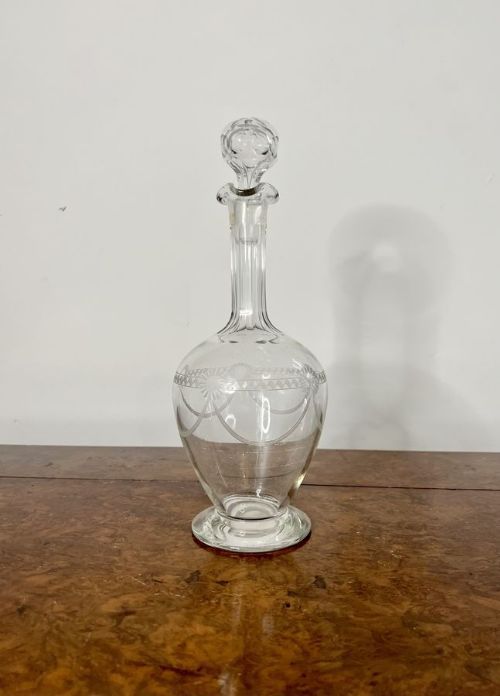
These etched glass flagon examples are decorative vessels shaped for serving wine and spirits, combining clear or coloured glass bodies with precious metal mounts.
Etched Glass Flagon
When you search for an etched glass flagon, you are looking at nineteenth-century and early twentieth-century vessels designed for the dining table. These pieces encompass decanters, claret jugs, ewers, and wine decanters produced across the Victorian and Edwardian eras.
You are most likely to meet Victorian examples on this page, often formed from clear glass or lead crystal and frequently paired with sterling silver or silver plate mounts. These functional vessels range from simple engraved designs to more elaborate forms with floral etching.
How they were made
The body of an etched glass flagon relies on glass, crystal glass, or lead crystal, shaped into ewers and decanters through traditional forming and cutting techniques. Artisans applied surface decoration using engraving and floral etching directly onto the glass body.
Precious metal elements complete the construction, incorporating sterling silver, silver plate, or 950 silver collars and figurine tops. These mounts secure the neck and handle, joining metalwork with the glass vessel.
Materials represented across the inventory include clear glass, lead crystal, cranberry glass, sterling silver, silver plate, and cut glass.
What varies in quality
Quality in an etched glass flagon rests on the crispness of the glass cutting and the delicacy of the floral etching or engraving. Superior examples display precise hand-cut facets and deep, clean surface decoration that catches the light clearly.
The execution of the silver or silver plate mounts also dictates the standard of the piece, separating standard production from finer work. Heavier gauge silver collars, intricate figurine tops, and maker contributions such as Orfèvrerie Produx Saint Hilaire mark out the more distinguished specimens.
The Etched Glass Flagon Glossary
- Ewer
- A large jug with a wide spout and handle, traditionally used for holding and pouring wine or water. Victorian glass examples often feature decorative etching.
- Claret jug
- A specific type of serving vessel designed for red wine, usually fitted with a silver or silver-plated handle, mount, and hinged lid. They frequently incorporate cut glass or crystal bodies.
- Sterling silver
- An alloy consisting of ninety-two point five percent silver by mass, with the remainder composed of other metals for strength. This material frequently forms the collars and mounts of nineteenth-century decanters.
- Lead crystal
- A type of glass containing lead oxide, which increases the weight, refractive index, and clarity of the material. This composition allows for deeper and sharper cutting than standard glass.
- Orfèvrerie Produx Saint Hilaire
- A silversmithing producer associated with metal mounts found on select crystal glass decanters. Their work appears on twentieth-century pieces fitted with high-purity silver collars.
Etched Glass Flagon: Frequently Asked Questions
What is an etched glass flagon used for?
These vessels were originally manufactured to hold and serve wine, brandy, and other spirits at the dining table. They allowed hosts to decant wine from casks into ornate glass containers for formal meals.
Today, collectors utilise them as decorative dining accessories or functional decanters for modern entertaining. Their silver mounts and etched bodies also make them striking display pieces in cabinet collections.
How do I identify a Victorian piece?
Victorian examples typically date between eighteen thirty-seven and nineteen oh one, identifiable through specific design motifs and heavy lead crystal construction. Look for characteristic Victorian Rococo Revival styles or traditional floral etching.
Many of these items carry hallmarks on their silver mounts which record the exact year of production and assay office. Unmarked pieces are usually dated by their distinct glass cutting patterns and ewer forms.
Are silver mounts marked?
Many British pieces feature hallmarks stamped directly onto the silver collar or handle mount, indicating the standard of silver and the year of manufacture. These small stamps often include maker's marks and assay office symbols.
Foreign pieces or those with silver plate may lack traditional British hallmarks, sometimes bearing maker stamps or purity numbers such as nine-fifty silver instead.