



Etched Glass Wine Decanter
An etched glass wine decanter brings nineteenth-century dining tables to life, holding claret or hock with ornamental weight and engraved clarity.
Etched Glass Wine Decanter
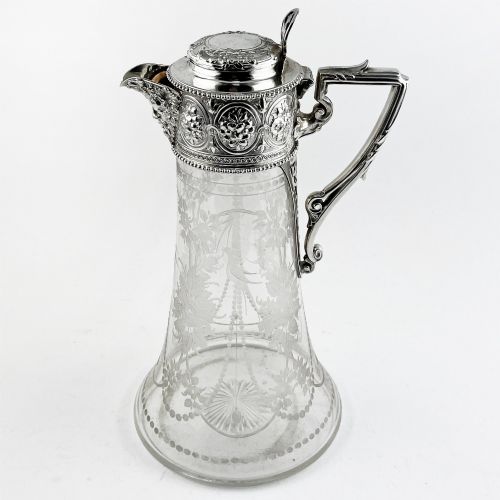
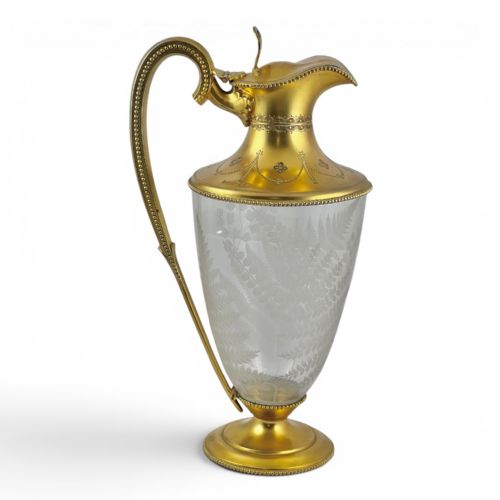
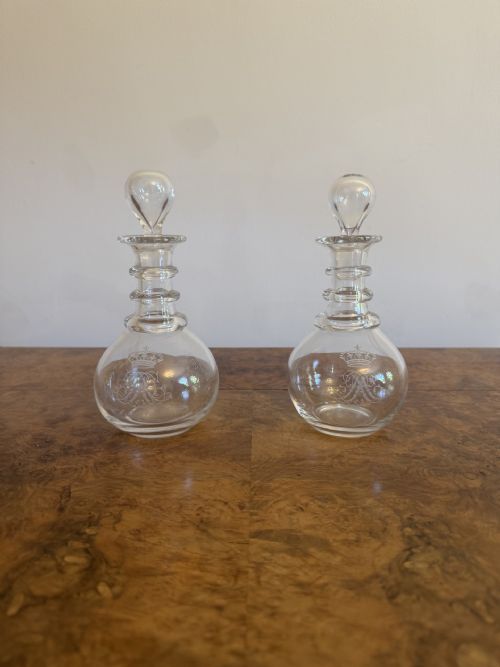
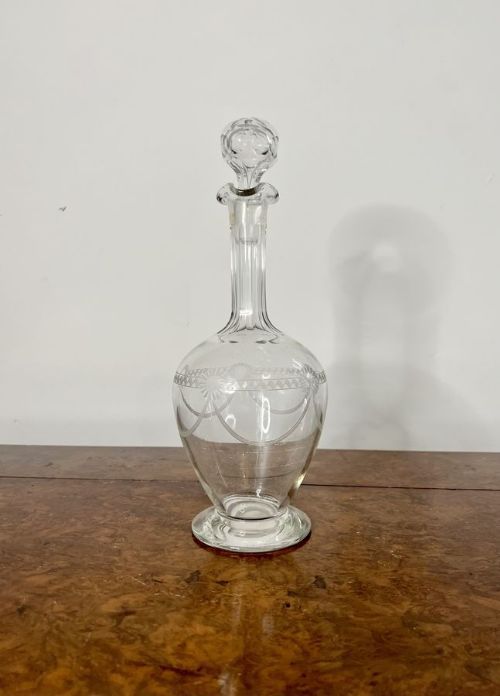
An etched glass wine decanter encompasses Victorian and Edwardian table vessels designed for serving claret, hock and other wines. The listings on this page present tall clear glass decanters, coloured crystal ewers and silver-plated wine jugs spanning the later nineteenth century into the twentieth century. Forms range from simple stoppered bottles to elaborate ewers fitted with silver mounts, Bacchus masks and wrought iron frames.
Most examples hail from the Victorian and Edwardian eras, featuring decorative motifs such as grapes and vines alongside botanical engraving. Buyers encounter pairs of coloured glass decanters, Bohemian overlay vessels, and French or German spirit ewers among the selection. These pieces served a practical role on the dining table while displaying the craftsmanship of glass-cutters and metalworkers.
How they were made
Maker's hands shaped these objects from clear glass, lead crystal and coloured glass overlays, combining blowing techniques with wheel-cutting and acid-etching. Glassmakers layered different coloured glass, such as ruby or green over clear crystal, before cutting through the outer layer to reveal contrasting tones beneath.
Metal mounts, collars and handles utilised sterling silver, silver plate, silver gilt and wrought iron, often secured around the neck of the glass body. Silversmiths cast and chased details like grape clusters, Bacchus masks and scrollwork to complete the vessels.
Several Victorian jugs feature mythological Bacchus masks peering out from the silver mounts to guard the wine.
What varies in quality
Quality rests upon the crispness of the glass engraving and the weight of the crystal body. Fine examples display deep, clean wheel-cutting or precise acid-etched motifs that sit sharply within the material, whereas lesser items show shallow or blurred surface marks.
The integration of the metal mount defines the upper tier of production. Solid silver collars, heavy silver plating, and robust wrought iron frames fitted securely to the glass indicate superior workshop output compared to simpler, unmarked mounts.
Asprey and Co. Ltd·Elkington·Orfèvrerie Produx Saint Hilaire
The Etched Glass Wine Decanter Glossary
- Claret jug
- A pouring vessel specifically intended for serving red wine at the table. These often feature hinged metal lids and elaborate handles.
- Ewer
- A large jug with a wide spout and a looped handle, traditionally used for holding water or wine. Antique examples frequently incorporate silver mounts.
- Overlay glass
- A technique where a layer of coloured glass is fused over a clear body. Artisans cut through the outer colour to create contrasting patterns.
- Silver gilt
- Silver that has been coated with a thin layer of gold on its surface. This finish adds a warm yellow lustre to mounts and collars.
Etched Glass Wine Decanter: Frequently Asked Questions
What is a claret jug?
A claret jug is a specialised pouring vessel designed to serve red wine during formal meals. They typically combine a glass body with a hinged metal lid and a handle.
Victorian dining customs required claret to breathe before pouring, making these vessels both ornamental centerpieces and functional tableware.
How do I date an etched decanter?
Dating relies on stylistic clues, glass colour, and any accompanying silver hallmarks. Victorian pieces often display heavy cutting and naturalistic grape motifs.
Marked silver collars provide specific assay office dates and maker marks, helping to narrow the decade of manufacture.
Are these decanters safe for modern wine?
Most antique glass decanters remain entirely suitable for holding and serving wine today. Careful hand washing protects the delicate glass and any historic silver plating.
Lead crystal vessels should not store liquids for extended periods, but serving wine during a meal poses no difficulty.
What is colour over crystal?
Colour over crystal describes glass made by casing a clear crystal core inside a brightly coloured outer layer. Makers then cut away portions of the outer layer.
This process creates striking visual contrast between the coloured decoration and the clear glass beneath.