

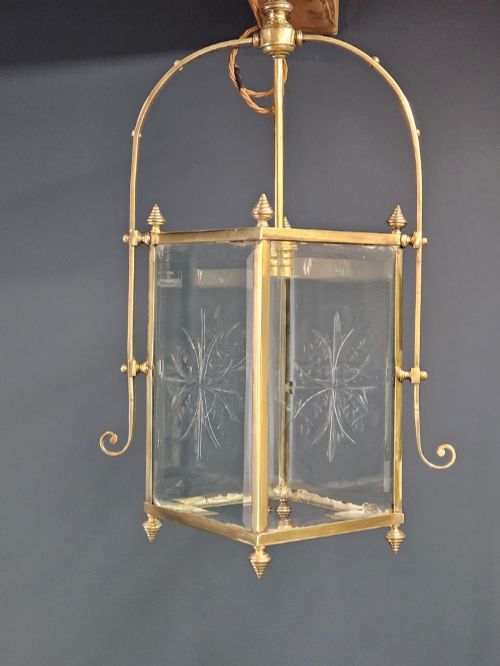


Etched Glass Lamps
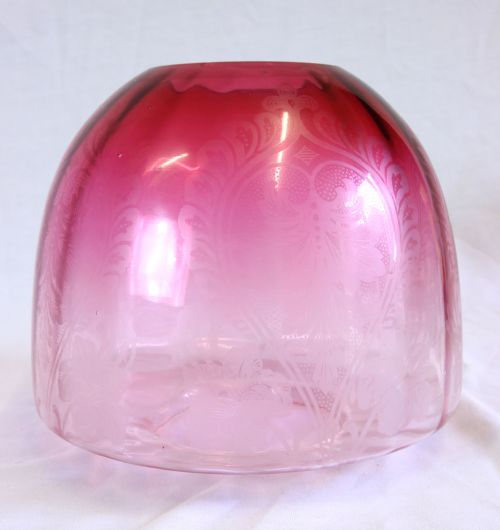
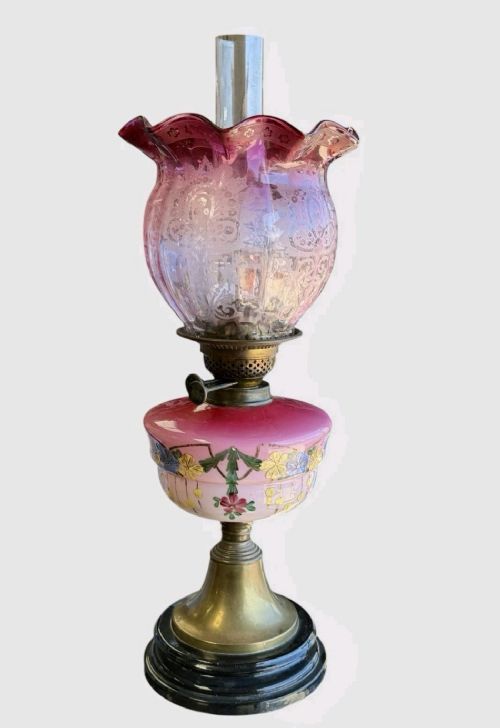
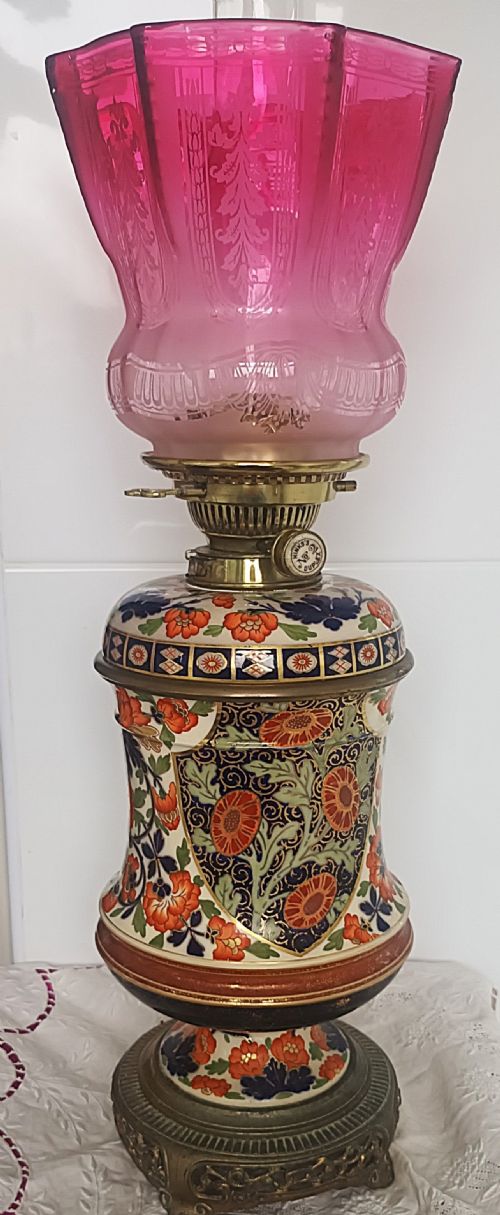
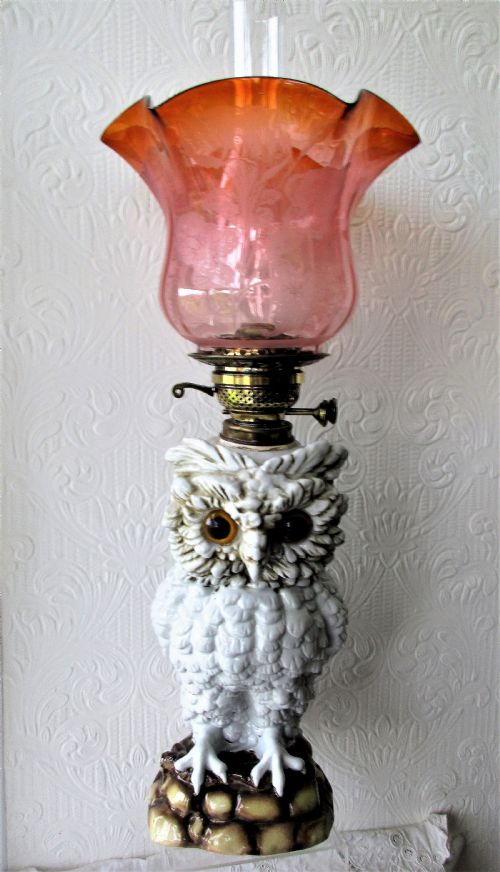
These etched glass lamps bring together period brass, cranberry glass and detailed surface work to light a room with genuine nineteenth and early twentieth century character.

Etched Glass Lamps
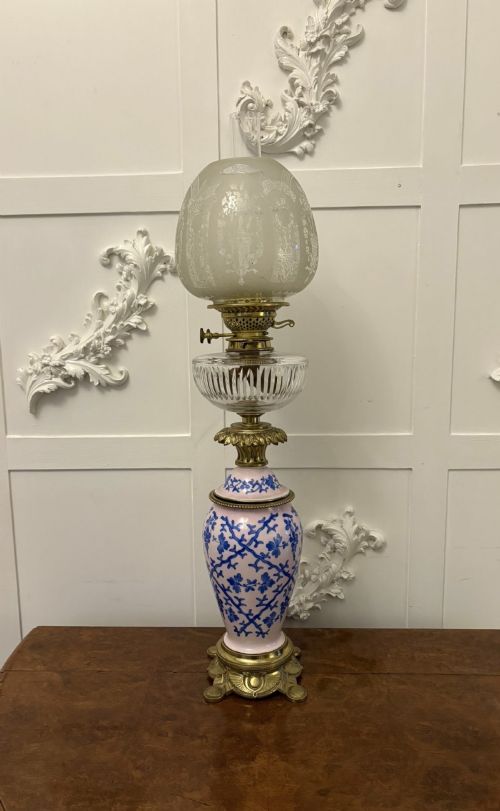
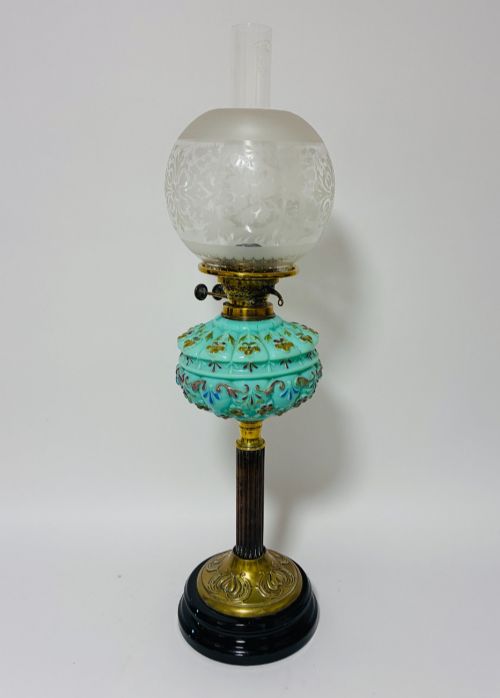
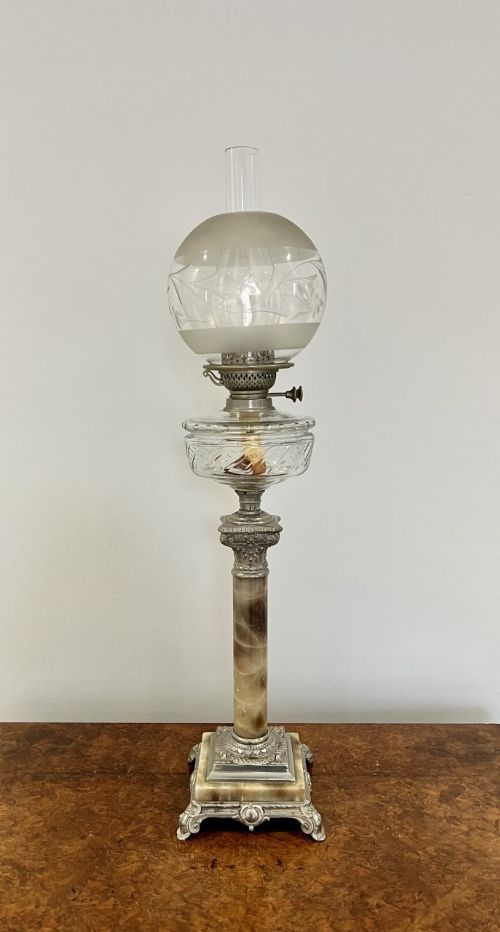
When you search for etched glass lamps, you encounter a varied selection of domestic lighting largely rooted in the nineteenth century and the Edwardian era. The pieces listed range from tall oil lamps with elaborate columns to hanging pendant lights, ceiling fixtures and table lamps designed for functional illumination.
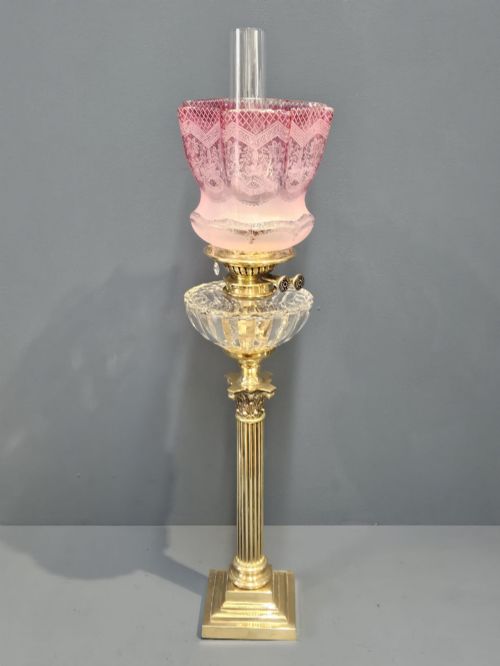
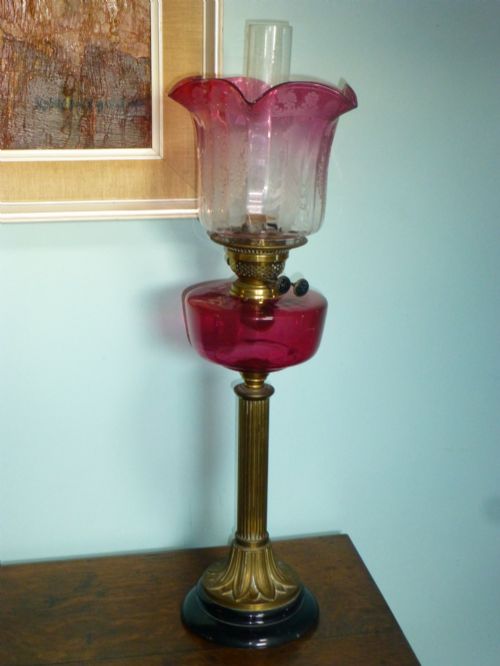
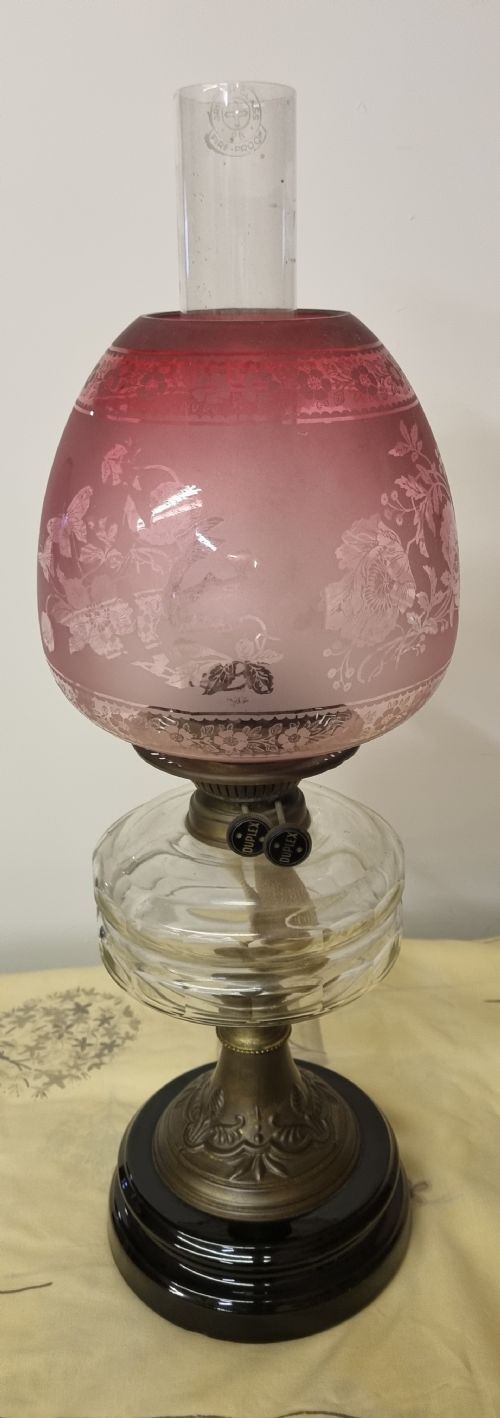
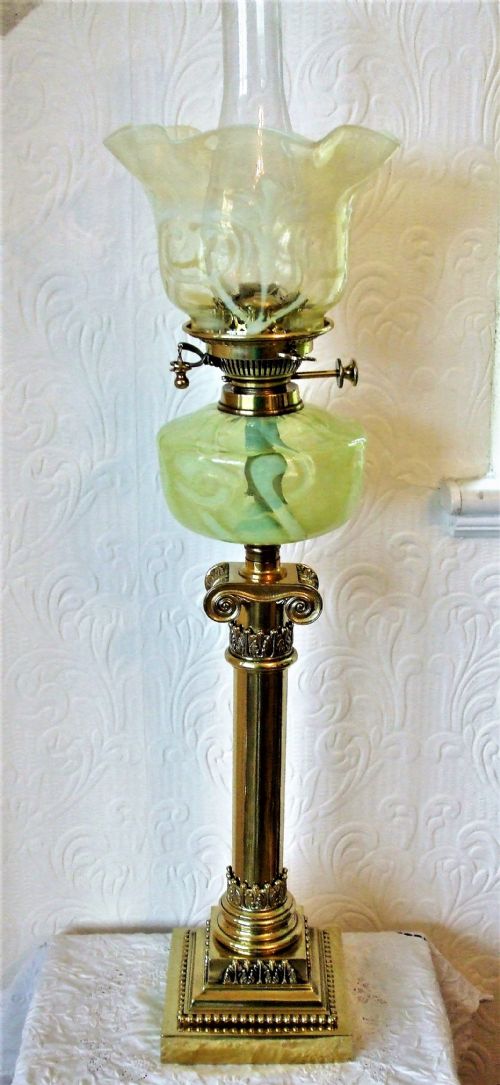
The most common examples on this page are Victorian oil lamps featuring brass columns, ceramic or coloured glass fonts and patterned shades. Alongside these stand later twentieth century floor lamps, hall lanterns and desk lamps that adapt glass and metal elements for different domestic settings.
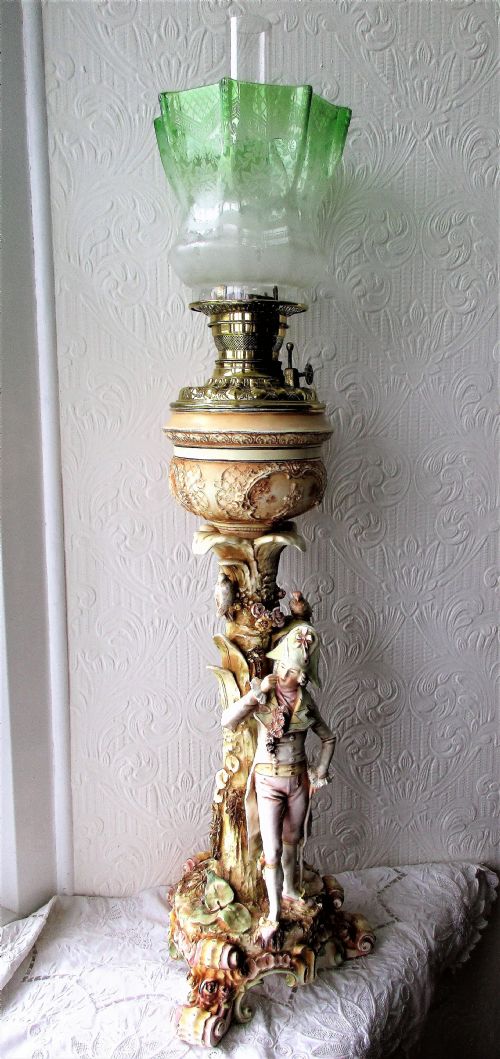
Origins span English production by makers like Hinks alongside continental European pieces, including German porcelain and Bohemian glass components. Buyers select these lamps to introduce period atmosphere, decorative metalwork and textured glass into a modern interior.
How they were made
Makers built these lamps using combinations of cast brass, copper, porcelain and various formulations of glass including cranberry glass, crystal and cut glass. Metal components such as Corinthian columns and swan neck frames provide structural support and a solid weight to the bases.
Glass elements, particularly shades and fonts, received their decoration through cutting, moulding or surface etching to create frosted patterns against clear or coloured backgrounds. Some pieces integrate hand painted details or gilding directly onto the glass and porcelain surfaces.
Listings feature brass, cranberry glass and porcelain across Victorian, Edwardian and Art Deco periods.
What varies in quality
The distinction between standard production and superior pieces rests on the crispness of the casting in the brass or bronze mounts and the depth of the glass etching. Heavier columns, intricate burner mechanisms by established firms and substantial crystal or cranberry fonts elevate certain examples above utility items.
Proportion and material integration also determine overall distinction, as seen in pieces that combine fine porcelain figures or columns with matching etched glass shades rather than mismatched replacement components.
Hinks of Birmingham·Taylor Tunnicliff·Sitzendorf·Daum
The Etched Glass Lamps Glossary
- Duplex burner
- A double wick burner mechanism common on nineteenth century oil lamps that produced a brighter flame than single wick alternatives. These mechanisms often bear the stamp of makers such as Hinks.
- Font
- The oil reservoir of a lamp, usually manufactured from glass, porcelain or ceramic and mounted upon a metal column or base. Fonts frequently showcase colours like cranberry, pink or blue.
- Corinthian column
- An architectural column style featuring ornate acanthus leaf capitals, frequently utilised in brass for the stems of Victorian table lamps. This design added classical formality to domestic lighting.
- Cranberry glass
- A rich red glass created by adding gold chloride to the molten batch, widely used for Victorian lamp shades and fonts. The colour varies from pale pink to deep ruby.
- Hurricane lamp
- A protective glass shade or complete lamp designed to shield a flame from drafts. Convertible examples allow indoor table use alongside traditional outdoor placement.
Etched Glass Lamps: Frequently Asked Questions
How do I date an antique oil lamp?
Dating relies on examining the burner mechanism, the style of the metal column and the manufacturing technique of the glass font. Victorian examples often feature registration marks or maker stamps on the brass thumb-turns.
Later Edwardian and early twentieth century pieces tend toward simpler structural lines and modified burner designs as paraffin gave way to electric lighting conversions.
Can these antique lamps be used safely today?
Many oil lamps and pendant lights adapt readily for modern electrical use by professional rewiring while retaining their original burners and fonts. Conversion allows you to display period glass and brass safely as functional table lamps or ceiling pendants.
It is advisable to consult a qualified electrician to ensure any historical wiring or conversion meets current safety standards before daily use.
What is the difference between an oil lamp and a paraffin lamp?
In practical terms within these listings, oil lamps and paraffin lamps describe the same nineteenth century lighting vessels that burned liquid fuel through a cotton wick. The terminology often reflects regional preference or the specific refined petroleum product utilised.
Both types typically comprise a weighted base, a fuel reservoir or font, and a glass chimney paired with a decorative shade.
How should I clean etched glass lamp shades?
Cleaning requires warm water and mild soap applied gently with a soft cloth to avoid damaging hand-painted details or gilding. Submerging antique glass requires care, particularly around delicate etched or frosted motifs.
Harsh chemical cleaners and abrasive scouring pads must be avoided to preserve the original surface texture and finish of the glass.