




Etched Glass Crested Mirror
An etched glass crested mirror brings remarkable depth and light to a room, catching the eye with intricate surface work and ornate frames.
Etched Glass Crested Mirror
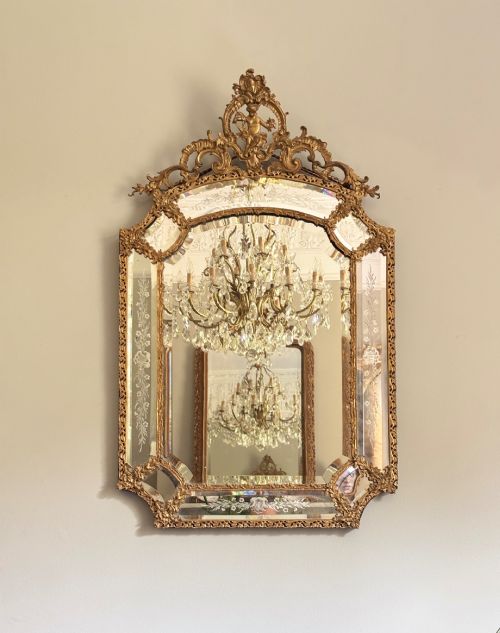
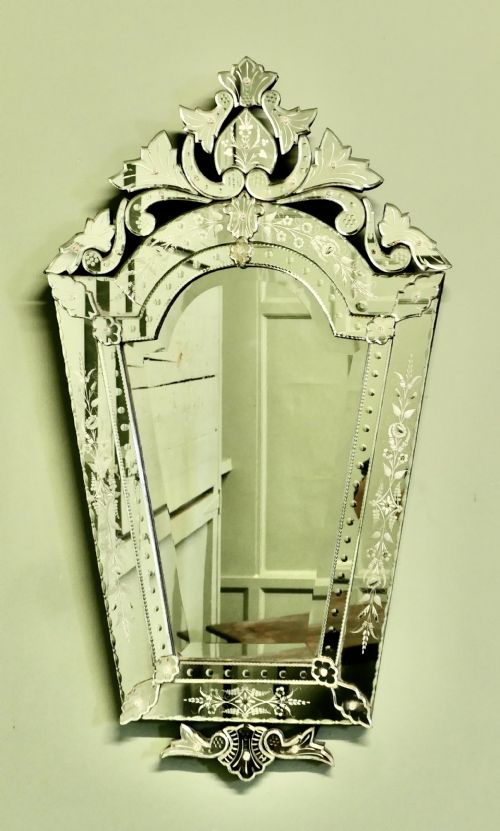
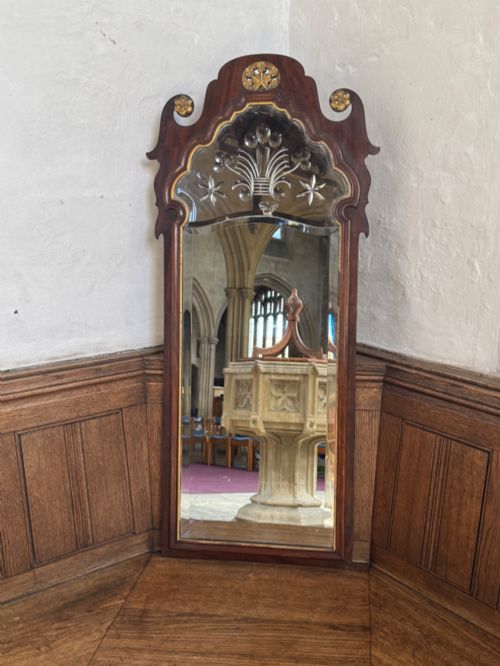
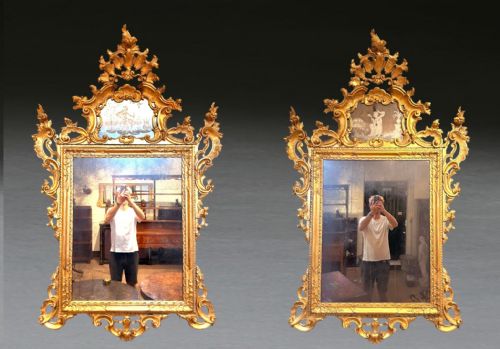
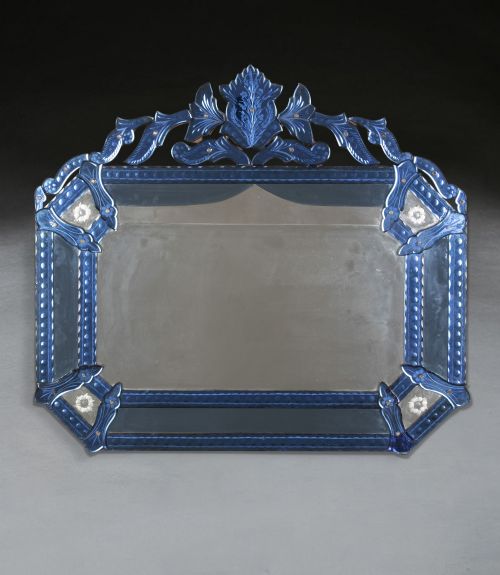
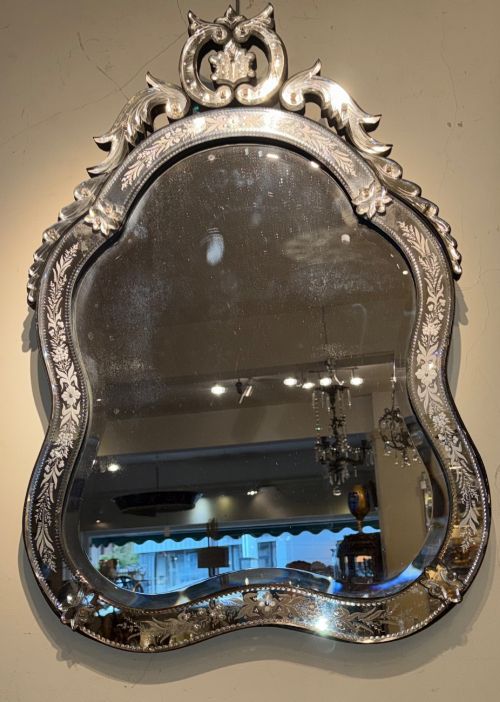
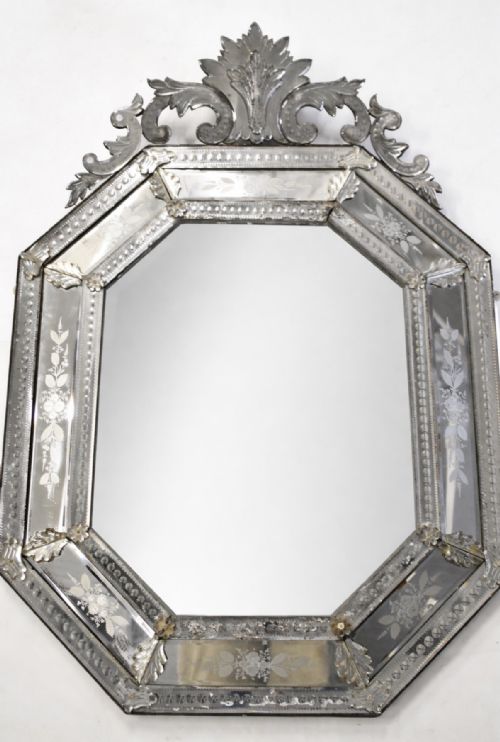
When searching for an etched glass crested mirror, buyers encounter wall mirrors spanning from the Georgian period through the Victorian era, Edwardian times, and into the mid-twentieth century. Venetian and Rococo Revival styles dominate the selection, bringing elaborate crests and decorative borders into domestic spaces.
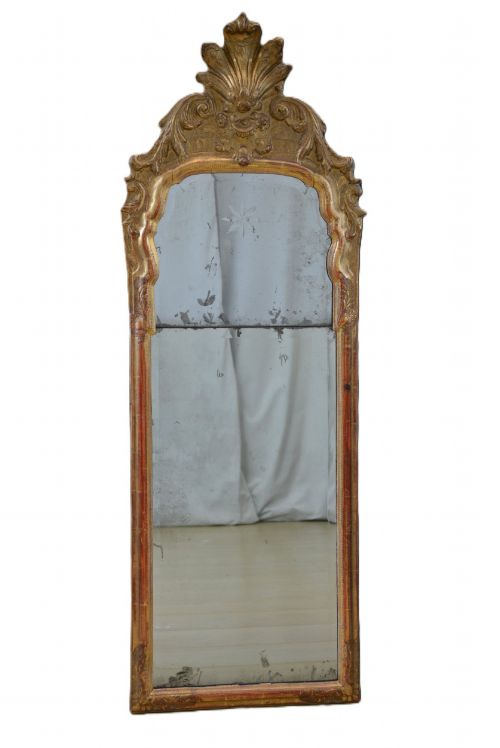
The pieces on this page include cushion mirrors, pier mirrors, and large wall-hanging designs with cut glass pediments or ruby red borders. Many pieces draw on earlier design idioms, including George I and Louis XV revivals, executed in the nineteenth and early twentieth centuries.
How they were made
Maker workshops utilised glass, mirrored glass, and silvered glass alongside carved wood, gesso, and giltwood. Frames often combined carved wooden foundations with plaster-based gesso layers before receiving gold leaf or paint.
Glass plates were shaped and decorated through cutting and etching techniques, sometimes incorporating reverse cut plates or foxed bevelled surfaces that reflect the age and hand-finishing of the work.
Listings span periods from the Georgian era through Victorian and Edwardian times, up to the 1950s.
What varies in quality
Quality rests in the crispness of the glass etching and the depth of the carved detail within the crest and frame. Finer examples display meticulous hand-cutting on the glass plate and robust construction in the wood and gesso structure.
The integrity of the original gilding and the preservation of the silvered glass plate influence the overall character. Pieces that retain their early framing and original mirrored components demonstrate superior craftsmanship.
John Belchier
The Etched Glass Crested Mirror Glossary
- Gesso
- A plaster-like mixture applied to wooden frames as a smooth base for gilding or painting. Artisans carved intricate patterns into this layer.
- Pier mirror
- A tall mirror designed to hang on the wall space between windows. These pieces often feature matching console tables or slender proportions.
- Foxed
- The natural ageing of mirrored glass resulting in mottled dark spots and patination. This chemical change occurs over decades.
- Reverse cut
- A decorative technique where cutting and engraving are applied to the back of the glass plate. It creates depth when viewed from the front.
Etched Glass Crested Mirror: Frequently Asked Questions
How do I clean an antique mirror?
Use a soft, dry cloth to gently remove dust from the glass and frame. Avoid chemical sprays that can damage old silvering or delicate gesso surfaces.
Take care near the edges of etched plates and crested sections where moisture might seep behind the glass.
Where should I hang a large pier mirror?
These mirrors suit principal reception rooms, hallways, or above a mantelpiece where they can reflect natural light.
Ensure the wall structure and fixings can support the substantial weight of carved wood, gesso, and thick glass plates.
What defines a Venetian style mirror?
Venetian mirrors typically feature engraved glass frames made of multiple smaller glass sections secured with decorative rosettes. Their designs emphasise luminous glass surfaces over heavy wooden framing.
Many examples incorporate elaborate crests and tinted borders, such as ruby red glass accents.
How can I tell the age of the glass?
Examine the plate for slight distortions, hand-bevelled edges, and natural foxing within the silvered backing. Older plates often display subtle imperfections from early manufacturing methods.
Match the plate characteristics with the construction style of the wooden or gesso frame behind it.