

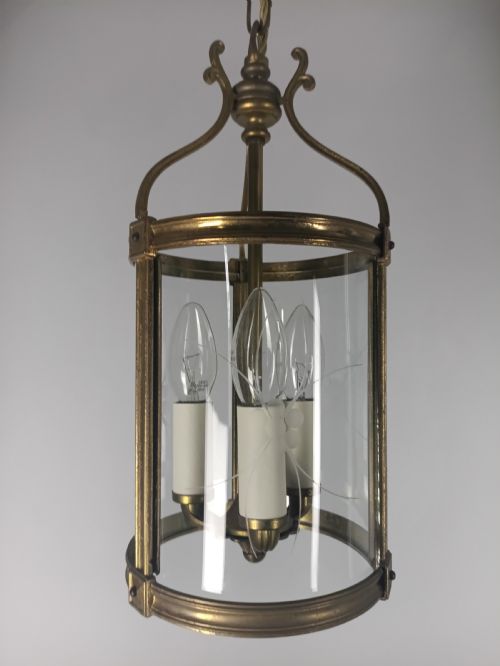
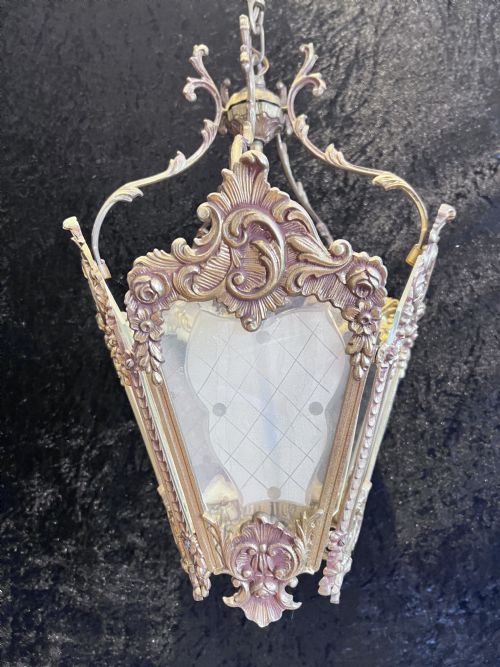
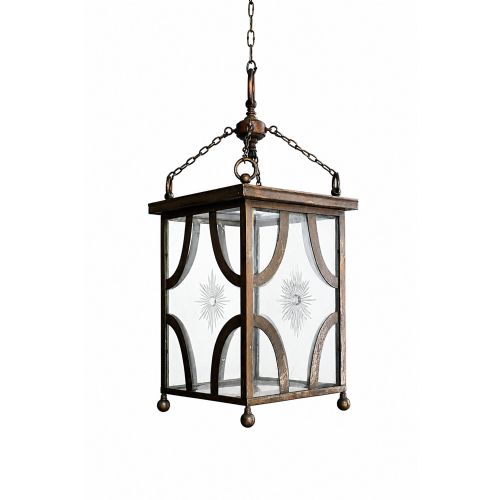
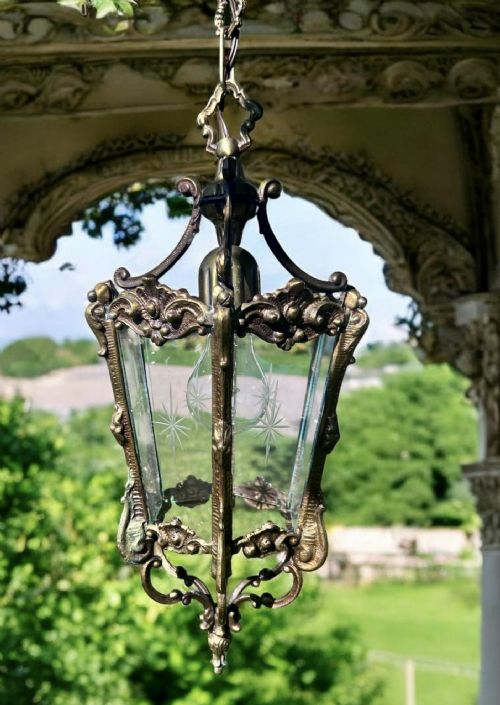
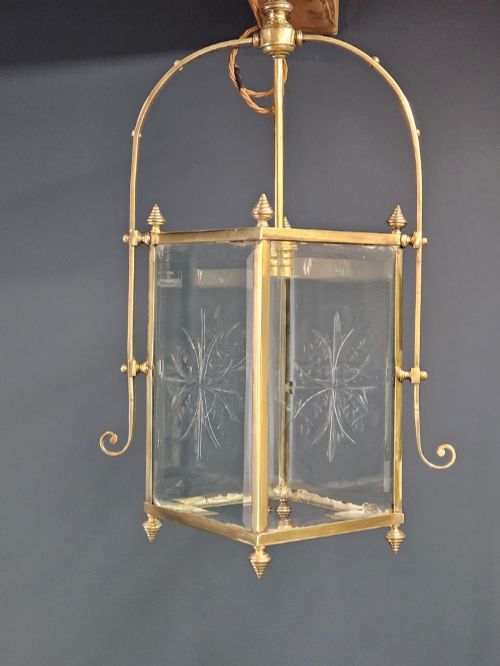
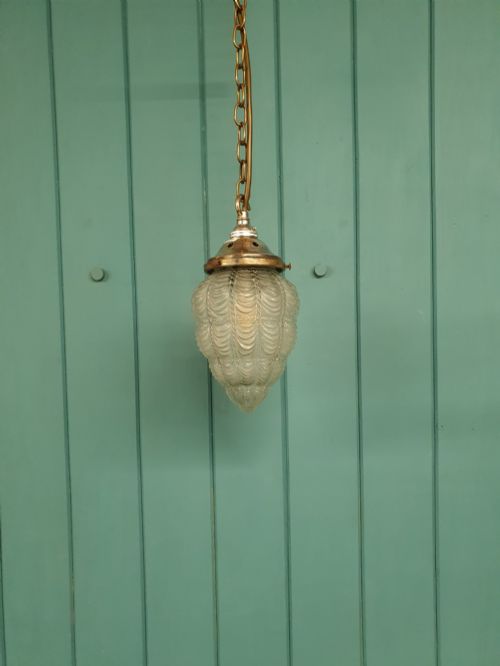


Etched Glass Ceiling Pendant
An etched glass ceiling pendant brings a refined architectural glow to a hallway or reception room, combining decorative illumination with period metalwork.
Etched Glass Ceiling Pendant
When you search for an etched glass ceiling pendant, you encounter overhead lighting fixtures that utilise decorated glass shades suspended by brass, gilt brass, or bronze frameworks. These objects span various design movements, including Art Deco, Edwardian, Arts and Crafts, and nineteenth-century classical styles.
The surviving examples range from compact single-light hall lanterns and convex shades to large multi-light chandeliers and bowl pendants. Their origins stretch from English workshops to French ateliers, showing diverse aesthetic approaches to domestic illumination.
Materials and construction
These fixtures pair glass elements with metal mounts, incorporating etched, frosted, cut, or pressed glass panels and shades. The supporting structures rely on brass, gilt brass, and gilt bronze to hold the glass securely while providing decorative structure.
Makers utilised acid etching and surface cutting techniques to pattern the glass panels with floral, geometric, or figurative motifs. Metal components were cast, chased, and joined to form rigid frames, multi-light clusters, and suspension chains designed to bear the weight of the glass.
The surviving inventory spans multiple materials, combining brass, gilt brass, and crystal with etched, frosted, and cut glass components.
Judging quality in period lighting
The distinction between standard production and superior examples lies in the crispness of the metal casting and the depth of the glass decoration. Heavier brass frames and deeply etched or hand-cut glass panels indicate greater ambition from the original workshop.
Proportion and integrity also separate the grades of work, where harmonious scale between the glass shade and the metal mount preserves the visual balance of the piece. Intricate detailing on the metalwork and undamaged original glass components elevate the standing of an individual pendant.
The Etched Glass Ceiling Pendant Glossary
- Etched glass
- Glass decorated by applying acid to eat away the surface and create frosted designs. This technique allows for detailed patterns that diffuse light softly.
- Hall lantern
- A ceiling-hung lighting fixture enclosed in glass panels, historically placed in entrance halls and corridors. These pieces protect the light source from drafts while illuminating transition spaces.
- Gilt brass
- Brass coated with a thin layer of gold or gold-coloured wash to impart a richer metallic finish. It offers the warmth of gold without the weight of solid precious metal.
- Bowl chandelier
- A ceiling light featuring a suspended shallow or deep glass bowl held by chains and metal straps. This form distributes ambient illumination widely across a room.
Etched Glass Ceiling Pendant: Frequently Asked Questions
Where should I hang a hall lantern?
These pendants suit entrance halls, vestibules, and high-ceilinged corridors where their vertical proportions fit the space. They provide welcoming overhead illumination while serving as a focal point upon entry.
Ensure the drop of the pendant leaves adequate headroom for passage beneath the fixture. Positioning them centrally allows the light to spread evenly across surrounding walls and architectural details.
How do I date a period ceiling light?
Dating relies on identifying stylistic markers in the metalwork and glass, such as the geometric lines of Art Deco or the organic motifs of Arts and Crafts. Construction methods, including casting techniques and screw types, also offer clues to the decade of manufacture.
Comparing the shade shape and mounting hardware against documented period examples helps confirm the era. Original wiring or surviving labels provide further context for the timeline of the fixture.
Can these pendants be rewired safely?
Most antique fixtures require rewiring to meet contemporary electrical standards and ensure safe operation in modern homes. Professional electricians can easily adapt the internal brass fittings while preserving the original exterior components.
Rewiring also allows for the integration of appropriate modern bulb holders and LED compatibility. The historic shade and frame remain untouched during this necessary functional update.
What is the difference between etched and frosted glass?
Etched glass uses acid or abrasive methods to carve specific patterns and opaque designs into the clear surface. This creates defined ornamental motifs rather than a uniform matte texture.
Frosted glass diffuses light across its entire surface through sandblasting or acid treatment, producing a soft glow without distinct ornamental linework. Many period pendants combine both techniques to vary light transmission.