

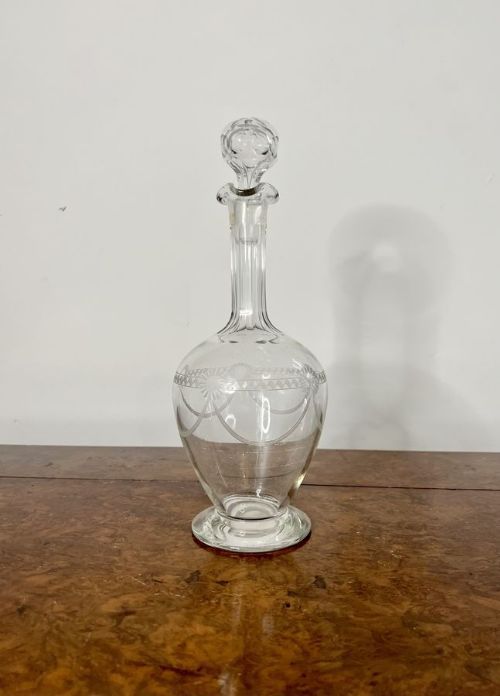


Etched Glass Bottle
These etched glass bottle pieces are practical table vessels and vanity containers prized for their delicate surface decoration, offering authentic period character for daily use.
What an etched glass bottle is
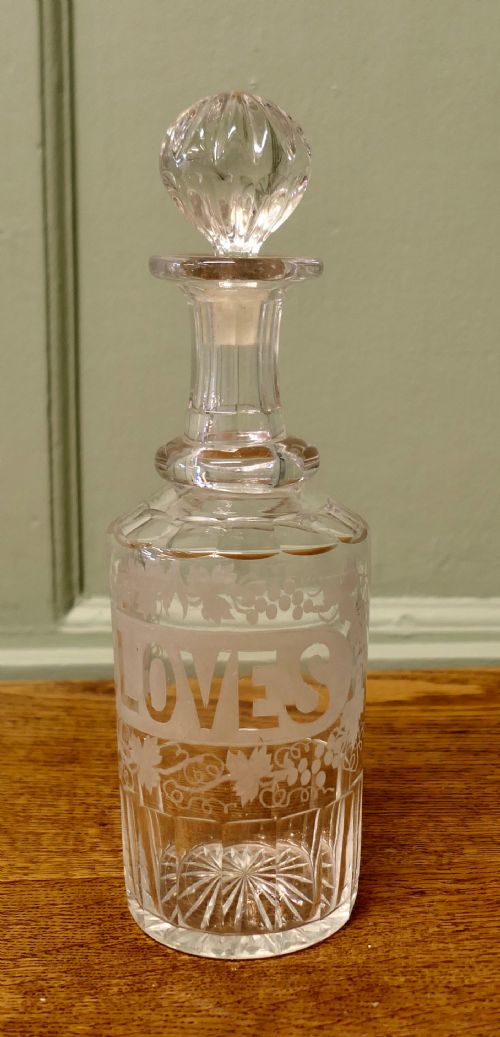
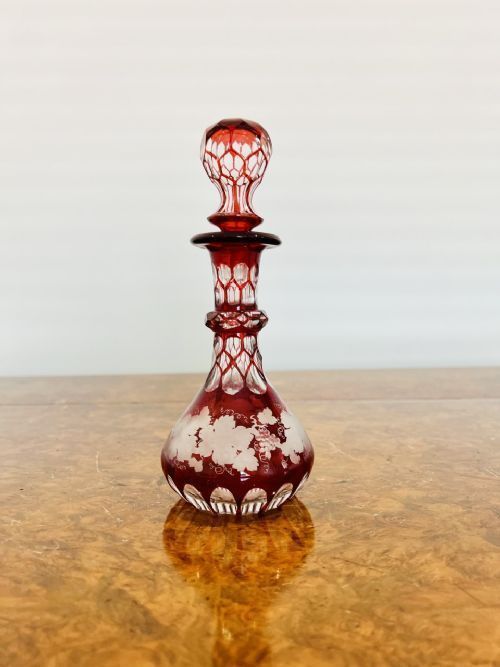
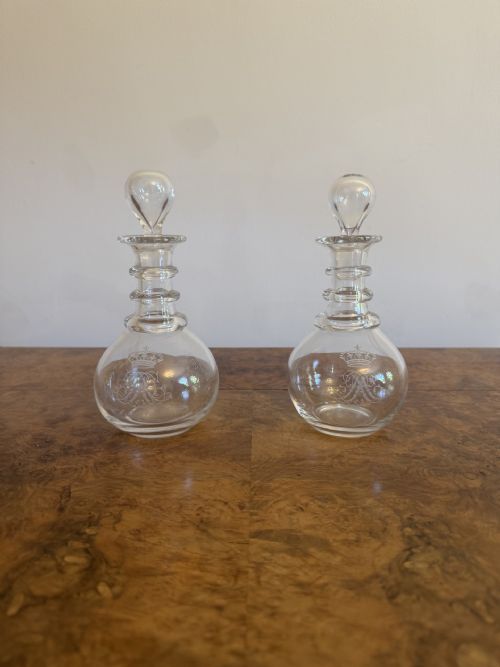
When you search for an etched glass bottle, you encounter a diverse group of functional vessels ranging from dining table decanters to small vanity and scent containers. These pieces cross multiple eras, including eighteenth century Swedish works and nineteenth century Victorian productions.
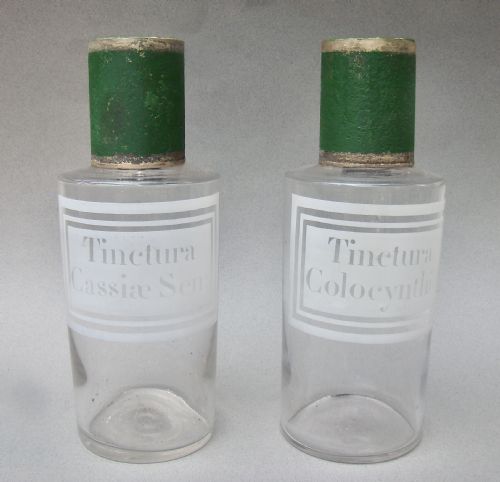
The most common examples you meet on this page are Victorian decanters and scent bottles featuring clear glass or lead crystal bodies. Alongside these, the selection includes French cologne bottles, early twentieth century chemistry bottles, and Gustavian pieces.
Forms span simple utilitarian bottles fitted with corks to elaborately mounted items featuring sterling silver, silver gilt, or guilloche enamel collars and stoppers. Each object serves both a practical containment purpose and a decorative role within interior settings.
How they were made
Makers formed these vessels using glass, clear glass, lead crystal, and cut crystal, shaping the molten material through traditional blowing and moulding techniques. Workshops often combined heavy cutting with surface engraving to create textured contrast against polished transparent areas.
Many examples incorporate fitted elements of metal, cork, and sterling silver, sometimes finished with silver gilt or enamel details. Surface decoration relies on acid etching or wheel engraving to apply floral motifs, scenic views, and decorative borders onto the glass body.
Retail Price Guide 2026
Typical UK retail prices for etched glass bottle, calculated from the Sellingantiques database of over a million retail prices indexed since 2003. This retail price guide relies exclusively on Sellingantiques data; no external sources or auction records are used, so the figures do not describe the wider market.
The inventory records pieces spanning the eighteenth, nineteenth, and early twentieth centuries, encompassing both British Victorian and Scandinavian Gustavian origins.
What varies in quality
Quality in an etched glass bottle rests upon the clarity of the metal and the precision of the surface engraving. Finer examples display crisp, deep lines within the etched ornament and substantial weight from lead crystal content.
The integration of precious metal mounts, such as hallmarked sterling silver collars or guilloche enamel caps, elevates the standing of a piece. Superior manufacture shows in the careful matching of stoppers to necks and the absence of heavy surface wear.
Baccarat·Orrefors
The Etched Glass Bottle Glossary
- Etching
- A technique of decorating glass surfaces using acid to eat away unmasked areas, creating frosted or textured designs. This method produces soft-edged lines distinct from mechanical cutting.
- Lead crystal
- A heavy variety of glass containing lead oxide, which increases brilliance, refractive index, and weight. It provides a superior medium for both cutting and detailed engraving.
- Decanter
- A vessel designed for holding and serving liquids such as wine or spirits, typically fitted with a ground glass stopper. Period examples often feature panel cutting or engraved decoration.
- Guilloche
- A decorative mechanical engraving technique producing intricate, repetitive geometric patterns beneath translucent enamel. It appears frequently on twentieth century bottle caps and atomisers.
- Gustavian
- A Swedish neoclassical style spanning the late eighteenth and nineteenth centuries, known for restrained elegance and pale finishes. Swedish pieces from this tradition appear in domestic decanter forms.
Frequently Asked Questions
What is an etched glass bottle used for?
These versatile vessels served multiple domestic functions, acting as table decanters for wine, containers for perfumes, or receptacles for chemical compounds.
Today, collectors use them to display on dressing tables, sideboards, or open shelving where light can pass through the engraved decoration.
How do I date an etched glass bottle?
Dating relies on examining the manufacturing traits, glass colour, and style of the engraved motifs alongside any accompanying metal mounts or hallmarks.
Victorian pieces often display heavier lead crystal forms, while twentieth century examples may show cleaner lines or specific maker signatures.
Are stoppers usually original?
Finding a bottle with its matching ground glass or metal stopper remains an important consideration for period pieces.
Because stoppers easily suffered damage or misplacement over generations, replacements do occur and require careful inspection of the fit and wear patterns.
How should I clean my bottle?
Gentle washing with warm water and mild soap preserves the delicate interior surfaces and prevents damage to metal mounts or fragile glass necks.
Avoid harsh abrasives and extreme temperature changes, which can stress antique crystal or dislodge historic cork linings.