

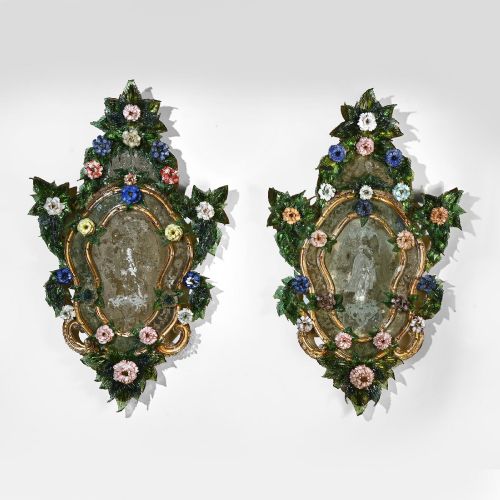
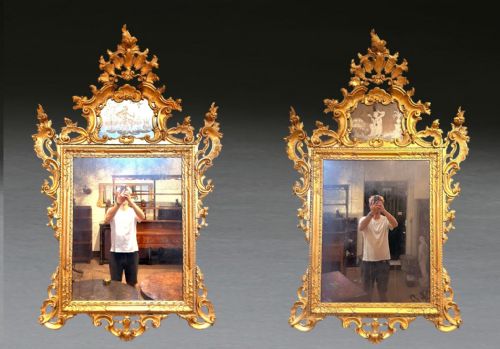

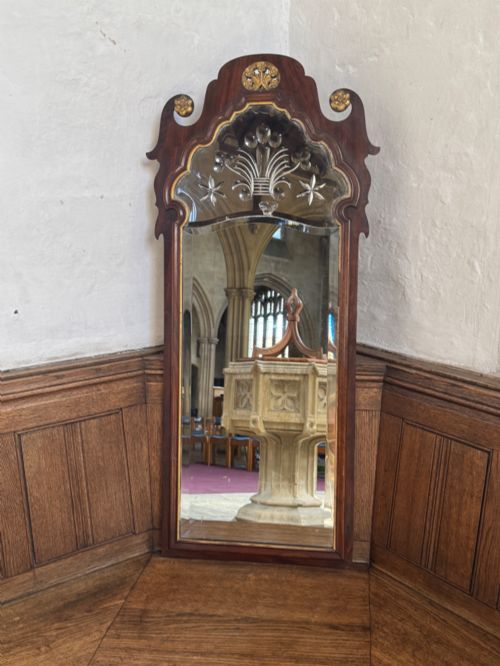


Etched Gilt Wood Mirror
An etched gilt wood mirror brings immediate depth and reflected light to a room through centuries-old craftsmanship.
Etched Gilt Wood Mirror
An etched gilt wood mirror combines reflective glass with ornate wooden frames finished in gold leaf or paint. These wall-hanging pieces appear across various historical periods, including the eighteenth and nineteenth centuries, as well as Edwardian revivals.
Italian and French workshops dominate the available selection, ranging from Venetian rococo forms to Louis Philippe designs. Buyers frequently encounter carved wooden frames shaped with arched tops or cushion profiles, often paired with engraved or reverse cut glass plates.
Markers of superior craftsmanship
The fineness of the hand-carved gesso details and the depth of the gilding set superior examples apart from standard work. Crisp edges on floral or scroll motifs indicate skilled hand-tooling rather than mass production.
Original mirror plates showing genuine age, consistent silvering wear, and precise hand-etching elevate an object. The integrity of the underlying wooden structure and the survival of the original painted or gilt finish remain central to a piece's integrity.
Etched Gilt Wood Mirror Retail Price Guide 2026
Typical asking prices for etched gilt wood mirror among the pieces listed under this phrase on Sellingantiques today, from the lower quarter to the upper quarter. They describe what is for sale here now, not the wider market.
Many nineteenth-century French mirrors carry the distinct marks of domestic life in their original distressed paint finishes.
John Belchier
The Etched Gilt Wood Mirror Glossary
- Gesso
- A plaster mixture applied to wood frames to create a smooth surface for gilding. This material allows for intricate relief carving.
- Giltwood
- Timber coated with thin gold leaf or gold powder. It provides a luminous finish that catches interior light.
- Pier mirror
- A tall glass designed to hang on the wall between windows. These pieces often feature detailed carved frames.
- Reverse cut plate
- Glass decorated from the back by removing portions of the silvering or etching the surface. This technique produces subtle designs visible from the front.
- Louis Philippe
- A mid-nineteenth-century French style known for gentle rounded top corners and restrained classical ornamentation. These mirrors balance decorative presence with clean architectural lines.
Etched Gilt Wood Mirror: Frequently Asked Questions
How do I date an etched gilt wood mirror?
Dating relies on examining the construction of the wooden frame, the composition of the gesso, and the characteristics of the glass plate. Eighteenth-century examples often feature distinct regional carving styles, while nineteenth-century pieces show different plate bevelling and backboard construction.
Changes in hardware, screw types, and the wear patterns on the original gilding also help establish the chronological period of manufacture.
Where should I hang a large gilt mirror?
These mirrors work effectively above mantelpieces, in hallways, or positioned between windows to amplify natural light. Their substantial weight requires secure wall fixings anchored directly into masonry or heavy studs.
Ensure the hanging height allows the glass to reflect focal points in the room rather than blank ceilings or floors.
What is the difference between gesso and carved wood?
Carved wood refers to the structural timber shaped by hand into scrolls, frames, and decorative motifs. Gesso is the plaster layer applied over that wood to refine the surface before the application of gold leaf.
Together, the timber provides strength while the gesso layer holds the fine sculptural detail.
How should I clean antique mirror glass?
Clean the glass gently using a soft, dry microfiber cloth to remove dust. Avoid harsh chemical cleaners or abrasive pads that can damage the surrounding giltwood or seep behind the plate.
If moisture is necessary, apply a mild soap solution sparingly to the cloth rather than spraying directly onto the antique glass.