

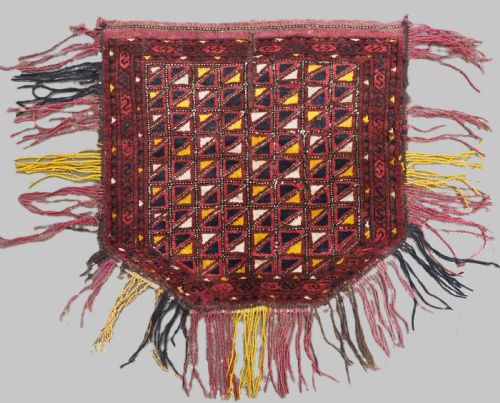


Ersari Trapping
An ersari trapping brings the rich tribal heritage of Central Asia into your home through finely knotted wool and natural dyes.
Ersari Trapping
An ersari trapping is a distinctive textile created by Turkmen nomadic and semi-nomadic groups in Central Asia. These pieces typically take the form of torbas, saddle covers, or bag faces designed for functional nomadic life and interior decoration.
Buyers browsing this selection will most frequently encounter antique torba faces and wall hangings dating from the late nineteenth century to around nineteen hundred. These textiles showcase traditional tribal motifs woven with rich, saturated natural colour palettes.
The regional origins trace directly to Turkmen tribal weavers who utilised traditional geometric layouts and symbolic forms. Each object represents a distinct piece of nomadic heritage adapted into a decorative format for modern interiors.
Materials and Construction
The foundation of these textiles relies heavily on hand-spun wool, chosen for its durability and tactile qualities. Artisans combined this core material with natural dyes to achieve deep, enduring shades that mellow gracefully over time.
Selected examples incorporate delicate silk highlights alongside the wool to accent specific tribal motifs and create subtle textural contrast. Skilled weavers knotted these materials meticulously by hand, producing dense pile surfaces designed to withstand generations of daily use.
Ersari Trapping Retail Price Guide 2026
Typical asking prices for ersari trapping among the pieces listed under this phrase on Sellingantiques today, from the lower quarter to the upper quarter. They describe what is for sale here now, not the wider market.
Some antique torbas still retain their original wool tassels, swaying slightly as if they have just been unstrapped from a nomadic camel.
Evaluating Quality and Detail
The distinction between average and exceptional pieces rests upon the precision of the knotting and the complexity of the design layout. Finer examples display crisp geometry within motifs such as the gul or star in octagon, maintaining structural integrity across the entire field.
Materials also dictate the tier of a piece, with superior specimens utilising exceptionally spun wool and well-preserved natural dyes. The inclusion of original elements like tassels or embroidered silk highlights further elevates the character and distinction of an individual textile.
The Ersari Trapping Glossary
- Torba
- A small Turkmen bag face or storage sack traditionally used inside a nomadic tent. These rectangular textiles are among the most common forms encountered by collectors.
- Gul
- A medallion pattern or repeating primary motif used extensively in Turkmen carpet design. Each tribal group utilised distinct variations to signify lineage and identity.
- Beshir
- A sub-group of Ersari weavers known for distinctive design elements and broader palette choices. These pieces often feature motifs such as rams horn patterns.
- Mafrash
- A larger storage bag or bedding container panel woven in tribal techniques. Surviving faces demonstrate the robust utility of these nomadic furnishings.
- Natural Dyes
- Organic colouring agents derived from plants and minerals used prior to synthetic dyes. They produce harmonious, complex tones that age with considerable depth.
Ersari Trapping: Frequently Asked Questions
What is an ersari trapping used for?
These textiles originally served practical functions within nomadic tents as storage bags, saddle covers, or decorative wall partitions. Today, collectors primarily display them as wall hangings or decorative floor rugs to appreciate their tribal artistry.
Their striking geometric patterns and rich textures make them versatile accents for traditional and contemporary interior spaces alike.
How do I care for antique wool textiles?
Protect antique wool and natural dyes by placing pieces away from direct, harsh sunlight to prevent fading. Gentle vacuuming without a rotating brush roll helps remove dust safely.
Consult a professional textile conservator for any deeper cleaning needs rather than attempting wet washing at home.
How can I date an ersari trapping?
Dating relies on examining the specific wool preparation, the chemical composition of the natural dyes, and the structural tightness of the weave. Pieces from the late nineteenth century typically exhibit hand-spun wool and specific traditional gul proportions.
Comparing structural details against established tribal typologies helps narrow down the period of production.
What does gul design mean?
A gul is a repeating octagonal or medallion motif central to Turkmen carpet and trapping design. Different tribal groups incorporated specific variations of this motif to represent their clan heritage.
Recognising these patterns helps identify the specific sub-group or regional origin of the weaver.