






Ernest Higgins Rigg Painting
An ernest higgins rigg painting captures the quiet light of rural Yorkshire and the coast through the distinct lens of British Impressionism.
What an ernest higgins rigg painting is
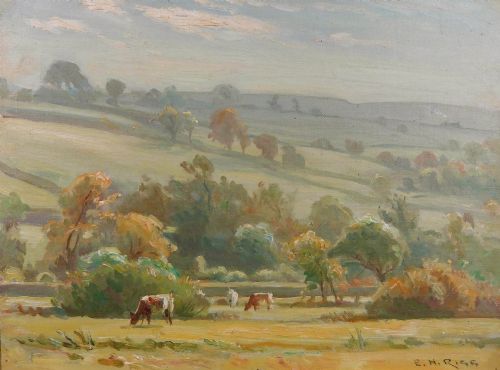
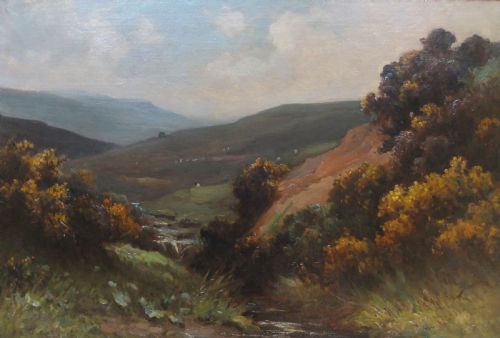
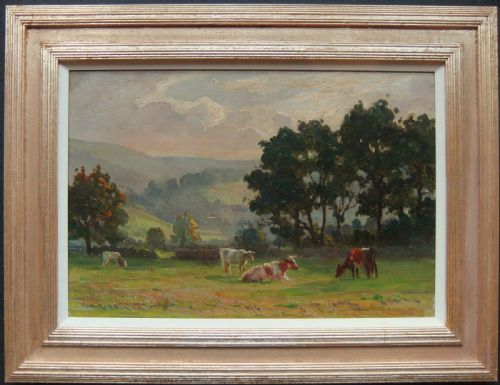
An ernest higgins rigg painting focuses primarily on landscape and rural subjects, capturing moorlands, valleys, streams, and farming scenes across Yorkshire. These works frequently depict specific locations such as Swaledale, Staithes, and Low Row, anchoring the visual record in recognizable regional geographies.
The compositions date predominantly from the early twentieth century, aligning with the artistic output of the Staithes Group. Buyers encounter pastoral subjects like plough horses, haymaking, and cottage gardens rendered in a characteristic plein air manner.
Materials and technique
Artists of this period applied oil paint directly onto stretched canvas, prepared wooden board, or timber panels. The medium allows for rich texture and impasto application, building visible brushwork that catches the light.
The handling relies on broken colour and rapid brushstrokes characteristic of British Impressionism, prioritizing atmospheric effects and natural sunlight over rigid academic finish.
The recorded listings exclusively feature oil paint applied to canvas, board, or timber supports across early twentieth-century dates.
Distinctions in quality
The strength of a composition rests on the handling of natural light, particularly in works depicting sunlight on moorlands or twilight across the dales. Stronger examples demonstrate confident tonal contrast and dynamic brushwork.
Subject matter also influences the visual impact, with lively figurative elements like plough horses, figures, and garden roses adding narrative depth to the landscape.
Ernest Higgins Rigg
The Ernest Higgins Rigg Painting Glossary
- British Impressionism
- A painting style developed around the late nineteenth and early twentieth centuries, focusing on light, outdoor settings, and loose brushwork. It heavily influenced regional artist colonies in the north of England.
- Staithes Group
- A northern association of artists who painted en plein air along the Yorkshire coast. Ernest Higgins Rigg was closely associated with this influential circle.
- Impasto
- Paint laid on an area of the surface in thick layers, standing out visibly from the canvas. This technique adds tactile depth to foliage, water, and earth.
- Plein air
- The act of painting outdoors to capture the actual visual conditions of a scene directly. This approach defined the working method of many early twentieth-century landscape painters.
Frequently Asked Questions
Who was Ernest Higgins Rigg?
Ernest Higgins Rigg was a painter associated with the Staithes Group of artists working in Yorkshire. His output concentrates on regional landscapes, rural farm life, and coastal scenes.
His paintings record the rural topography of places like Swaledale and surrounding moorlands during the early decades of the twentieth century.
What subjects do these paintings feature?
The works predominantly depict northern English landscapes, including moorland streams, valleys, hayfields, and grazing sheep. Village views and agricultural labour, such as ploughing horses, appear frequently.
Still life studies of garden roses also occur within the recorded body of work.
How should I display an oil painting?
Keep oil paintings away from direct, strong sunlight and sources of extreme heat or humidity to protect the canvas and timber frames. Proper placement preserves the stability of both the paint layer and the support.
Ensure adequate wall anchoring to safely support framed works on canvas or board.
What periods do these artworks represent?
The available evidence spans the late nineteenth century and the early decades of the twentieth century, specifically highlighting dates around nineteen hundred to nineteen twenty.
This era marks the height of the Staithes Group movement and related regional plein air painting in Britain.