



Equestrian Statue on Base
An equestrian statue on base captures horse and rider cast in metal and mounted upon stone, bringing classical movement to a mantelpiece.
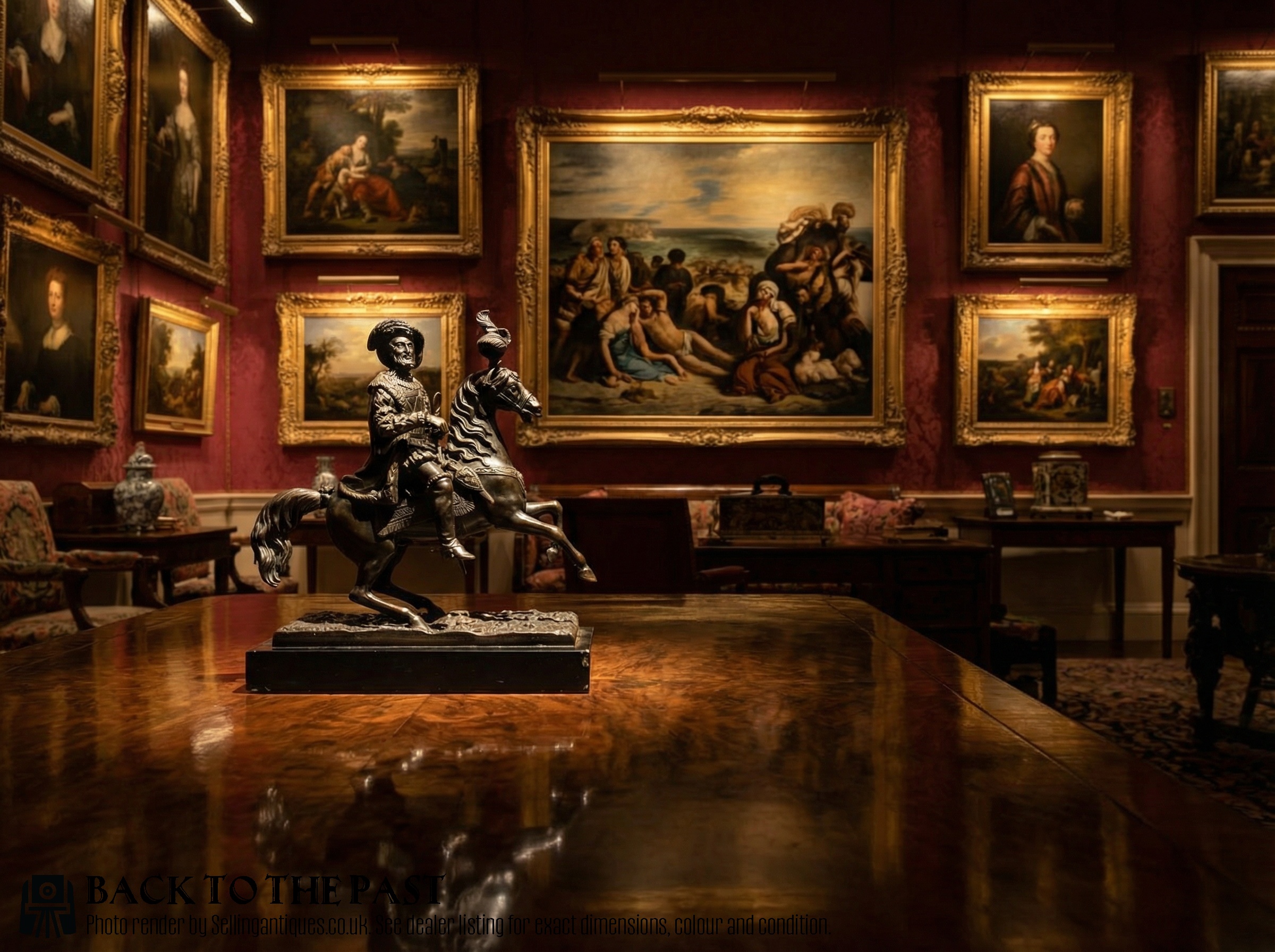
Equestrian Statue on Base
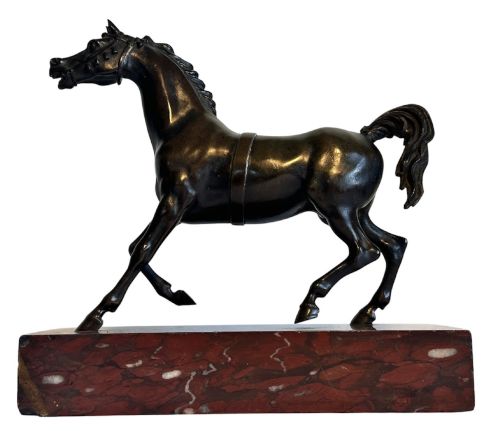
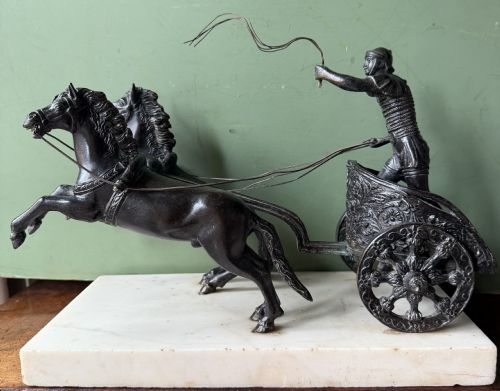
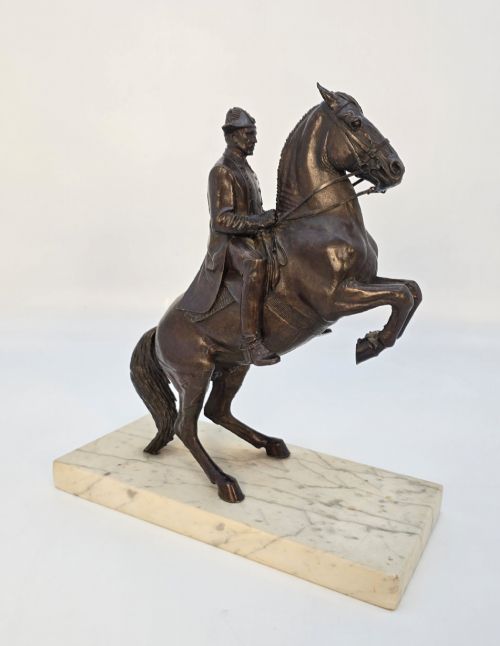
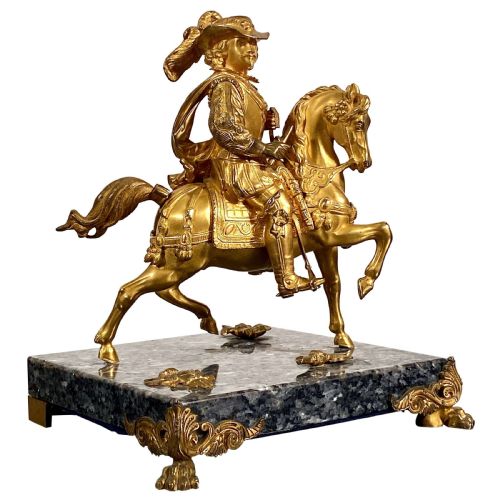
An equestrian statue on base depicts a horse and rider or a standalone horse cast in metal and mounted securely onto a plinth, block, or slab. These pieces span from the mid-nineteenth century into the mid-twentieth century, drawing on periods such as the nineteenth century, the Edwardian era, and the Art Deco movement.
The subjects range from historical figures like Napoleon and Charles I to Grand Tour souvenirs of Italian monuments, racing jockeys, and spirited stallions. Bronze serves as the primary medium, paired with bases fashioned from white marble, green marble, or olive wood.
Italian Grand Tour studies and French animalier works dominate the selections, alongside Vienna bronzes and academic realism. Buyers encounter everything from small cabinet figures to large decorative sculptures designed for prominent display.
What varies in quality
The choice and density of the mounting base also mark the tier of the piece. Solid slabs of green or white marble and finely turned olive wood elevate the presence of the sculpture compared to simpler supports.
Listings feature bronze, marble, gilt bronze, wood, ormolu, olive wood, silver plated metal, and green marble.
Franz Bergman·Bruno Zach·Xavier Raphanel
The Equestrian Statue on Base Glossary
- Animalier
- A nineteenth-century artistic focus on the realistic depiction of animals, particularly horses and lions. Practitioners captured beasts in motion or repose with anatomical precision.
- Grand Tour
- A traditional trip through Europe undertaken by upper-class scholars and collectors during the eighteenth and nineteenth centuries. Travellers purchased bronze reductions of famous monuments and sculptures as souvenirs.
- Ormolu
- Gilded bronze produced by applying a mercury and gold amalgam to a bronze object and heating it. This technique creates a rich, durable golden surface finish.
- Patination
- The natural or chemical coloration of a metal surface over time or through treatment. Bronze figures often display rich brown, black, or green patinas applied by the foundry.
- Vienna Bronze
- Small, highly detailed metal sculptures produced in Austrian workshops during the late nineteenth and early twentieth centuries. These pieces typically feature cold-painted or patinated surfaces.
Equestrian Statue on Base: Frequently Asked Questions
What is an equestrian statue?
An equestrian statue depicts a rider mounted upon a horse, usually cast in bronze or another metal.
These sculptures often commemorate historical leaders, military figures, or literary characters, though many simply celebrate the animal itself.
Why are these figures mounted on bases?
The base provides structural stability for a heavy metal sculpture with a narrow footprint, preventing the piece from tipping over.
Plinths made of marble or wood also frame the artwork visually, elevating the subject and protecting the surface underneath.
How do I identify a Grand Tour bronze?
Grand Tour bronzes were produced in the nineteenth century as souvenirs for travellers visiting classical sites in Italy and Europe.
They frequently replicate famous public monuments, such as Renaissance equestrian statues, and are mounted on heavy marble plinths.
What materials are used for the bases?
Bases commonly consist of white marble, green marble, or turned wood such as olive wood.
Heavier stone bases add substantial weight to balance the metal horse above.