



Equestrian Historical Art
Equestrian historical art brings horse-mounted figures and cavalry battles into rooms through oil paintings, engravings, and tapestries.
Equestrian Historical Art
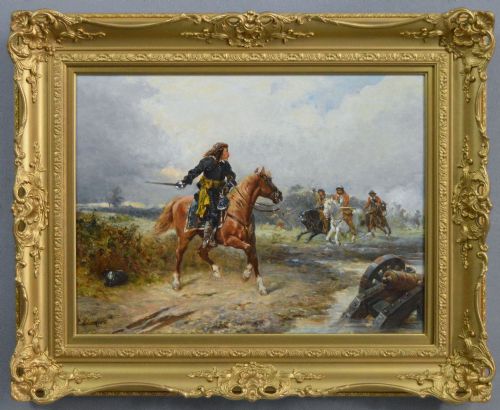
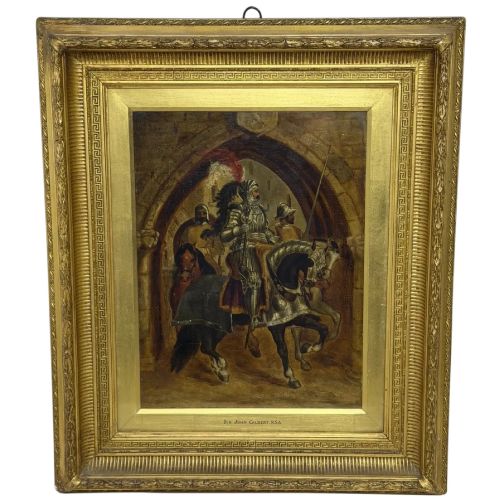
Equestrian historical art captures mounted figures, cavalry skirmishes, and racing scenes across several centuries of creative work. Buyers encounter oil paintings, watercolours, pen and ink drawings, photographic prints, and needlework pictures depicting past events.
The periods span from the seventeenth century through the Victorian era and into the mid-twentieth century. Works range from Flemish Baroque landscapes with sportsmen to nineteenth-century battle scenes and twentieth-century racehorse prints.
Materials and techniques
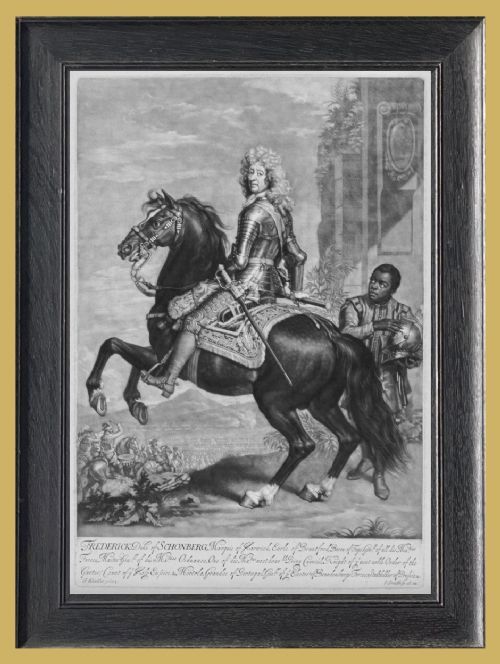
Artists painted in oil on canvas or worked in watercolour and pen and ink on paper. Printers produced mezzotints and photographic prints, sometimes framing them behind glass within wood or giltwood surrounds.
Craftspeople also created wall tapestries and silk needlework pictures to depict horses and riders. These varied supports reflect the different traditions used to record historical subjects over time.
Equestrian Historical Art Retail Price Guide 2026
Typical asking prices for equestrian historical art among the pieces listed under this phrase on Sellingantiques today, from the lower quarter to the upper quarter. They describe what is for sale here now, not the wider market.
Listings include works from the seventeenth, eighteenth, nineteenth, and twentieth centuries, employing oil paint, watercolour, pen and ink, photography, and silk needlework.
What separates the finest works
Quality rests upon the handling of the horse's anatomy, the dynamism of the composition, and the depth of the historical setting. Works attributed to known circles or named artists often display more confident draughtsmanship.
The condition of the canvas, paper, or textile matters greatly, alongside the integrity of original frames such as giltwood. Finer pieces maintain clear details in complex battle scenes and portraits.
John Smith·Sir Godfrey Kneller·Sir John Gilbert·Pieter Bout·Adriaen Frans Boudewyns·Jean Sobieski·Heywood Hardy·Albert Ferdinand Le Dru·George Cattermole·Abraham Cooper
The Equestrian Historical Art Glossary
- Mezzotint
- A printmaking process where the surface is roughened to achieve rich tonal gradations and dark backgrounds. This technique allows for subtle shading in portraits.
- Giltwood
- Wood carved and coated with gold leaf or a gold-coloured finish for framing artwork. It provides a decorative border for paintings and prints.
- Needlework
- Sewing executed on canvas or silk to create pictorial scenes. Silk threads produce fine detail in historical depictions.
- Flemish Baroque
- An artistic movement characterised by vigorous movement and rich colour. Works from this school often show expansive landscapes with figures.
- Provenance
- The documented history of ownership of an object. This record helps establish the authenticity and origin of historical pieces.
Equestrian Historical Art: Frequently Asked Questions
What subjects appear in equestrian historical art?
These works depict cavalry battles, military commanders on horseback, hunting scenes, and horse racing tracks. Scenes range from seventeenth-century portraits to Victorian skirmishes and twentieth-century racehorse photographs.
Artists also recorded historical processions and genre subjects involving riders and horses. Each piece captures a specific moment in military or sporting history through various visual media.
How are these pieces framed and displayed?
Many oil paintings and works on paper are housed in wooden or giltwood frames, occasionally behind glass. Wall tapestries and large needlework pictures hang directly from textile suspension methods.
Collectors place these works in studies, libraries, and principal living rooms to anchor traditional interiors. Proper placement avoids direct sunlight to protect pigments and paper supports.
How can I tell the period of a work?
Stylistic clues such as costume, armour, and painting technique indicate the era in which a piece was made. Seventeenth-century works often show Baroque influences, while Victorian pieces reflect nineteenth-century romanticism.
Inscriptions, signatures, and framing styles also offer chronological markers. Comparing the handling of horses and landscapes against dated examples helps narrow the time of production.
What is the difference between an oil painting and an engraving?
An oil painting is a unique work created by applying pigment suspended in oil onto canvas or panel. Engravings and mezzotints are printed multiples produced from etched metal plates.
Paintings offer textured brushwork and deep colour variations, whereas prints rely on ink lines and tonal etching. Both formats record historical equestrian subjects through distinct technical processes.