



Equestrian Desk Sculpture
An equestrian desk sculpture brings the energy of the horse and rider to a working surface in bronze, silver, or marble.
Equestrian Desk Sculpture
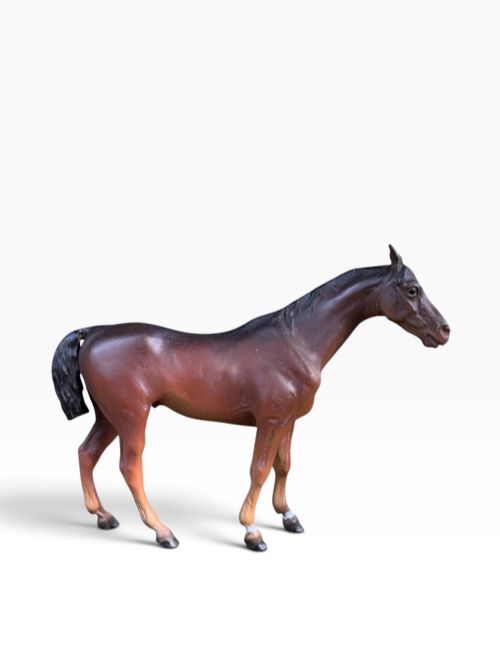
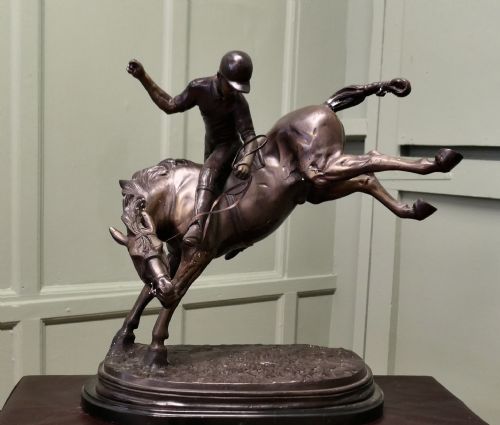
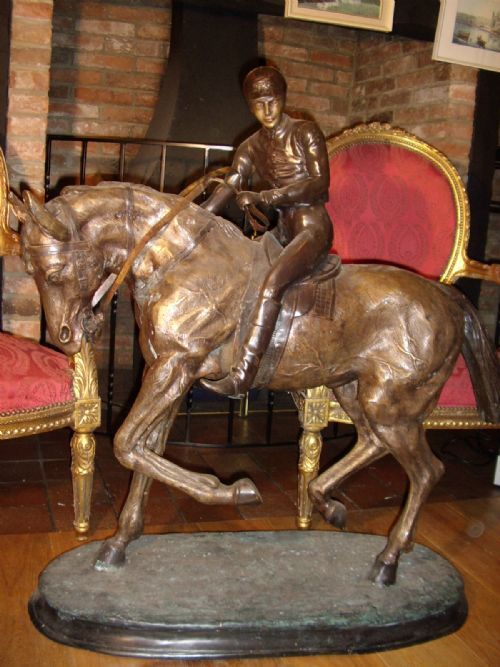
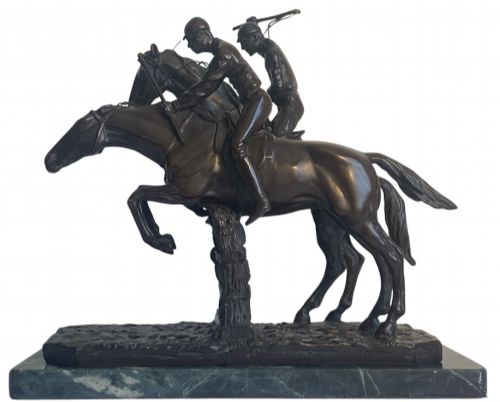
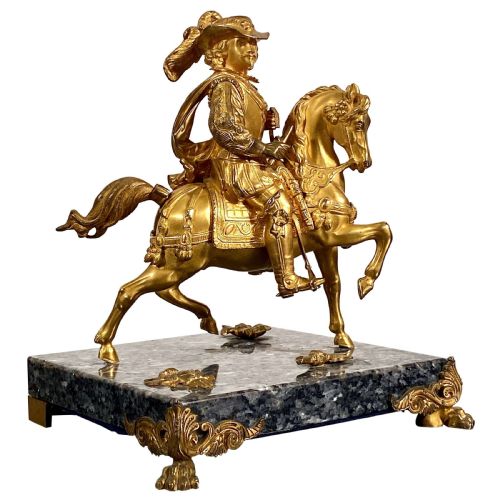
An equestrian desk sculpture captures horses and riders in miniature, spanning subjects from steeplechase racing and polo to historical figures on horseback. These pieces function as desk accessories, paperweights, mantel clocks, and table lighters while depicting animals in motion or repose.
The selection here draws from the nineteenth and twentieth centuries, showing French Animalier school works alongside Austrian cold painted bronzes and English silver figures. Collectors encounter subjects ranging from classical historical monarchs to bucking western horses and racing jockeys.
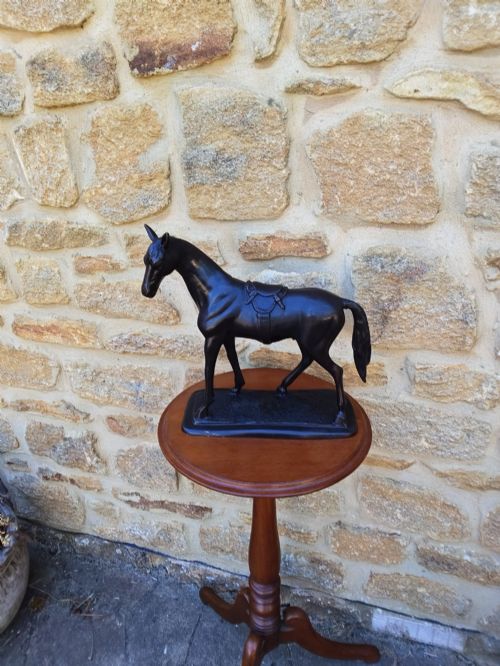
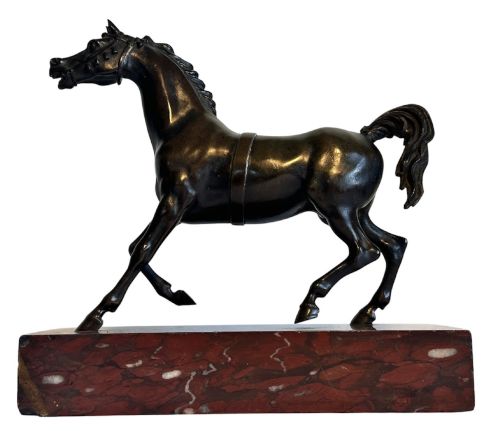
Most examples mount a metal figure onto a substantial base of marble, olive wood, or black ebony, grounding the dynamic animal forms for daily desktop use.
How they were made
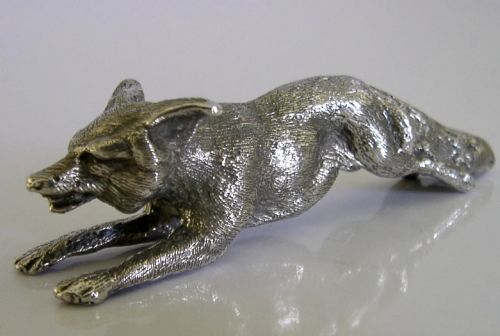
Metal casting forms the core of these works, utilising bronze, gilt bronze, ormolu, and sterling silver to shape the figures. Many pieces receive a patinated finish or cold painted polychrome details to highlight the musculature of the horses and the texture of the riders' clothing.
Heavier elements incorporate natural stones, setting the metal sculptures onto bases of polished marble, olive wood, or ebony plinths. Artisans combined casting, chasing, and mounting techniques to balance heavy metal figures securely on stone or wooden supports.
Monkeys don jockey silks and race on horseback in a nineteenth-century bronze by Paul Joseph Gayrard.
What varies in quality
The integration between the sculpture and its base also distinguishes pieces, as top tier works feature tightly fitted mounts of heavy marble or carved wood that anchor the composition without clumsy joins.
Pierre Jules Meme·Jules Bonheur·Philip Blacker·Paul Joseph Gayrard
The Equestrian Desk Sculpture Glossary
- Animalier
- A nineteenth-century artistic movement focused on the realistic depiction of animals, particularly horses and big cats. Artists in this tradition studied anatomy closely to capture creatures in active motion.
- Cold painted bronze
- A method where bronze sculptures are painted with cold enamel colours rather than fired in a kiln. This technique gained particular popularity in late nineteenth and early twentieth-century Austrian workshops.
- Ormolu
- Gilt bronze ornamentation applied to furniture, clocks, and sculpture mounts during the eighteenth and nineteenth centuries. The process involves coating bronze objects with a mercury and gold amalgam.
- Patinated bronze
- Metal treated with chemicals, heat, or acids to produce a specific surface colour and sheen. The resulting finish protects the bronze while giving depth to the sculptural details.
- Specimen marble
- Multi-coloured decorative stone assembled from various geological samples to create polished bases and tabletops. Italian craftsmen utilised these rich materials for nineteenth-century desk ornaments and carvings.
Equestrian Desk Sculpture: Frequently Asked Questions
How do I identify the period?
Dating relies on materials, casting techniques, and stylistic markers associated with specific eras like Art Deco or the nineteenth-century Animalier school. Bases made of heavy marble or specific wood types also offer clues to the decade of production.
Signatures and foundry marks stamped into the metal provide further evidence for precise attribution.
Where were these pieces made?
The listings show production centres across Europe, notably in France, Austria, Italy, and England. Each region developed distinct specialities, such as Austrian cold painted bronzes or French animalier castings.
Local workshops and individual sculptors shaped the distinct aesthetic traditions of these countries.
How do I care for bronze and silver?
Metal sculptures require gentle dusting with a soft brush to protect patinated surfaces and delicate cold painted finishes. Avoid harsh chemical cleaners that strip the original historic patination.
Wooden and marble bases benefit from occasional wiping with a dry cloth to maintain their polished appearance.