

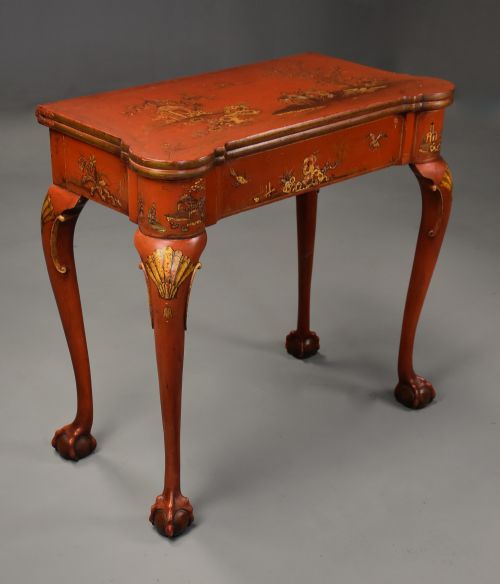


Envelope Gaming Table
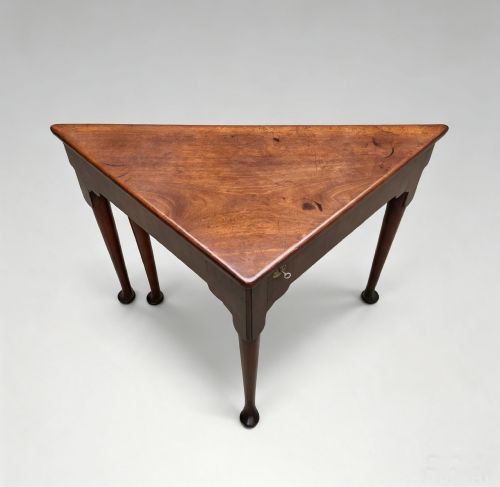
An envelope gaming table is a clever folding piece that opens to reveal a lined playing surface.
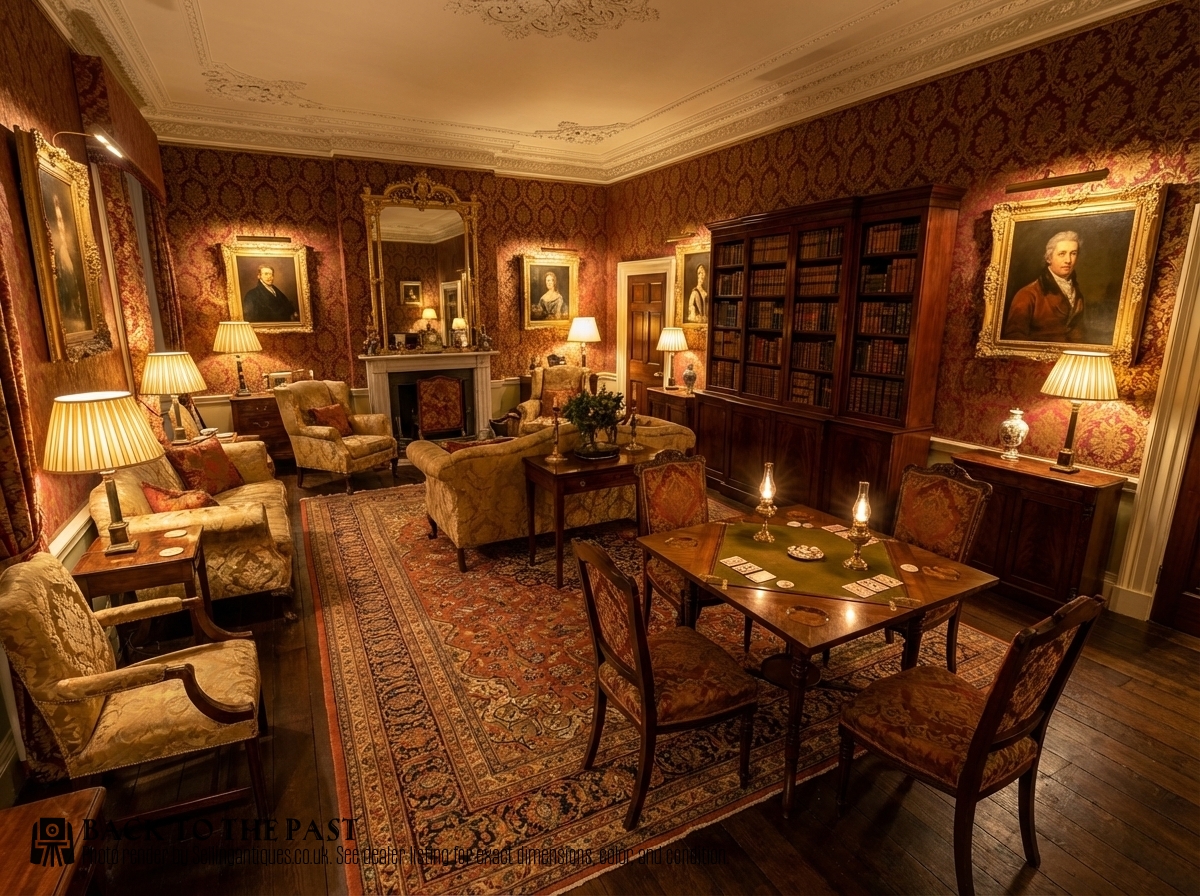
Envelope Gaming Table
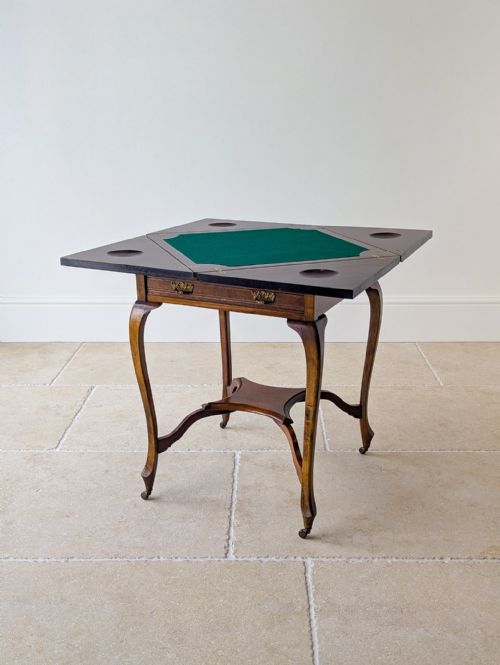
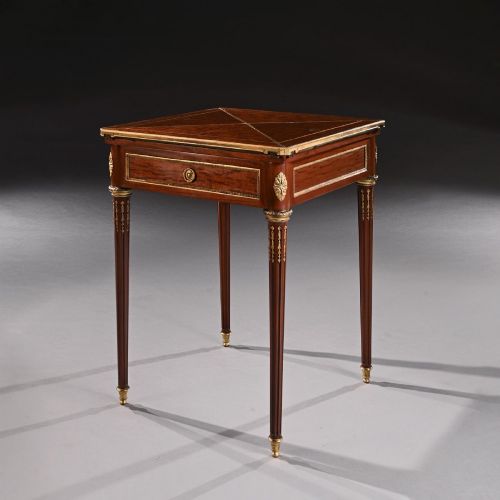
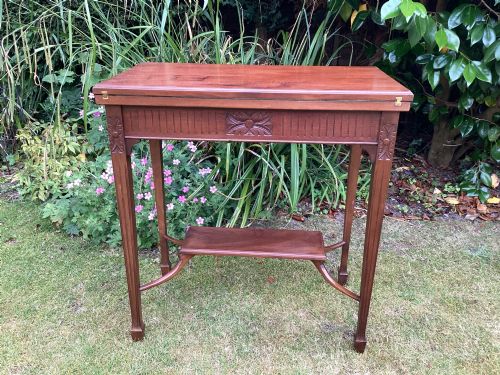
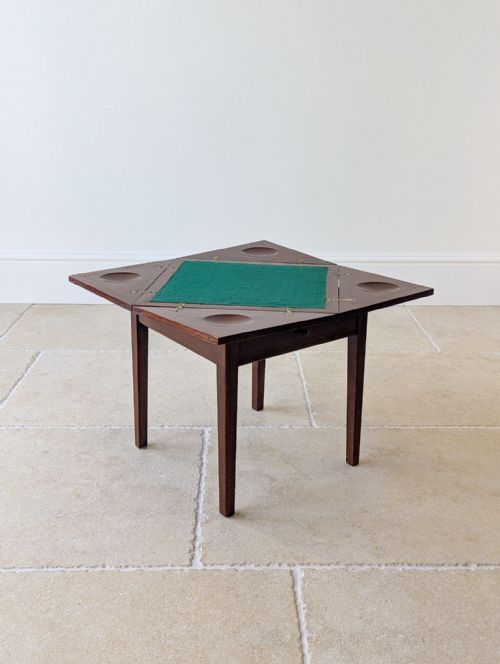
An envelope gaming table is a versatile piece designed for card games and social evenings, appearing most frequently from the Victorian and Edwardian periods in mahogany, rosewood, and satinwood. The distinct folding mechanism allows the square top to rotate and the four triangular flaps to fold open like an envelope, exposing a baize-lined playing surface and corner wells for counters or coins.
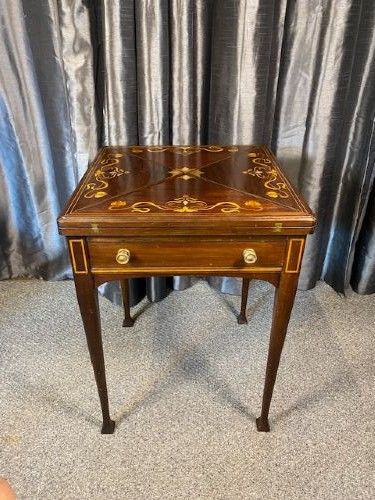
The forms range from diminutive Edwardian side tables to more robust late nineteenth-century examples decorated with intricate marquetry and brass inlay. Alongside traditional mahogany and rosewood constructions, one encounters revival styles such as Louis XVI and Chinoiserie, demonstrating the adaptability of the form across different decades.
How they were made
Cabinet makers constructed these tables using dense timbers like mahogany, walnut, and rosewood, often applying delicate satinwood inlay or brass stringing to the folding leaves. The clever pivoting top relies on precise internal hinges and framing so that the four flaps move in unison when the user rotates the surface.
The interior playing surfaces are traditionally lined with wool baize, providing a soft texture for card playing, while corner wells are frequently scooped into the timber framework. More elaborate workshops added marquetry motifs, ormolu mounts, and hand-painted lacquered finishes in the Chinoiserie taste.
Some tables cleverly double as drinks surfaces, proving that Victorian card players took their refreshments as seriously as their hand of whist.
What varies in quality
The standard of an envelope gaming table is visible in the precision of the mechanical action and the crispness of the timber inlays. A superior example operates smoothly with tight joints when closed, whereas lesser pieces suffer from warped flaps or loose pivoting mechanisms that disrupt the symmetry.
The choice of secondary woods and the finesse of the marquetry or ormolu mounts also distinguish standard production from exceptional cabinet work. Tables bearing maker signatures or specific revival styling display a higher degree of hand-finishing in the carved details and the fitted gaming wells.
Antoine Lampre·Maple and Co·Howard and Sons Ltd·Francoise Linke
The Envelope Gaming Table Glossary
- Envelope table
- A square occasional table with a pivoting top that unfolds four triangular flaps to reveal a card surface. This mechanism defines the entire form.
- Baize
- A coarse woolen fabric used to line the playing surface of card tables. It offers a durable texture that prevents cards from sliding.
- Marquetry
- Decorative veneer work arranged in pictorial or geometric patterns on the table top. Craftsmen used contrasting woods to achieve this effect.
- Ormolu
- Gilt-bronze mounts applied to the exterior frame of certain revival pieces. It adds ornamental weight and metallic contrast to the timber.
Envelope Gaming Table: Frequently Asked Questions
How do the folding leaves operate?
The top rotates on a central pivot while connected internal arms guide the four triangular flaps simultaneously. As you turn the square surface, the flaps lift and fold outward to form a larger playing area.
When closing the table, you reverse the rotation, causing the leaves to tuck neatly back together into a compact square profile suitable for use as an occasional side table.
What were the corner wells used for?
The recessed triangular wells positioned in the corners of the open table top served to hold gaming counters, stakes, or coins during card play. They kept small items contained and prevented them from rolling off the surface.
When the flaps are folded shut, these wells are concealed entirely beneath the closed timber leaves, maintaining the clean appearance of a standard table.
How do I distinguish Edwardian from Victorian examples?
Victorian envelope tables often feature heavier rosewood or walnut construction with bolder marquetry and deeper mouldings. They frequently date from the late nineteenth century and possess a more substantial presence.
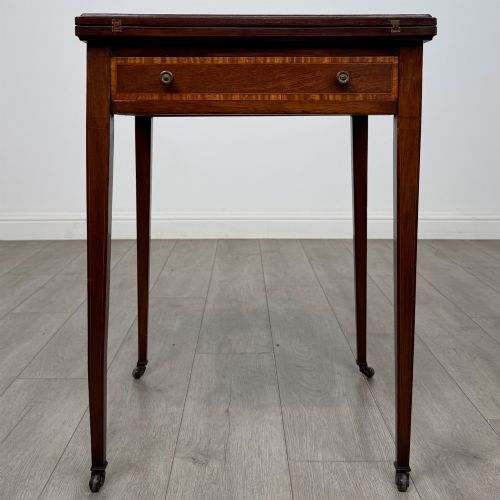
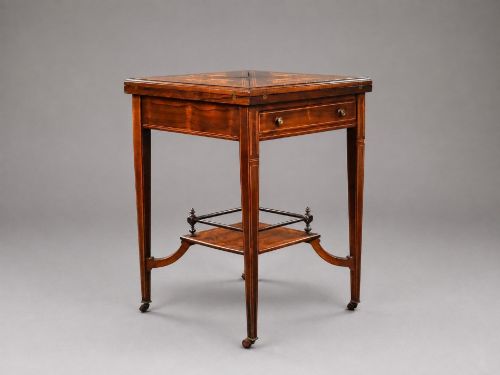
Edwardian pieces, made around the turn of the twentieth century, tend to be lighter in proportion with satinwood inlay, ebonised finishes, or delicate brass stringing reflecting neoclassical revival tastes.
Can these tables be used daily?
These pieces function well as everyday occasional or side tables when kept closed in a drawing room or study. Their compact square footprint makes them practical for smaller spaces.
Frequent conversion for card games requires gentle handling of the pivoting mechanism to preserve the original hinges and prevent strain on the folding leaf joints.