


Entryway Stick Holder
An entryway stick holder organises walking canes and wet umbrellas while setting a purposeful tone for the hall through materials like oak, brass, and bent beechwood.
Entryway Stick Holder
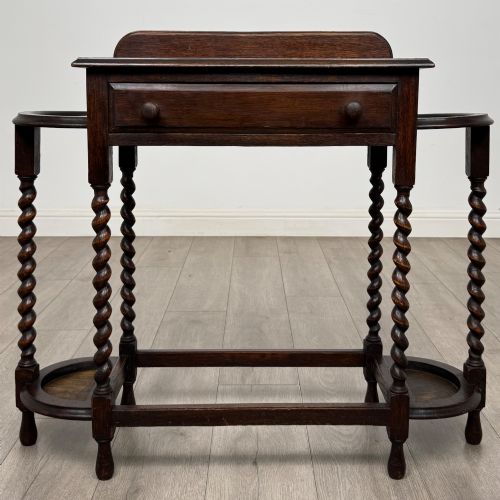
An entryway stick holder serves as a functional anchor for hallways, accommodating umbrellas and walking sticks within domestic interiors. These pieces range from substantial hall stands with mirrors to compact freestanding frames designed for corners or narrow passages.
Buyers encountering this selection will find examples originating across the nineteenth and early twentieth centuries, spanning Victorian, Edwardian, and Art Deco periods. Oak and brass predominate among the forms, accompanied by alternative constructions in cast iron, bamboo, and bent beechwood.
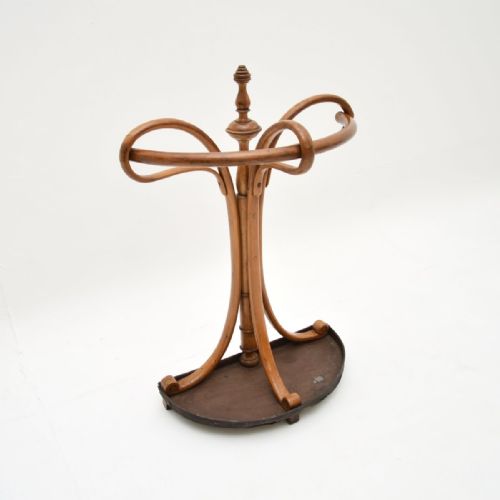
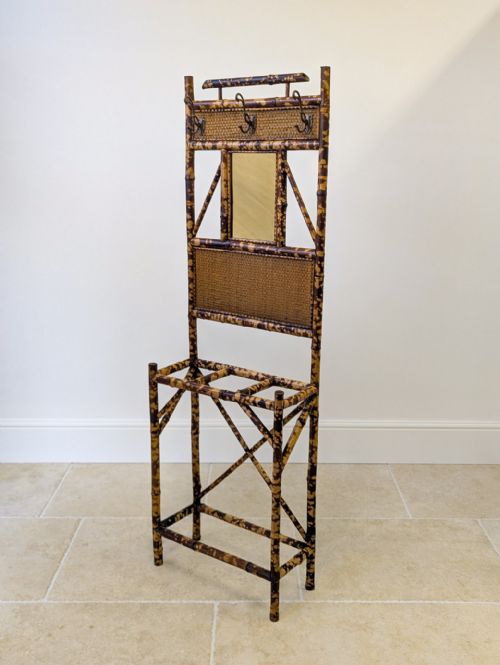
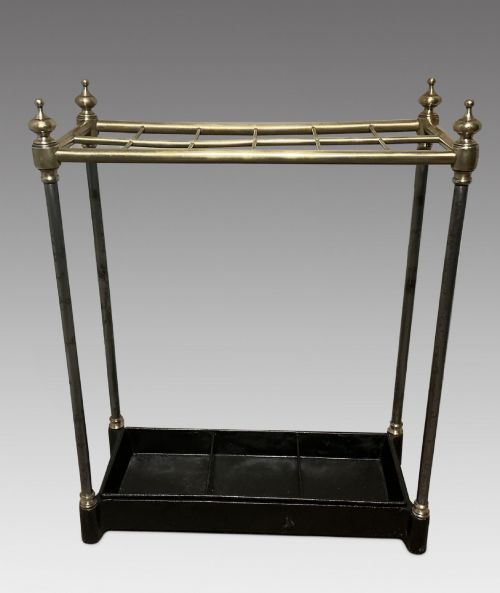
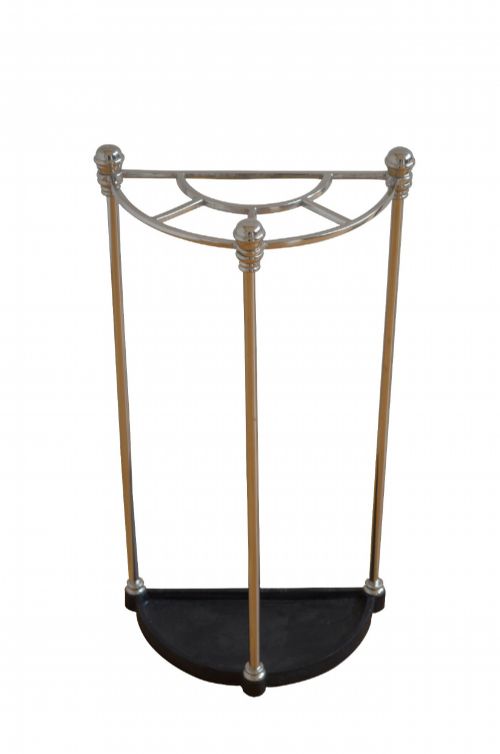
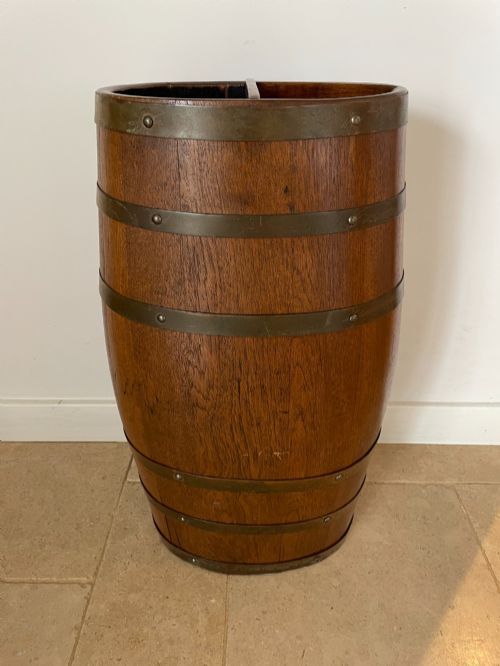
The objects take diverse structural shapes, including oval coopered vessels, demi-lune designs, and compartmentalised metal frames. Many integrate directly with broader hall furniture, combining coat hooks and mirror plates into a single furnishing.
Materials and construction
Makers utilised solid hardwoods such as oak, mahogany, and walnut, often employing traditional coopered construction with stave and hoop methods for circular and oval vessels. Bent beechwood relied on steam-bending techniques to shape pliable timber into flowing structural curves.
Metalwork forms a significant component of the inventory, utilising cast iron, spun brass, steel, and nickel plating. These metallic elements provide structural rigidity and moisture resistance at the base trays where wet umbrellas accumulate.
Entryway Stick Holder Retail Price Guide 2026
Typical asking prices for entryway stick holder among the pieces listed under this phrase on Sellingantiques today, from the lower quarter to the upper quarter. They describe what is for sale here now, not the wider market.
Materials recorded across the inventory include brass, cast iron, oak, glass, bent beechwood, bamboo, and rattan.
Distinctions in craftsmanship
Superior execution shows in the integration of materials, such as heavy brass divisions securely fitted to solid timber bases or structurally sound bentwood joints that retain their tension over time. Lesser examples rely on simplified joinery or lighter sheet metals that lack stability under daily use.
The handling of decorative details distinguishes the workmanship, from crisp turned spindles and carved oak panels to precisely formed bamboo and rattan work. Quality manifests in how successfully the piece balances functional capacity with decorative presence in the hall.
Thonet·Honourable Company of Edinburgh Golfers
The Entryway Stick Holder Glossary
- Coopered
- Constructed from vertical wooden staves bound together by hoops, typically used for cylindrical or oval vessels. This method derives from traditional barrel-making.
- Demi-lune
- A half-moon shape designed to sit flush against a wall. This profile maximises floor space in narrow hallways.
- Bentwood
- Timber shaped by exposure to steam and bent into curved forms. Thonet utilised this technique extensively for light furniture.
- Faux bamboo
- Wood carved or painted to imitate natural bamboo stalks. It was popular during the Victorian Aesthetic Movement.
- Aesthetic Movement
- A late nineteenth-century design focus on visual beauty over narrative meaning. It embraced diverse global influences including Japanese motifs.
Entryway Stick Holder: Frequently Asked Questions
How do I clean an antique brass stick holder?
Maintain the metal surface with a dry or lightly oiled cloth to preserve the historic patina built up over generations.
Avoid abrasive polishes that strip away the aged character characteristic of nineteenth-century brasswork.
Where should I place a hall stand?
Position the piece near the primary entrance of the home to manage incoming coats, walking sticks, and wet umbrellas.
Ensure adequate clearance allows doors to open fully without striking the wooden frame or mirror.
Are cast iron stands stable?
Heavy metal bases provide substantial weight at floor level, preventing tipping when long walking sticks or heavy golf umbrellas are loaded inside.
This material choice ensures durability in busy family hallways.
What is faux bamboo?
Makers carved or painted standard timbers such as beech or birch to resemble segmented bamboo stalks during the Victorian era.
This technique offered an exotic aesthetic while utilising domestic woods.
How do I date an oak stick holder?
Examine the construction methods, fixing screws, and stylistic markers such as Edwardian proportions or Victorian Aesthetic detailing.
Timber grain and finish wear also offer clues regarding the century of manufacture.