




Entryway Seating Pair
An entryway seating pair brings grounded presence to a hallway, offering sturdy timber construction and sculptural carved backs that anchor the space.
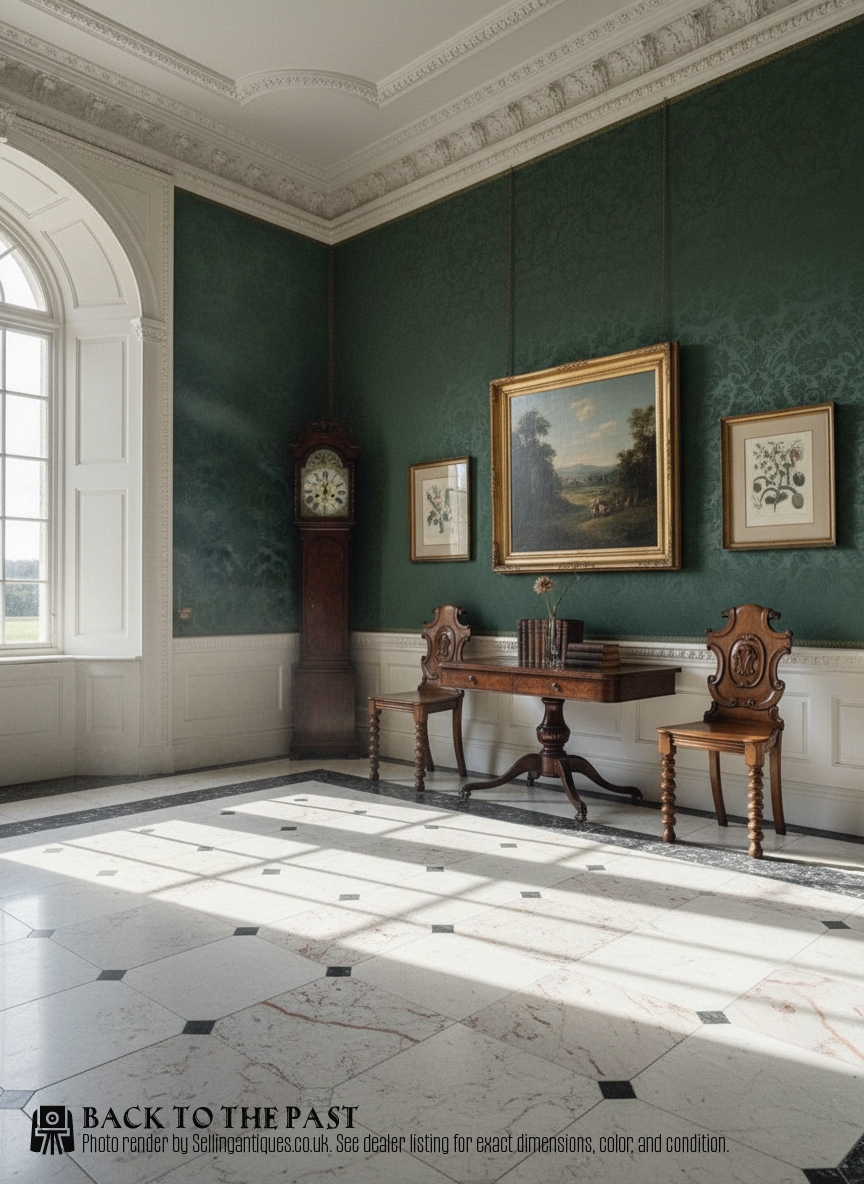
Entryway Seating Pair
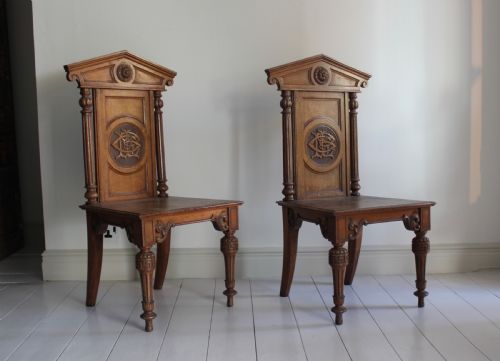
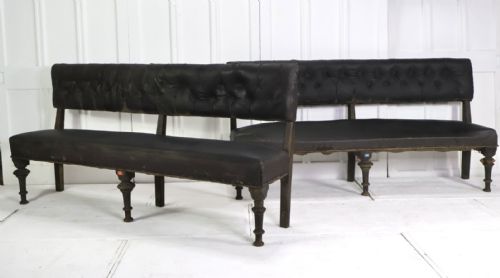
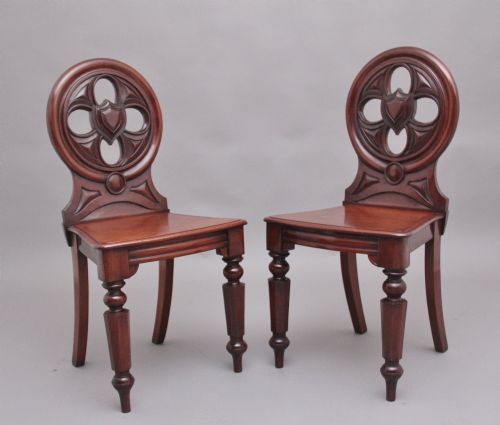
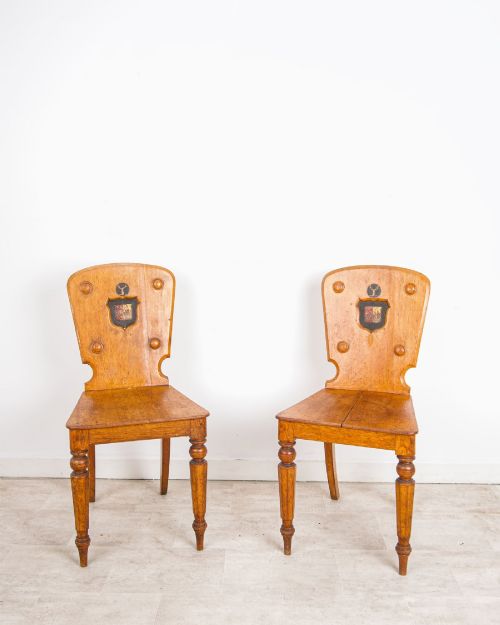
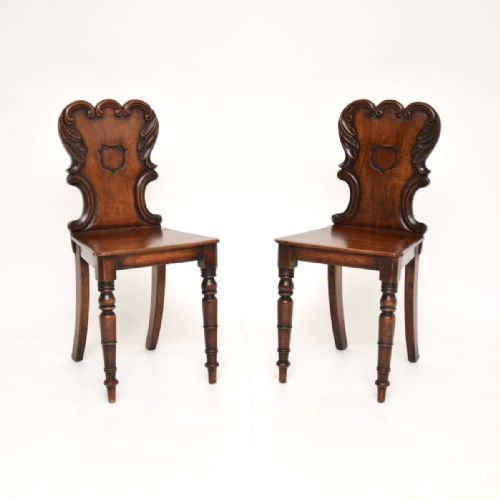
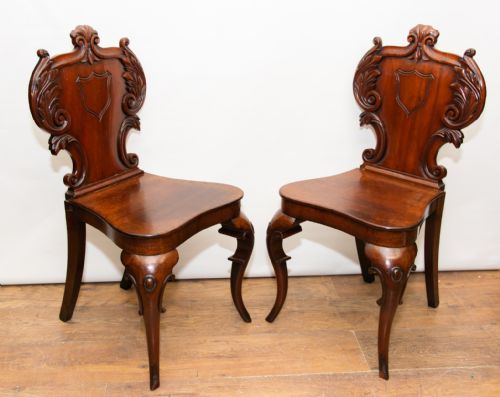
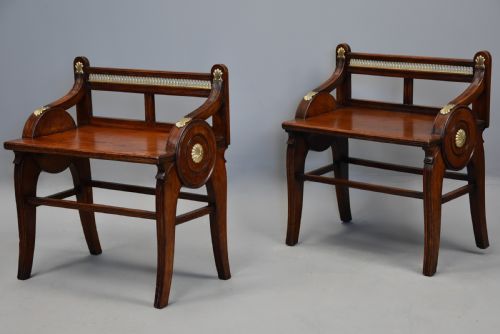
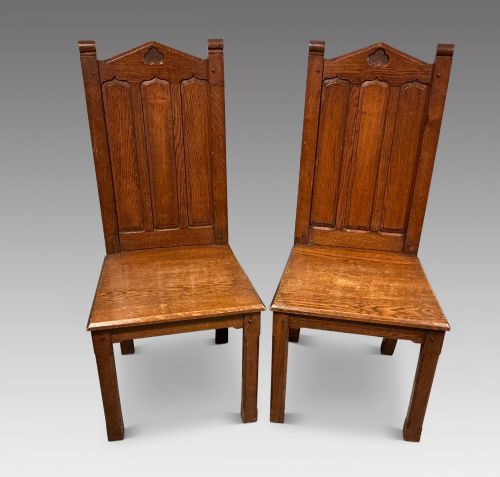
An entryway seating pair principally comprises matched pairs of hall chairs and hall benches designed to furnish grand passages and entrance halls. These pieces originate across the eighteenth and nineteenth centuries, spanning Georgian, Regency, William IV, and Victorian eras.
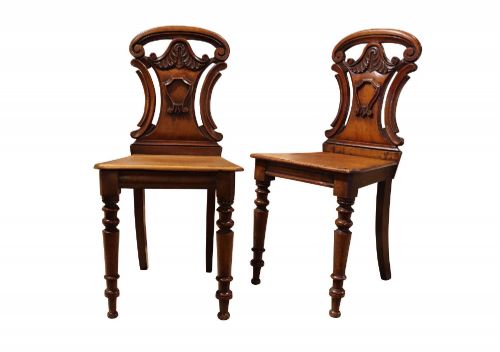
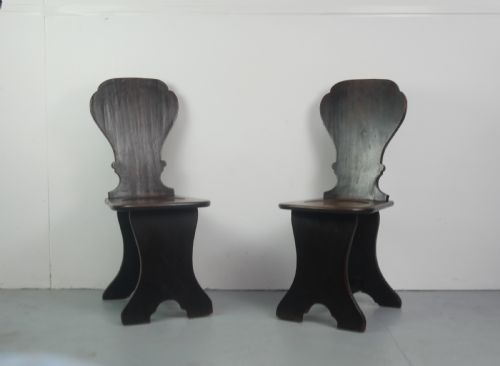
The most common examples encountered on this page are mahogany and oak hall chairs featuring carved wooden seats and distinctive high backs. Forms range from simple geometric panels to elaborate heraldic shield backs and pelta designs.
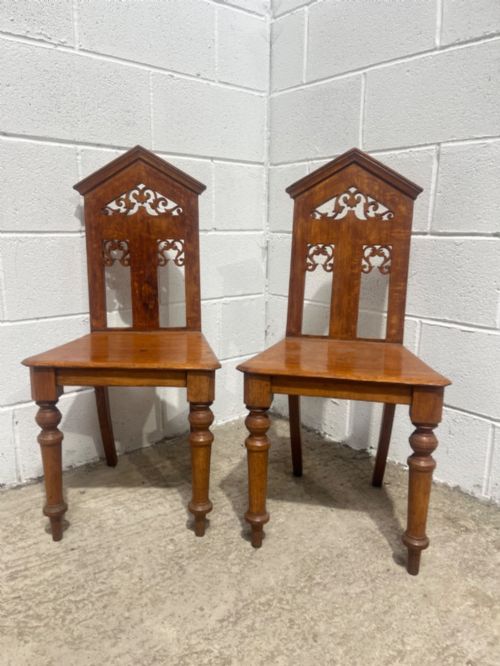
Regional variations appear alongside standard English models, including Scottish and Irish country house pieces that employ local timbers and specific regional carving traditions. Buyers encounter everything from austere Gothic pitch pine benches to sculptural Regency designs.
Materials and Construction
Makers relied heavily on dense hardwoods like mahogany and oak, which resisted heavy daily use in busy entrance spaces. Walnut and pitch pine also appear, providing different grain patterns and lighter or darker natural tones.
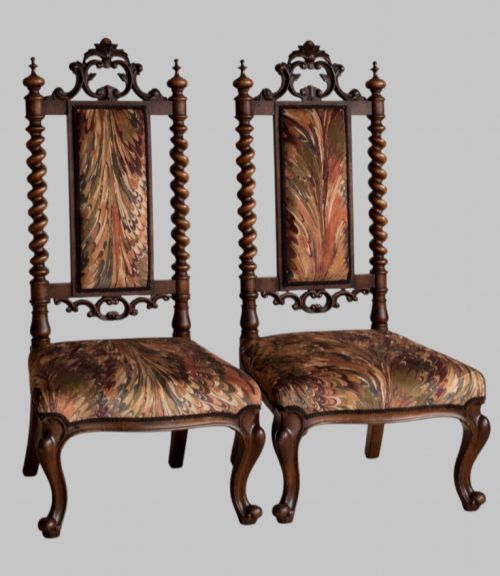
Joinery techniques focus on rigidity and durability, utilising solid timber panels for carved seats and robust stretchers to brace the legs. Elements such as barley twist supports and applied brass details add structural complexity without compromising daily utility.
Listings feature oak, mahogany, walnut, and pitch pine across Georgian, Regency, and Victorian periods.
Craftsmanship and Proportion
Quality separates ordinary utility seating from exceptional cabinetmaking through the depth and crispness of the carved ornament on the backrests. Superior examples feature deeply undercut shell backs, heraldic shields, or sculptural wooden contours that demand considerable skill from the carver.
The selection of timber grain and the integrity of the original joints dictate the overall standard of preservation. Pieces retaining their dense, heavy weight and original surface patination stand apart from those altered by later repairs.
James Shoolbred and Co·Gillows
The Entryway Seating Pair Glossary
- Hall chair
- A rigid wooden seat designed primarily for display and brief use in an entrance hall rather than prolonged comfort. These pieces typically lack upholstery and feature carved solid timber backs.
- Sgabello
- An early form of Renaissance-revival chair featuring a panel-type back and trestle supports, often adopted in Georgian and Victorian revival pieces. This term describes a distinct sculptural silhouette.
- Pelta back
- A backrest shaped after the ancient Greek crescent shield, creating a distinctive curved architectural profile. Cabinetmakers utilised this motif during the nineteenth century.
- Shield back
- A backrest carved in the contour of a heraldic shield, frequently embellished with crests or family insignia. This form was especially popular during the Regency and Victorian periods.
- Barley twist
- A turned wooden support resembling a twisted rope, carved into legs or stretchers. It adds textural interest and structural strength to nineteenth-century chairs.
Entryway Seating Pair: Frequently Asked Questions
What is an entryway seating pair used for?
These matched pairs furnished grand entrance halls and corridors, providing brief seating for callers and visitors waiting to be received.
Beyond practical seating, they served as decorative statements that displayed the household's taste and status through heraldic crests and carved woodwork.
How do I identify a Regency hall chair?
Regency examples often display classical architectural motifs such as sabre legs, brass inlay, and pelta or scroll-carved backrests. The timber is predominantly dark mahogany with a smooth wax finish.
Proportions tend to be clean and linear, reflecting the neoclassical design influences of the early nineteenth century.
Are these chairs comfortable to sit on?
Hall chairs were built with solid wooden seats and upright wooden backs, designed for posture and durability rather than lounging. They were intended for brief moments of rest rather than extended seating.
Living with them involves appreciating their sculptural silhouettes and historical presence in a hallway rather than expecting soft upholstery.
How do I tell oak pieces from mahogany?
Oak exhibits a pronounced, open grain with visible medullary rays and a warm, golden-brown tone that deepens with age. It forms the basis of many robust country house and Gothic revival pieces.
Mahogany presents a tighter, smoother reddish-brown grain that takes a high polish and accommodates sharper, more intricate carved detail.
Where should I place these in a modern home?
Positioning a pair against a hallway wall or in a large landing allows their carved backrests to function as architectural art. They anchor narrow spaces effectively without taking up physical floor depth.
Pairing them with a simple console table creates a traditional entryway arrangement that highlights the timber grain.