


Entryway Pendant Light
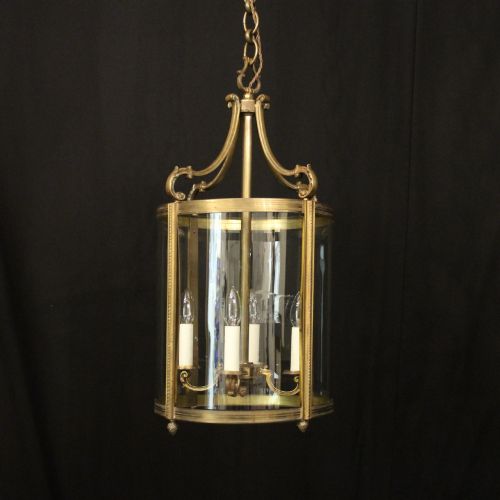
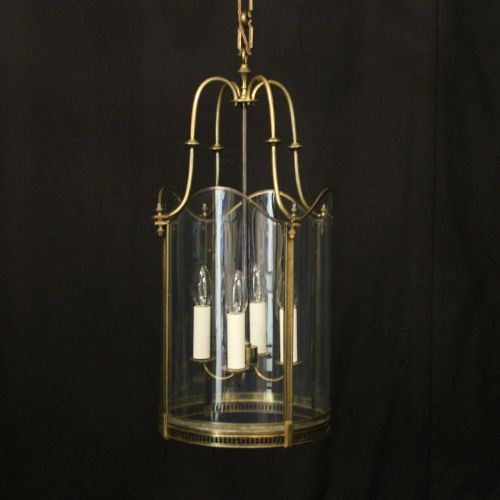
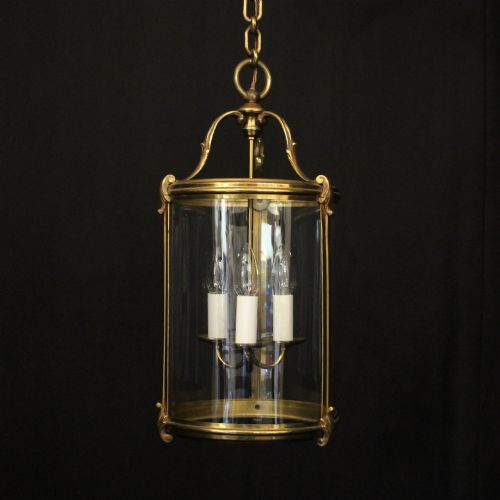
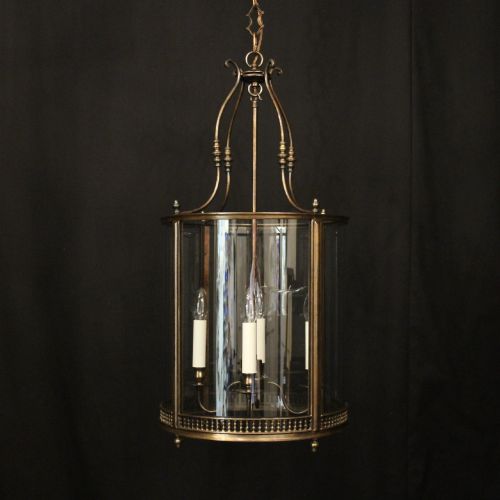
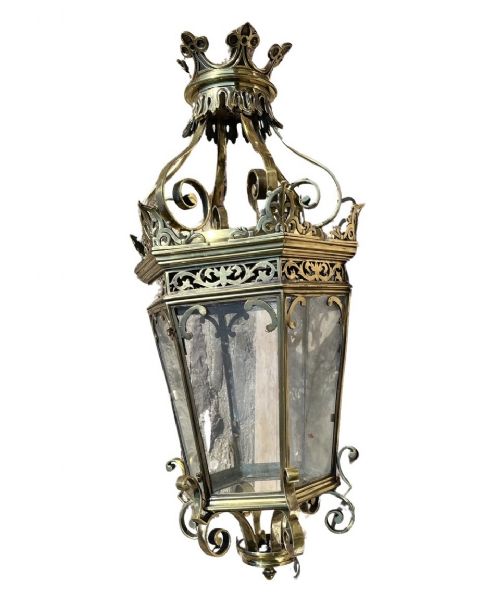
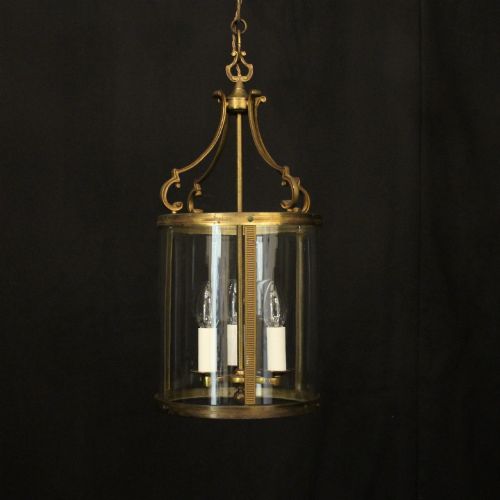
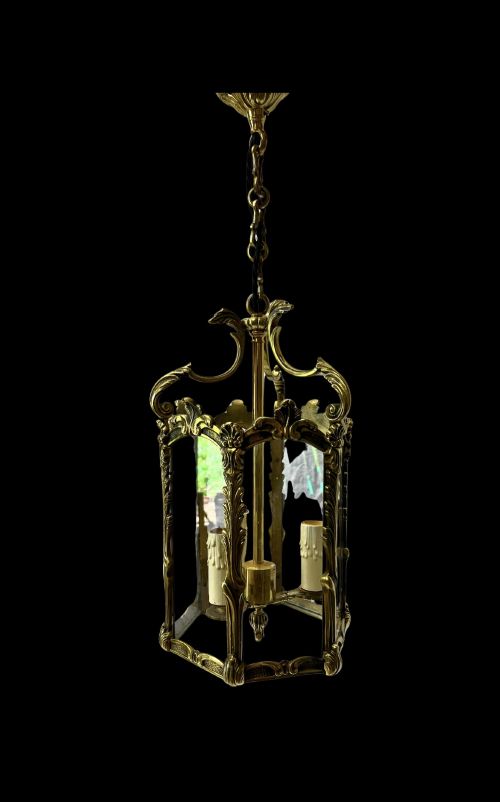
These entryway pendant light designs set a formal tone at a threshold, bringing polished brass and clear glass into a narrow space.
Entryway Pendant Light
An entryway pendant light hangs in a hall or vestibule, illuminating the arrival space from above. The forms seen here include hall lanterns, ceiling lights, and hanging lanterns that drop from a chain or fixed suspension.
Most examples date from the early twentieth century, particularly the nineteen-twenties and thirties, alongside late nineteenth-century pieces. French workshops dominate the selection, favouring convex glass panes and gilded bronze frames.
Makers frequently turned to domestic styles such as French Louis phases, Rococo revival, and Gothic revival, alongside English Regency and Arts and Crafts ironwork. The resulting fixtures range from single-light brass boxes to large multi-bulb glass cylinders.
How they were made
Metals form the structural cage of an entryway pendant light, utilising brass, gilt bronze, wrought iron, and silvered bronze. Workshops cast or forged these frames to support multiple internal lamp holders.
Glass panels enclose the sides, often curved into a convex profile to diffuse the internal glow across the hallway. Metalwork receives gilt or silvered finishes, while doors permit access to the interior bulbs.
French workshops produced the majority of these hall lanterns, utilising convex glass panes and multiple light fittings.
What varies in quality
The weight and finish of the bronze or brass framework distinguish standard production from exceptional work. Thickly gilded or cast metal retains crisp decorative detail on mounts and corners.
Glass selection impacts the visual depth of the fixture, particularly where convex or bevelled panes bend the light. Hand-forged ironwork displays individuality in its scrollwork and fixings compared to simpler commercial frames.
The Entryway Pendant Light Glossary
- Convex glass
- Curved glass panels that bulge outward from the metal frame. This shape disperses light more broadly across an entrance hall.
- Gilt bronze
- Bronze metal treated with a thin layer of gold or gold-coloured alloy. It offers a warm metallic sheen that resists tarnishing over decades.
- Hall lantern
- A ceiling-hung lighting fixture enclosed in glass panels with a metal frame. It protects internal candles or bulbs from draughts in a corridor.
- Wrought iron
- Iron heated and shaped by hand with hammers and anvils. This material provides structural strength for heavier Arts and Crafts and Gothic revival designs.
- Silvered bronze
- Bronze treated with a silver finish to yield a reflective, pale metallic surface. It suits cooler decorative schemes in period interiors.
Entryway Pendant Light: Frequently Asked Questions
How do I hang a hall lantern?
Suspension depends on ceiling height and the weight of the metal frame. Most fixtures hang from a matching chain attached to a ceiling rose.
Ensure the ceiling structure supports the combined weight of bronze and glass before fixing the mount.
Are these lights wired for modern electricity?
Many period lanterns undergo conversion to electricity during their lifespan. Some retain older internal bulb holders while others accept standard modern fittings.
Check the internal wiring configuration with a qualified electrician prior to installation.
How do I clean a glass and brass lantern?
Remove dust with a soft dry cloth and clean glass panels with standard glass cleaner. Avoid harsh chemical polishes on gilt or aged brass surfaces.
Careful maintenance preserves the original patina on the metal framework.
What period do most lanterns belong to?
The majority of these fixtures originate from the early twentieth century, spanning nineteen-ten to nineteen-thirty. Earlier nineteenth-century examples also appear with hand-forged iron or heavy brass frames.
Design motifs often draw inspiration from French Louis XVI and Rococo styles.