








Engraved Wine Goblets
These engraved wine goblets span centuries of glassmaking and silver craft, offering tangible history for your table.
Engraved Wine Goblets
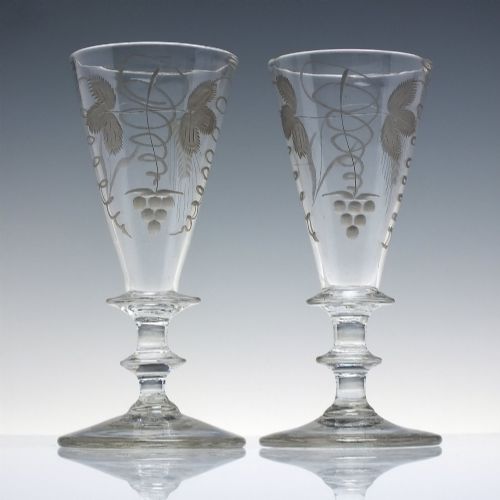
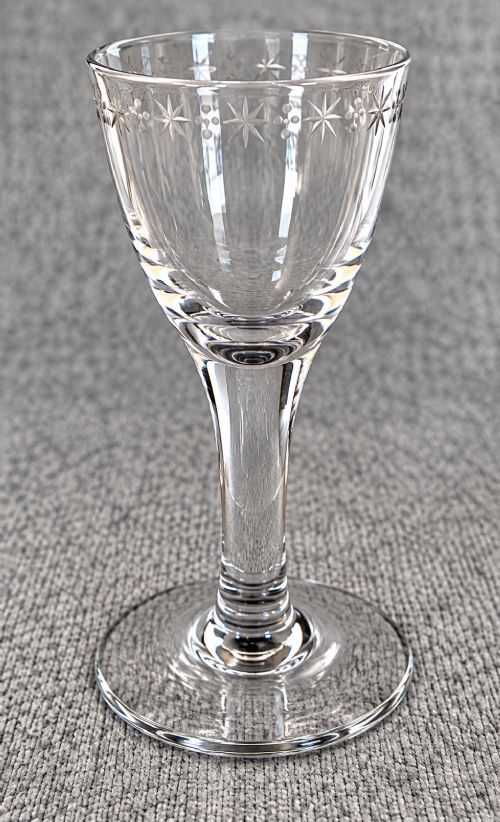
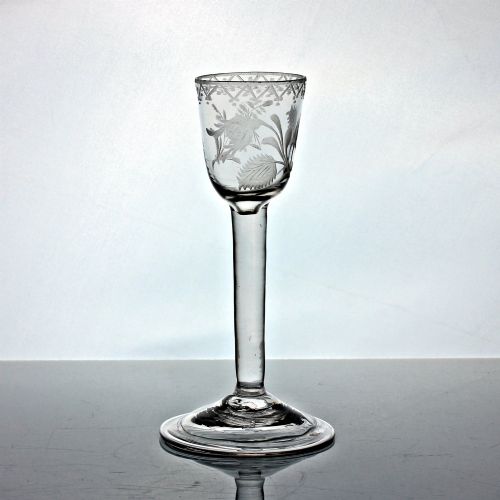
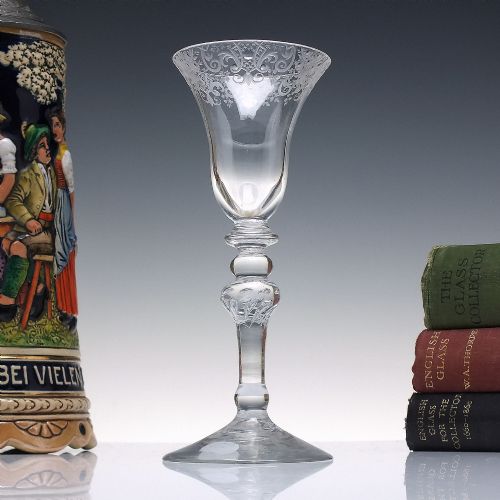
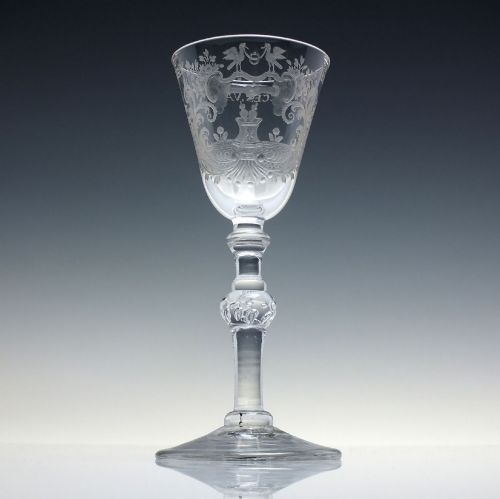
When you search for engraved wine goblets, you encounter drinking vessels ranging from eighteenth-century lead glass dram glasses and rummers to nineteenth-century Bohemian crystal and Victorian sterling silver pieces. The most frequent examples on this page are Georgian glass vessels, often featuring baluster, plain, or twist stems alongside detailed wheel-cut or diamond-point ornamentation.
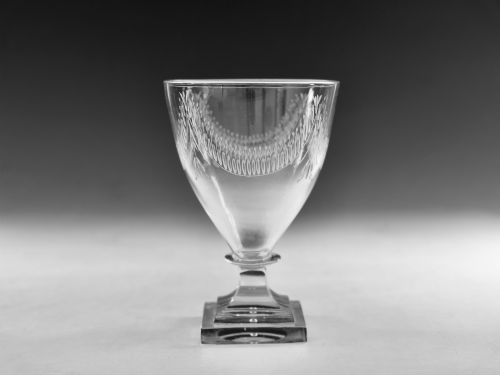
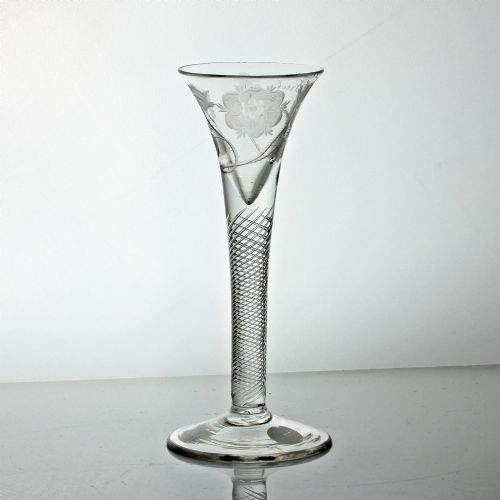
Forms vary from small dram glasses and heavy square-based rummers to tall ceremonial goblets and delicate ale glasses. Many specimens display specific historical motifs, including Jacobite emblems, armorial bearings, or botanical sprays, connecting the glassware directly to the social and political contexts of their production periods.
Materials and technique
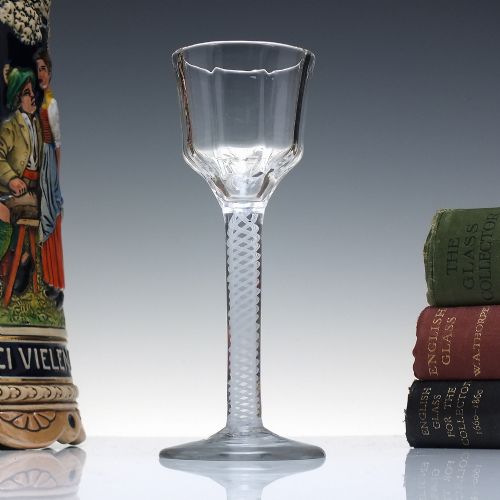
The objects listed utilise clear lead glass, standard glass, and lead crystal alongside sterling silver and silver plate. Glass pieces often exhibit specialised stem formations such as air twists, opaque twists, and facet cutting, whilst metal counterparts employ methods like parcel gilding and repoussé shaping.
Decoration is achieved through surface engraving, intaglio cutting, etching, and occasional gilding. Craftsmen utilised copper wheels or diamond points to cut intricate floral, heraldic, or figural designs directly into the body of the material.
Engraved Wine Goblets Retail Price Guide 2026
Typical asking prices for engraved wine goblets among the pieces listed under this phrase on Sellingantiques today, from the lower quarter to the upper quarter. They describe what is for sale here now, not the wider market.
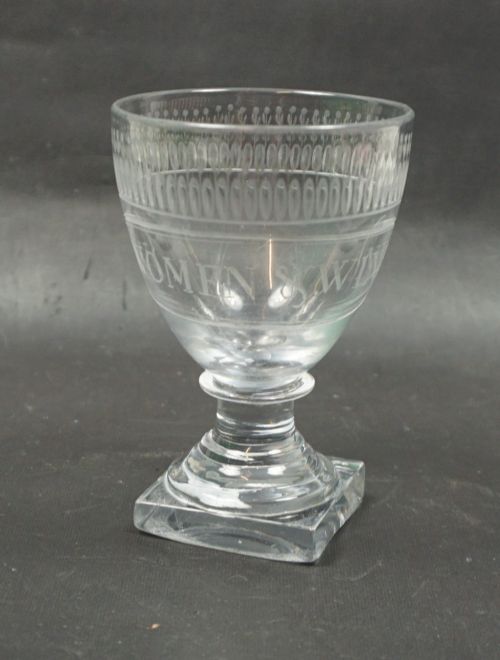
One remarkably honest eighteenth-century rummer bears the unapologetic social instruction engraved straight onto its bowl: Women and Wine.
Assessing quality
Quality rests in the crispness of the wheel engraving, the weight and clarity of the lead crystal or glass, and the sophistication of the stem formation. Early air twists and complex multi-spiral stems demand superior glasshouse skill compared to standard plain stems.
Provenance, historical significance, and maker attribution elevate certain examples significantly. Pieces bearing dated inscriptions, armorials, or documented connections to notable glasshouses like Moser or Richardson stand apart from anonymous production ware.
Moser Bohemian·George Unite·Webb Corbett·Richardson Stourbridge
The Engraved Wine Goblets Glossary
- Rummer
- A large, heavy-bowled drinking glass popular during the Georgian and Victorian eras, frequently set upon a square lemon squeezer foot.
- Air twist
- A stem formation containing internal spiralling threads of air, created by drawing out bubbles trapped within the molten metal during manufacture.
- Ogee bowl
- A bell-shaped drinking vessel profile curving outward at the rim and inward toward the base, commonly seen on eighteenth-century glasses.
- Jacobite glass
- A clandestine drinking vessel engraved with political symbols supporting the exiled Stuart cause, such as the rose, oak leaf, or the fiat motto.
- Intaglio
- A technique where the design is carved into the surface so that the pattern sits below the outer plane of the glass.
- Baluster stem
- A heavy, swelling stem shape reminiscent of architectural balusters, typical of mid-eighteenth-century English drinking vessels.
Engraved Wine Goblets: Frequently Asked Questions
What is a rummer?
A rummer is a substantial drinking glass featuring a wide bowl designed for ales, wines, or punch. These sturdy vessels were staples of eighteenth and nineteenth-century dining.
They frequently sit on heavy square bases, often called lemon squeezer feet, which provided stability on rustic wooden tavern tables and dining boards.
How do I identify Jacobite glass?
Jacobite glasses carry hidden political symbolism intended for secret toasts to the exiled Stuart dynasty. Look for engraved motifs like specific roses, buds, or the Latin word fiat.
Because these symbols carried treasonous weight during the eighteenth century, the engraving was often executed with great subtlety by specialist artisans.
What are twist stems?
Twist stems contain delicate internal glass filaments shaped into spiral patterns during the drawing process. Makers trapped air bubbles or opaque white enamel threads inside the molten metal.
These optical effects create intricate patterns running down the length of the stem, serving as a primary indicator of mid-eighteenth-century English glass manufacture.
How should I display antique goblets?
Antique goblets and silver cups require stable shelving away from direct, harsh sunlight and radical temperature fluctuations. Ensure they rest on level surfaces with adequate spacing between pieces.
For cleaning, hand wash delicate crystal gently in warm water using mild detergent rather than placing them in modern automated dishwashing machines.