



Engraved Sterling Serviette Holder
An engraved sterling serviette holder marks the place at table with bright metal and crisp pattern.

Engraved Sterling Serviette Holder
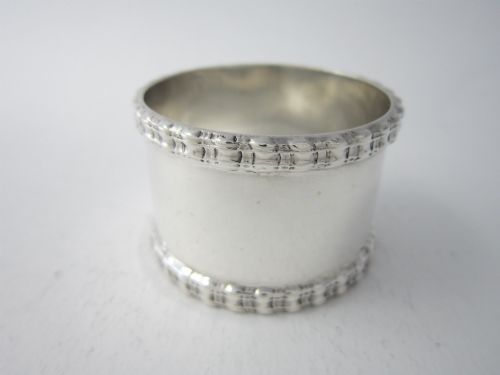
An engraved sterling serviette holder brings personal distinction to the dining table through bright metalwork and patterned surfaces. These pieces take the form of circular napkin rings or spring-tensioned napkin clips designed to secure individual table linen. The selection spans the Victorian, Edwardian, George V, Art Deco, and Mid-Century British eras.
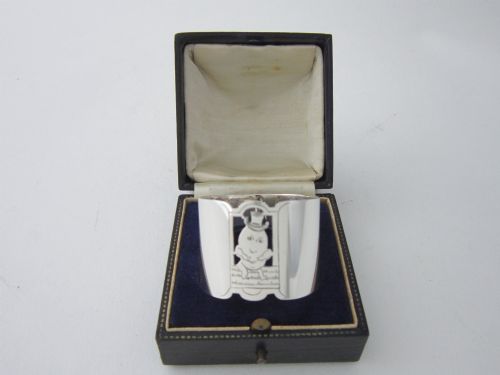
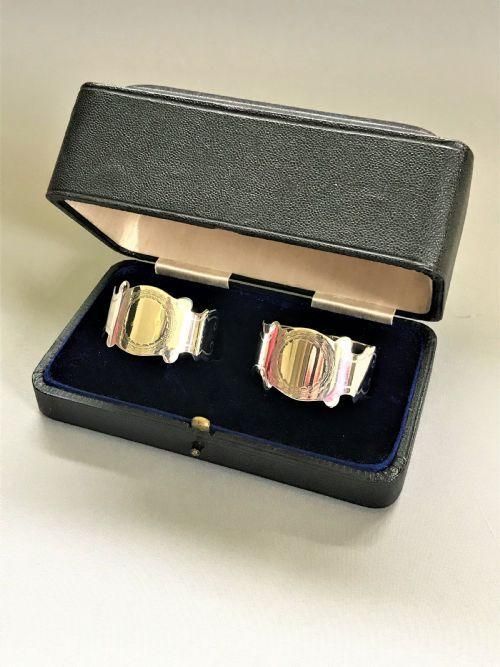
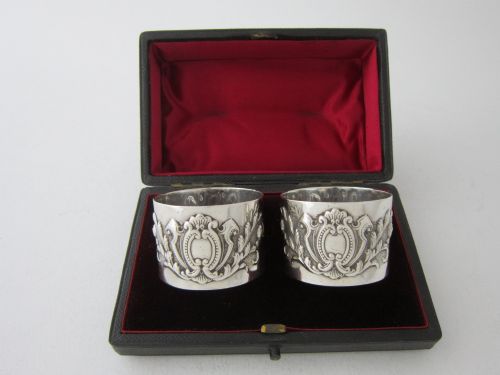
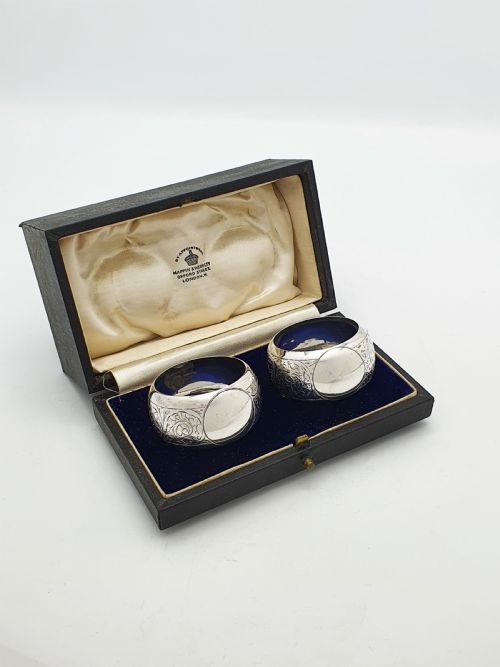
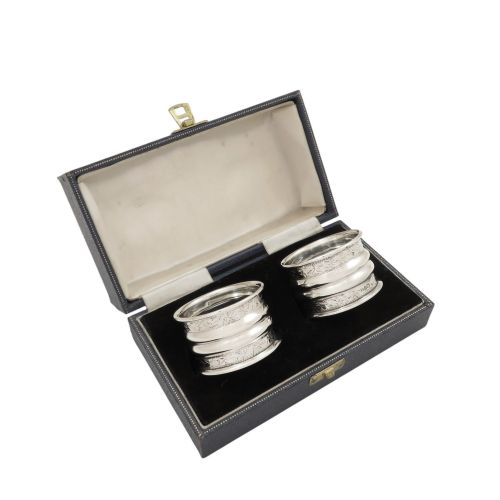
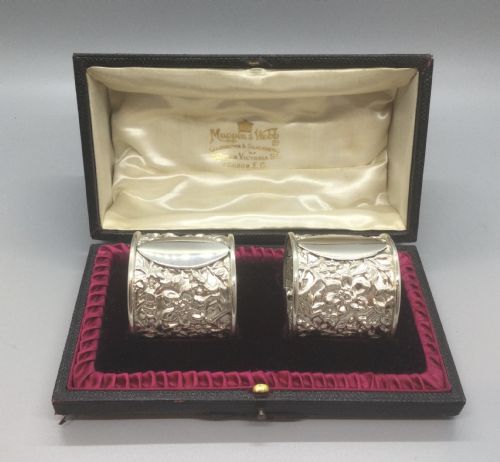
Buyers encounter single examples alongside matched pairs presented in fitted cases lined with silk, velvet, or leatherette. Designs range from plain cylindrical bands to novelty shapes, shield-shaped clips, and geometric aesthetic movements. Each piece records the hallmarks of British assay offices to confirm its metallic purity.
How They Were Made
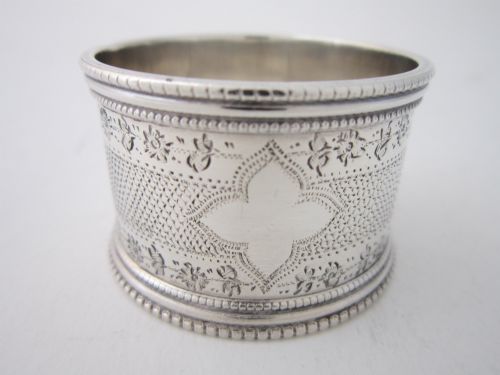
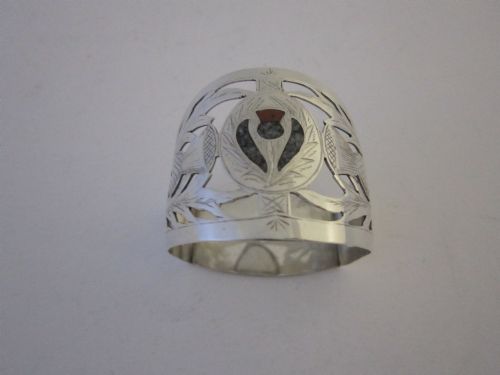
Makers shaped solid sterling silver sheet into cylindrical bands or formed spring clips by hand, soldering the seams securely. Artisans applied decoration through hand engraving, piercing, and chasing to create intricate surface patterns.
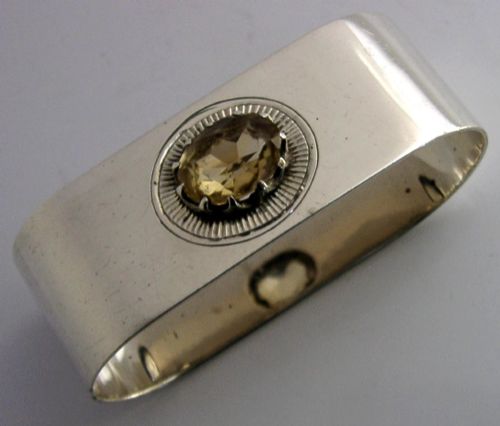
Certain examples incorporate natural gemstones such as citrine and agate set directly into the silver framework. Fitted presentation boxes utilise wood covered in leatherette and lined with plush velvet or silk fabrics.
The listings span the Victorian, Edwardian, George V, and Art Deco periods, featuring solid sterling silver alongside fitted cases lined in silk.
What Varies in Quality
The depth and clarity of the hand engraving distinguish finer pieces from simpler commercial output. Crisp, well-defined lines in foliate or geometric motifs retain their sharpness despite decades of handling.
Substantial gauge metal provides rigid durability, preventing distortion of the circular band or the tension of the clip. Complete original presentation cases lined in silk or velvet add considerable merit to paired sets.
Mappin & Webb·Henry Wilkinson
The Engraved Sterling Serviette Holder Glossary
- Sterling silver
- A silver alloy containing 92.5 percent pure silver and 7.5 percent other metals, usually copper, chosen for strength. This standard is denoted by the lion passant hallmark on British silver.
- Serviette holder
- A domestic table accessory used to identify or secure cloth napkins during meals. These items appear as rigid bands or spring clips.
- Hallmark
- A series of official marks stamped on precious metals in the United Kingdom to indicate standard of purity, assay office, and year of manufacture.
- Chasing
- A metalworking technique where the artisan hammers patterns into the front surface of the silver to create low relief designs without removing metal.
- Aesthetic design
- A nineteenth-century artistic style prioritising visual beauty through stylised motifs, asymmetry, and Japanese influences.
Engraved Sterling Serviette Holder: Frequently Asked Questions
How do I date a silver napkin ring?
Dating relies upon the stamped hallmarks found on the metal surface, which indicate the assay office, standard, and specific year code. Stylistic clues such as Victorian scrollwork or Art Deco geometry also point to the correct period.
Matching cases and retailer marks provide further historical context for the manufacture date.
Were these items sold in pairs?
Many napkin rings were produced and retailed as matched pairs or larger sets housed within fitted presentation boxes. These boxes are frequently lined with silk or velvet to protect the polished metal.
Single pieces also occur frequently, representing losses from larger original dining sets or individual commissions.
How do I care for antique silver?
Regular gentle cleaning with a soft cloth removes tarnishing without wearing away the delicate hand-engraved details. Storing pieces in dry conditions prevents accelerated oxidation of the metal surface.
Avoiding abrasive chemical dips preserves the original patina built up over generations of use.