


Engraved Sterling Napkin Rings
Engraved sterling napkin rings bring period silver to the table, offering tactile weight and personalised ornament from the Victorian era onwards.
Engraved Sterling Napkin Rings
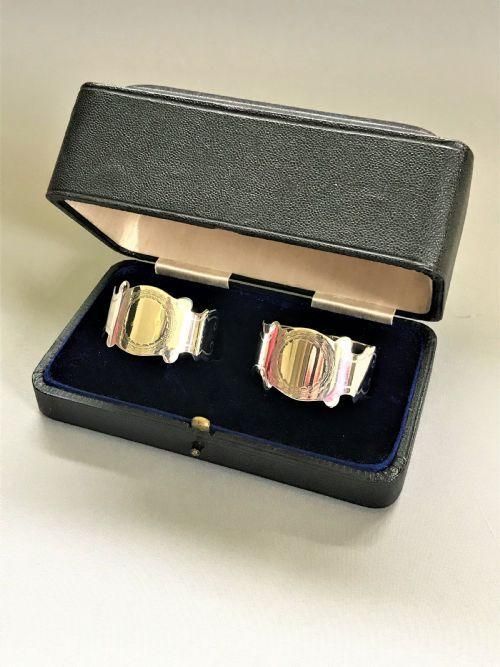
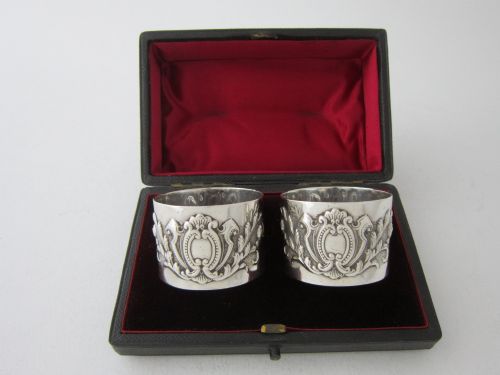
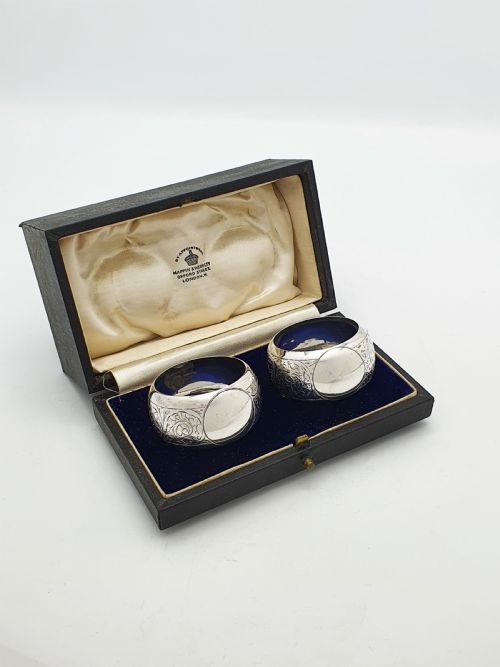
When you search for engraved sterling napkin rings, you are looking at small personal table silver spanning the late nineteenth century through to the mid-twentieth century. The pieces recorded here include single rings, matched pairs, and fitted christening sets, often surviving in their original presentation cases lined with velvet, silk, or leatherette.
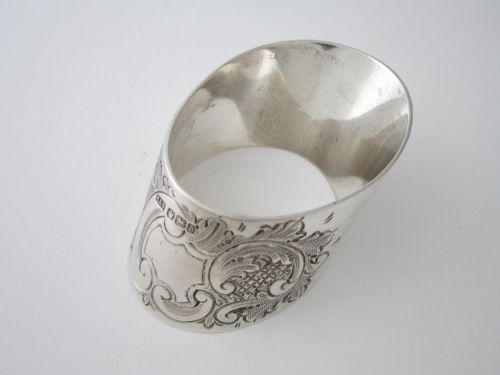
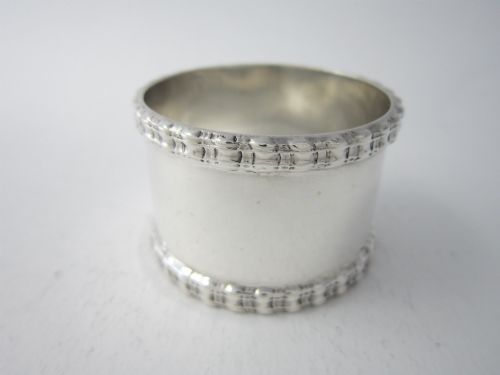
The version you are most likely to meet on this page is a Victorian or Edwardian circular band, though George V, Art Deco, and mid-century British examples also appear regularly. Forms range from plain cylinders and belt motifs to heavy asymmetrical designs decorated with fern engraving.
Originating predominantly from British workshops and assay offices, these napkin rings reflect the domestic dining habits of successive reigns. They function as both decorative table accessories and durable keepsakes intended for daily family use.
How they were made
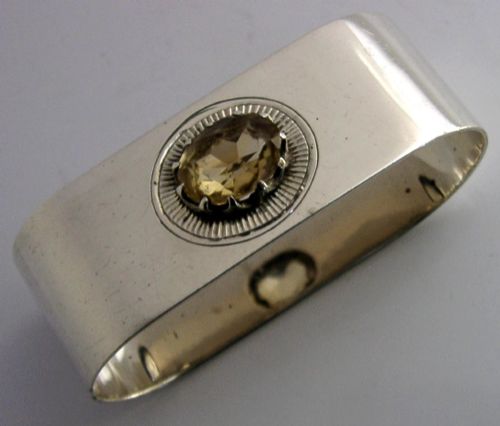
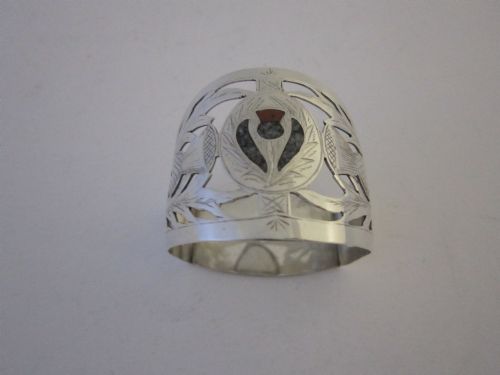
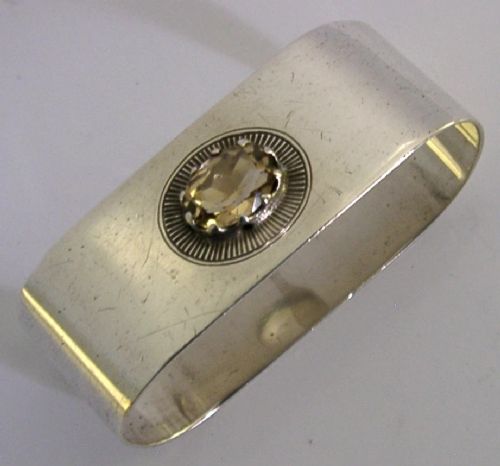
The primary material across all entries is solid sterling silver, worked into robust bands designed to withstand regular handling and polishing. Many pieces incorporate decorative gemstones such as citrine and agate, set directly into the silver body or mounted as central motifs.
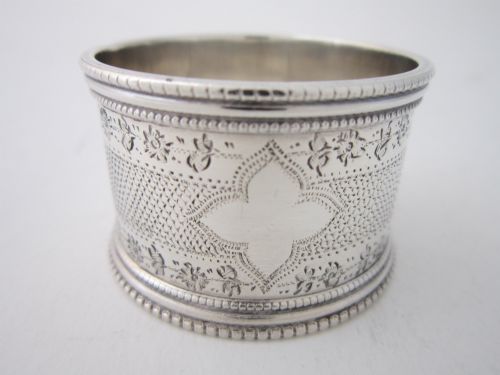
Surface ornament relies heavily on hand engraving, utilising techniques like fern patterns, aesthetic movement motifs, and monogramming to create texture against the polished silver. Structural weight varies from standard domestic bands to heavy gauges intended for formal dining.
Materials recorded across the inventory include sterling silver, citrine, agate, velvet, silk, leather, and leatherette.
What varies in quality
Quality in these rings rests upon the thickness of the silver gauge and the depth of the hand engraving. Heavier pieces offer greater tactile presence and resist denting during everyday service.
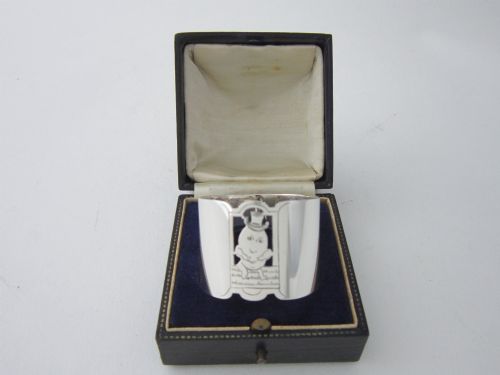
The presence of original fitted boxes lined in silk or leatherette elevates an item, as does the survival of matched pairs rather than assembled singles. Distinctive design elements, such as unusual aesthetic movement patterns or inset gemstones like citrine and agate, also separate standard examples from finer works.
Mappin and Webb·Henry Wilkinson
The Engraved Sterling Napkin Rings Glossary
- Sterling silver
- A silver alloy containing 92.5 percent pure silver and 7.5 percent other metals, usually copper, chosen for durability in tableware.
- Assay office
- An official body that tests the purity of precious metals and stamps items with hallmarks, confirming the standard of the silver.
- Aesthetic movement
- A late nineteenth-century design style focusing on visual beauty rather than narrative or moral function, visible in asymmetrical and naturalistic engraving.
- Christening set
- A matched grouping, often comprising a napkin ring, fork, and spoon, presented as a traditional gift for a newborn child.
- Belt motif
- A decorative band design shaped to resemble a buckled belt, popular on Victorian silver rings to symbolise fidelity or binding ties.
Engraved Sterling Napkin Rings: Frequently Asked Questions
Were these rings used every day?
Many households utilised silver napkin rings daily to identify each family member's linen napkin between weekly washes.
Heavier examples were built specifically to endure this constant handling, while boxed pairs were often kept for special dining occasions or given as christening gifts.
How can I tell a Victorian ring from an Edwardian one?
Victorian examples frequently display deep fern engraving, belt motifs, or heavier aesthetic movement designs reflecting nineteenth-century taste.
Edwardian pieces often shift towards cleaner geometric lines, lighter gauges, or simpler borders, matching the refined domestic styling of the early twentieth century.
Why do some napkin rings come in boxes?
Fitted presentation cases lined in velvet, silk, or leatherette indicate that the pieces were intended as gifts for weddings, birthdays, or christenings.
Original boxes help preserve the condition of the silver by protecting the surface from tarnish and physical knocks when not in use on the dining table.