





Late Victorian Silver Rings
Late victorian silver rings encompass small domestic table items and personal cases produced during the final decades of the nineteenth century.
Late Victorian Silver Rings
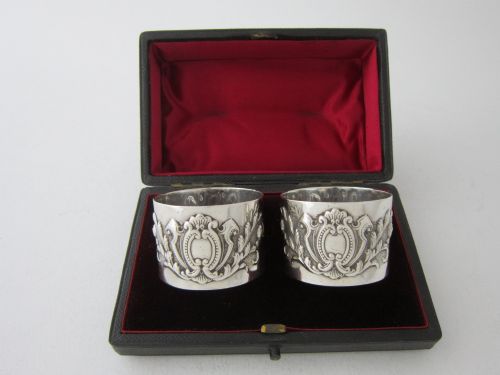
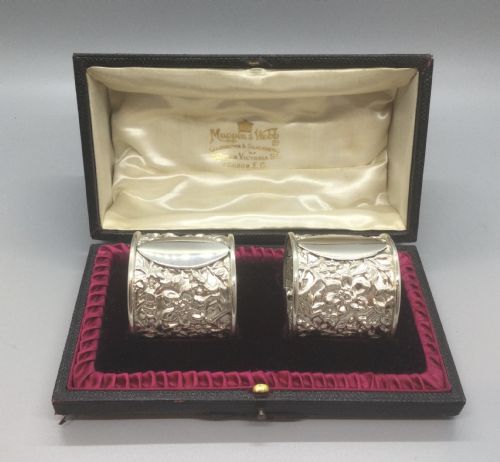
Late victorian silver rings primarily denote table napkin rings shaped in single pieces or matching sets dating from the eighteen eighties and eighteen nineties. These items frequently appear as individual cylindrical bands, paired pieces, or extensive boxed collections of six or eight.
The evidence records silver rings appearing alongside novel variations such as belt and buckle motifs or fern engravings. Similar nineteenth century sterling silver and silver plated items include trinket boxes, vesta cases, and christening sets.
Buyers encounter both solid sterling silver pieces bearing city hallmarks and silver plated versions housed in fitted presentation boxes. These domestic accessories reflect the formal dining and personal habits of the late nineteenth century.
How they were made
Makers utilised sterling silver and silver plating applied to base metal foundations to form these napkin rings and small containers. Many examples received decorative hand engraving such as fern patterns or structural shaping like belt and buckle designs.
Fitted presentation boxes accompanying the rings incorporated interior linings of velvet, silk, and leatherette enclosed within wooden or card structures. Metal components often required stamping, soldering, and finishing within workshops in cities like London and Chester.
Several Victorian napkin rings were cleverly shaped to resemble miniature belts and buckles, fastening the table with sartorial wit.
What varies in quality
Quality differences emerge through the crispness of engraved decoration and the substantial weight of the metal utilised in each piece. Superior examples retain clear hallmarks, sharp ornamentation, and original matching presentation containers lined with intact velvet or silk.
Sets marked with individual numbers or monograms demonstrate a higher degree of original factory planning compared to mismatched or plain singular rings. The presence of a sturdy, fitted case lined with leatherette or silk alters the preservation status of the set.
Winterhalder & Hofmeier
The Late Victorian Silver Rings Glossary
- Sterling silver
- A silver alloy containing 925 parts of pure silver per thousand parts total mass, standard for British solid silver items. This metal composition ensures durability in domestic tableware.
- Silver plate
- A layer of silver fused to a base metal core, commonly utilised for nineteenth century boxed table sets. This technique offered the appearance of solid silver at a lower production cost.
- Hallmark
- An official stamp applied by an assay office indicating the purity of the metal, the place of testing, and the date of manufacture. London and Chester are prominent assay locations seen in this period.
- Vesta case
- A small pocket container designed to hold matches, sharing materials and manufacturing methods with contemporary small silver items. These pocket accessories frequently feature engraved surface patterns.
- Napkin ring
- A small ring used to designate individual table napkins between uses during the late nineteenth century. These items were produced in single examples, pairs, or matched sets.
Late Victorian Silver Rings: Frequently Asked Questions
What are late victorian silver rings?
These items are nineteenth century napkin rings fashioned from sterling silver or silver plate, often found in matched sets.
They reflect the dining customs of the period through engraved ornamentation and fitted presentation packaging.
How were silver napkin rings used?
Families utilised these rings at the dining table to identify and store individual table napkins between meals.
Matched sets allowed each household member to retain a numbered or monogrammed ring across multiple uses.
What materials accompany these rings?
Many sets survive within original fitted presentation boxes lined with velvet, silk, and leatherette over rigid structures.
The rings themselves consist of solid sterling silver or silver plate applied over base metal.
How do you date late victorian pieces?
Official hallmarks stamped onto sterling silver items indicate the specific assay office and year of testing.
Stylistic elements like belt motifs and fern engravings further align the objects with the final decades of the nineteenth century.