

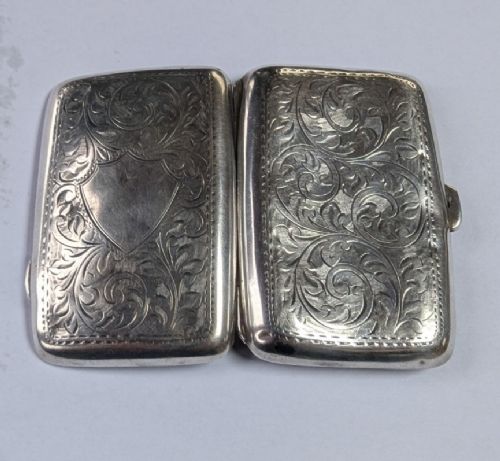


Engraved Sterling Card Holder
An engraved sterling card holder is a pocket companion for social calls, and these silver cases survive from the Victorian, Edwardian, and later periods.
Engraved Sterling Card Holder
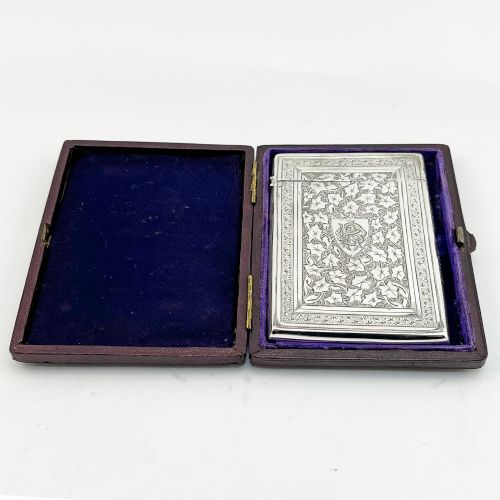
When you search for an engraved sterling card holder, you encounter small personal containers designed to hold calling cards, cigarettes, or small documents. The pieces on this page span the Victorian and Edwardian eras, reaching back towards Georgian examples and forward into Art Deco designs.
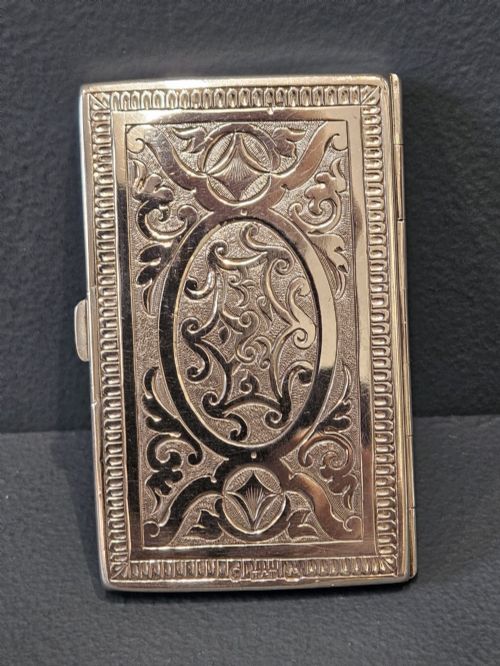
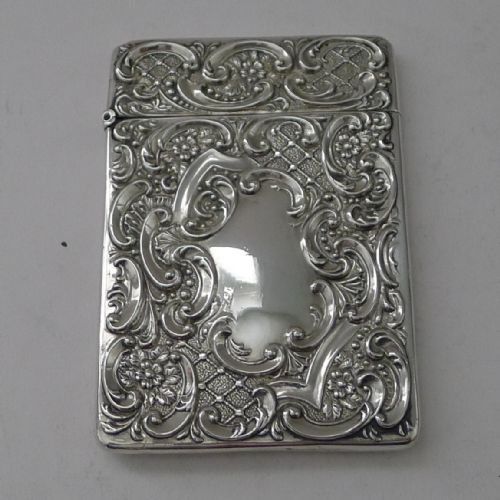
Card cases, calling card cases, and cigarette cases form the majority of the objects seen here, alongside specialised boxes and purses. Many take the form of flat rectangular containers, while others incorporate novelty mechanisms or curved profiles for pocket wear.
How they were made
Makers shaped these objects primarily from sterling silver and solid silver, occasionally applying silver gilt linings or pairing the metal with Connemara marble, glass, silk, and paper. Silversmiths formed the body panels through pressing, casting, and hand-beating.
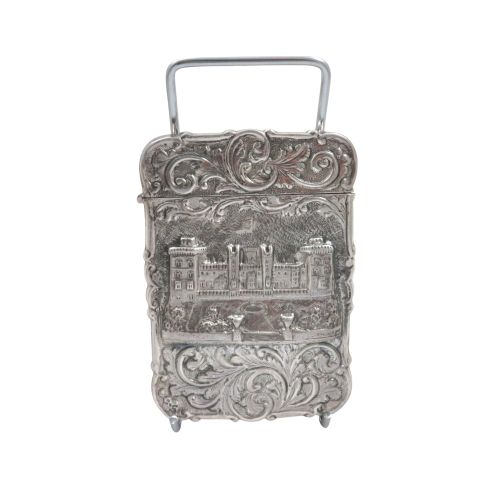
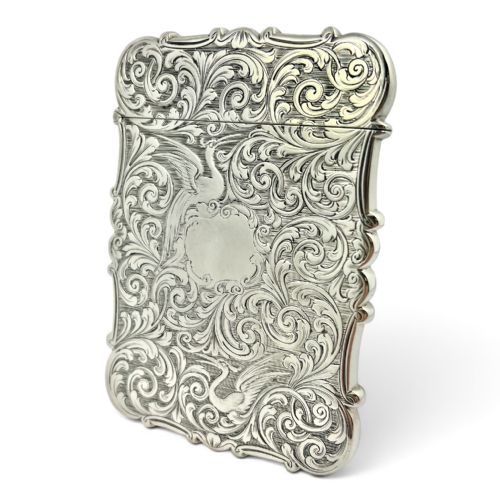
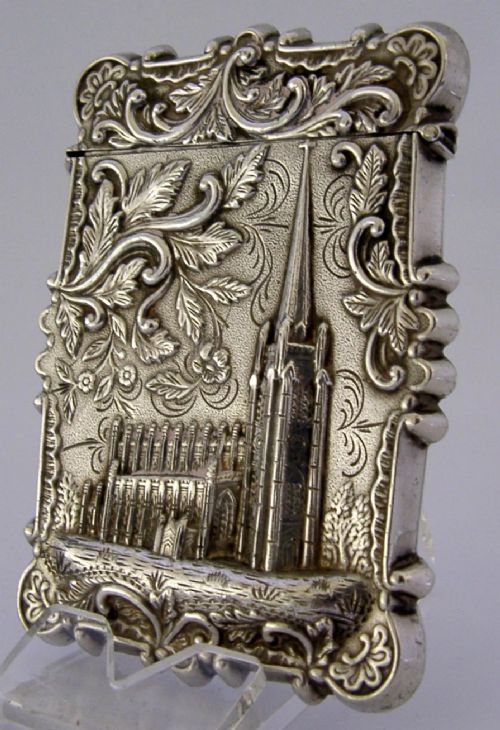
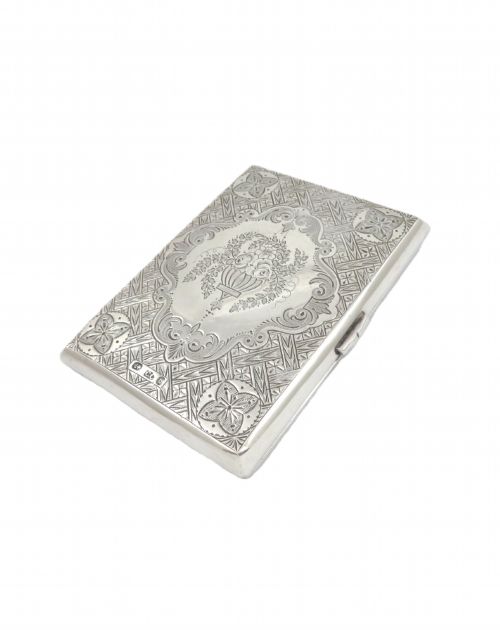
Decoration relied heavily on hand engraving, engine turning, and high-relief architectural embossing known as castle top work. Hinges, spring clips, and internal compartments were soldered and fitted by hand.
Engraved Sterling Card Holder Retail Price Guide 2026
Typical asking prices for engraved sterling card holder among the pieces listed under this phrase on Sellingantiques today, from the lower quarter to the upper quarter. They describe what is for sale here now, not the wider market.
Some Victorian cases doubled as secret diaries, hiding tiny ivory writing tablets inside for forgetting social blunders on the go.
What varies in quality
The distinction between standard production and exceptional work rests upon the crispness of the hand engraving and the complexity of the motifs, such as detailed architectural renderings of landmarks like Windsor Castle or St Paul's Cathedral. Maker attribution also influences the standing of a piece, with recognised workshops commanding greater attention.
Structural integrity, including the flush closure of lids and the precise action of hinges or spring mechanisms, marks the difference in manufacturing standard. The presence of internal silk or gilt linings adds further refinement to the surviving object.
Nathaniel Mills·George Unite·Wright and Davies·Edward Edwards·Foxall and Co
The Engraved Sterling Card Holder Glossary
- Castle top
- A style of card case featuring high-relief depictions of famous buildings or castles on the cover. These architectural scenes are typically chased and engraved in silver.
- Engine turned
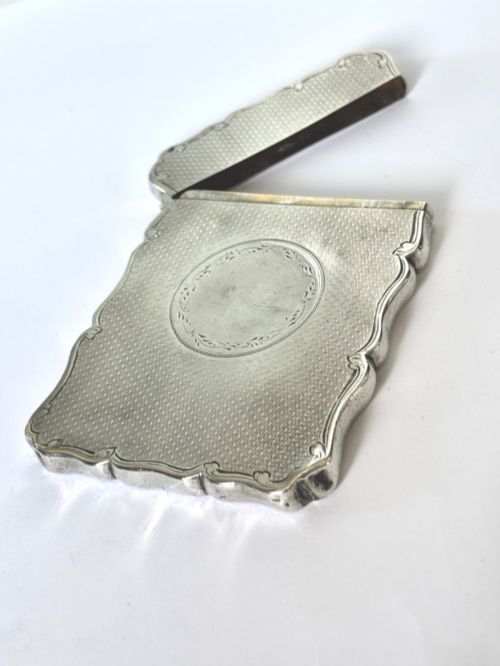
- A geometric pattern of fine lines or notches mechanically engraved onto the metal surface using a lathe. This technique provides texture and catches the light.
- Visiting card case
- A slim pocket case designed to hold paper calling cards used during formal social visits. They protect delicate paper from bending in transit.
- Silver gilt
- Silver that has been coated with a thin layer of gold on the interior or exterior. This treatment protects the silver from tarnishing in specific areas.
- Aide memoire
- A small pocket notebook or case containing ivory leaves or paper panels for writing brief notes. They frequently include an attached pencil and card storage.
Engraved Sterling Card Holder: Frequently Asked Questions
What is a castle top card case?
A castle top card case displays a detailed architectural embossing of a specific landmark, such as Windsor Castle or St Paul's Cathedral, on the exterior lid. These scenes are worked in high relief against a textured background.
Such pieces represent some of the most sought-after examples of Victorian silversmithing, often associated with named makers like Nathaniel Mills.
How were calling card cases used?
Victorian and Edwardian gentlemen and ladies carried calling cards to present when visiting acquaintances or leaving formal notes. The cases kept these thin paper cards clean and uncreased in pockets or reticules.
As social habits shifted toward less formal engagements, many of these same silver cases were adapted to hold cigarettes or small personal items.
How do I date an antique silver card case?
Dating relies heavily upon the hallmarks stamped into the silver, which record the assay office, standard mark, and date letter for the year of manufacture. Stylistic clues like Victorian scrollwork or Art Deco geometry also narrow down the period.
Maker marks further help establish the active working years of the silversmith who produced the object.
Are these cases made of solid silver?
The listings include sterling silver, solid silver, and silver gilt items alongside pieces incorporating materials like Connemara marble and glass. Hallmarks on the metal confirm the standard of the silver used.
Internal elements may feature silk, paper, or gilt washes while the exterior remains solid silver.