


Engraved Silver Serving Platter
An engraved silver serving platter handles formal hospitality with weight and surface detail, bringing Victorian and Edwardian dining tables to life.
Engraved Silver Serving Platter
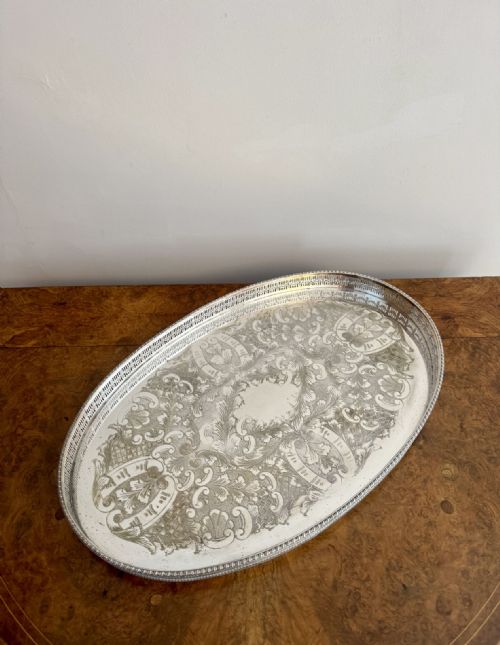
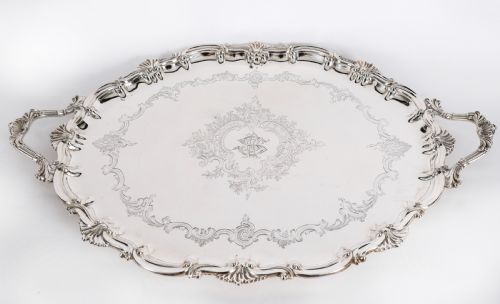
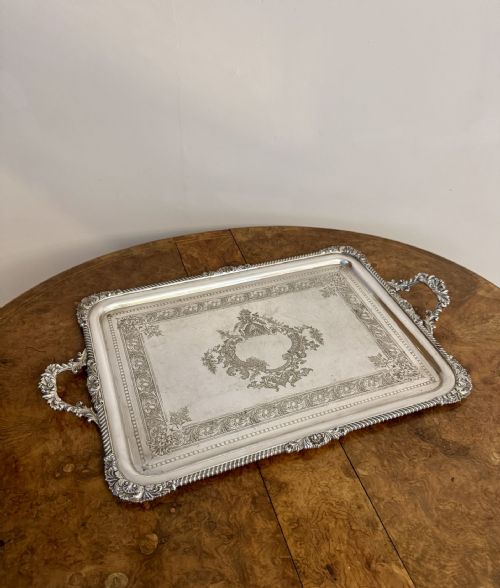
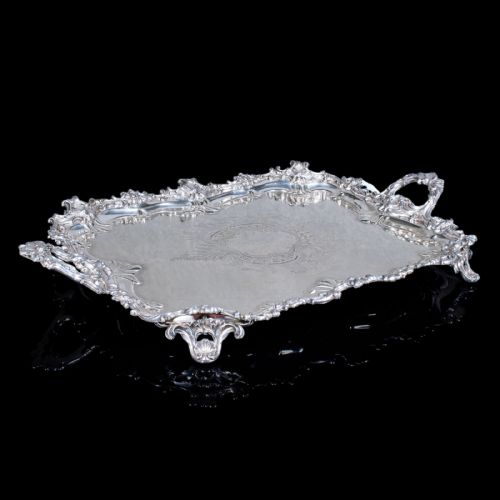
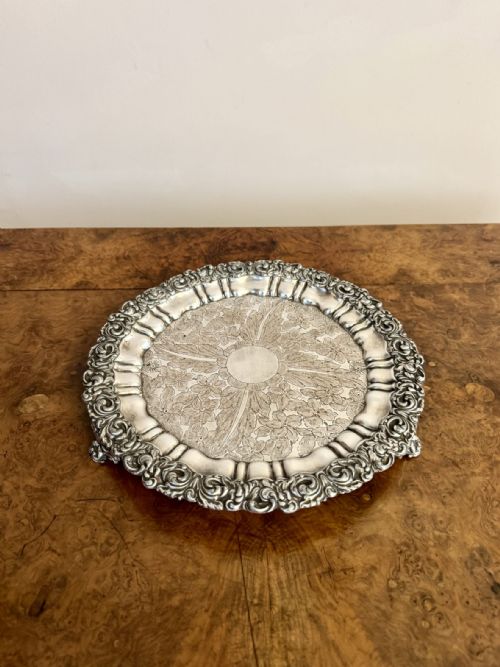
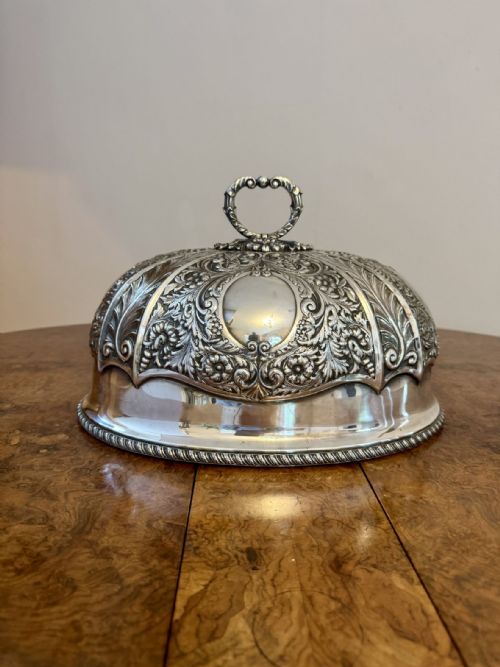
An engraved silver serving platter encompasses heavy tea trays, presentation pieces, meat domes, and round salvers dating from the eighteenth century through the interwar period. The selection on this page relies heavily on Victorian and Edwardian examples alongside earlier Georgian items.
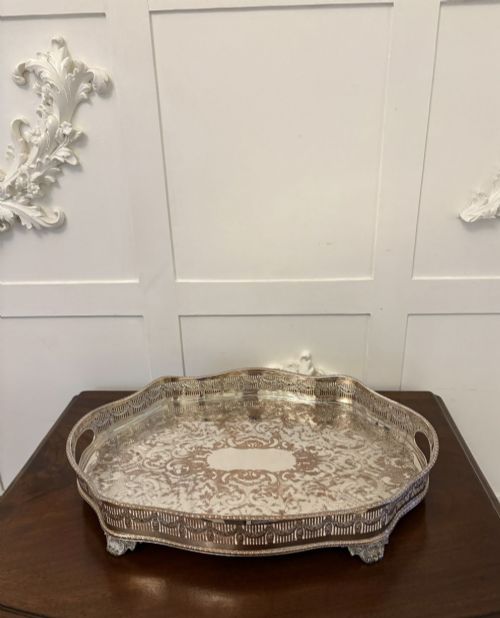
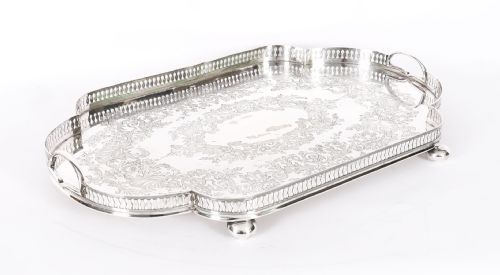
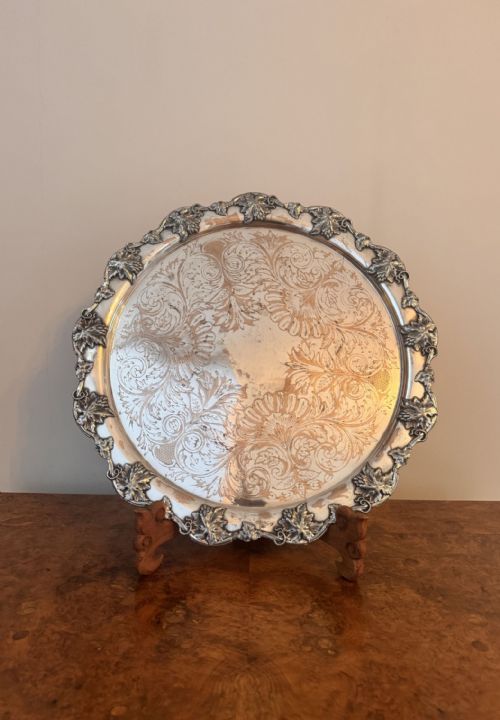
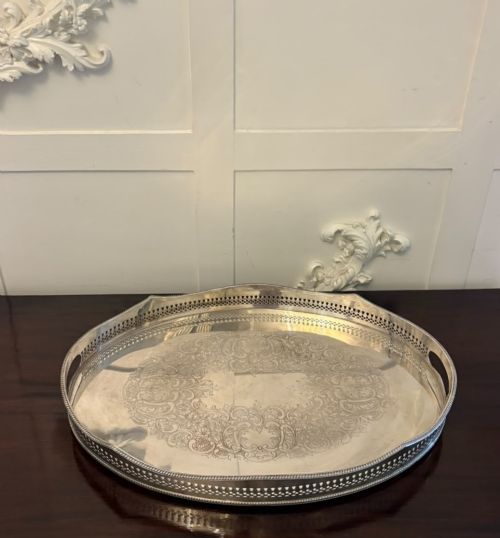
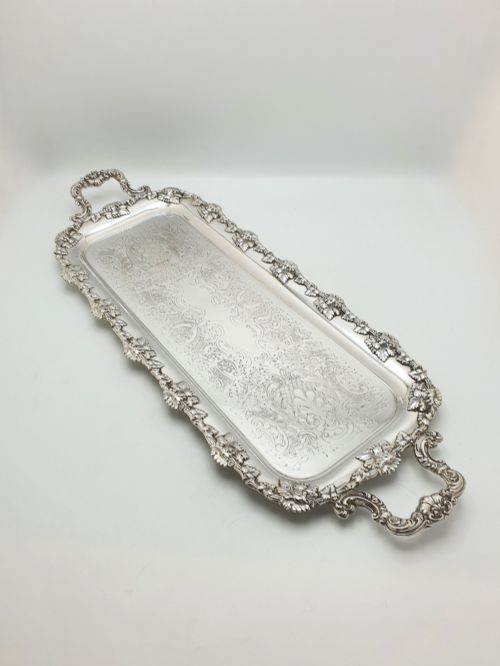
Makers shaped these utilitarian serving dishes in circular, oval, and gallery formats designed to support formal afternoon tea or heavy dinner service. Engraved scrollwork, floral motifs, and grapevine borders typically cover the central well.
Origin points span English silversmithing hubs such as Sheffield alongside Scottish, Irish, Indian Colonial, and continental workshops. Buyers will frequently encounter silver-plated and Old Sheffield Plate alternatives sitting alongside solid sterling silver editions.
Materials and Techniques
Silversmiths utilised solid sterling silver for high-status commissions, whilst larger presentation trays and meat domes employed copper fusion methods known as Old Sheffield Plate or later electroplating techniques over nickel silver and base metal.
The characteristic surface patterns on an engraved silver serving platter derived from hand chasing and engraving, where artisans cut fine lines into the metal surface to form floral, geometric, or foliate scrollwork.
Edges often featured applied cast borders, gallery rails, or embossed rims soldered onto the body of the tray to provide structural rigidity and decorative finish.
Listings span multiple centuries, ranging from eighteenth-century Georgian salvers to twentieth-century Art Deco cocktail trays.
Design and Execution
The depth and precision of the hand engraving dictate the visual impact of the piece, separating crisp artisan work from shallow mechanical scoring.
Weight distribution and metal thickness determine longevity, particularly on large tea and presentation trays that needed to support heavy porcelain or silver teapots without flexing.
The integrity of applied borders and the preservation of the underlying copper or base metal beneath worn silver plating mark the distinction between high-grade workshops and standard commercial production.
James Deakin·Mappin & Webb·Thomas Bradbury & Sons·John Harrison·Henry Wilkinson·Matthew Boulton·Robert Breading·Harrison Bros·Padley Parkin·Christofle·J Dixon & Sons·Roberts & Dore
The Engraved Silver Serving Platter Glossary
- Old Sheffield Plate
- A composite material made by fusing a sheet of silver to a thicker copper core before rolling them together into sheets for fabrication.
- EPNS
- Electroplated nickel silver, a durable base alloy introduced in the nineteenth century to simulate solid silver at a lower production cost.
- Gallery Tray
- A serving tray fitted with a pierced upright metal gallery or rail around its perimeter to prevent items from sliding off.
- Salver
- A flat serving vessel, usually circular and raised on feet, historically used for presenting glasses or documents.
- Chasing
- A metalworking technique where the artisan pushes the metal from the front using hammers and punches to create raised surface decoration without removing material.
Engraved Silver Serving Platter: Frequently Asked Questions
What is Old Sheffield Plate?
Old Sheffield Plate is an early composite material created by fusing a thin layer of silver onto a thick copper block, then rolling the combined metals into workable sheets.
When older items experience heavy polishing over generations, the underlying copper occasionally shows through along raised edges.
Can I use these trays for food?
Most antique serving platters and meat domes were designed for domestic dining use, making them suitable for serving dry foods or modern dining service.
Ensure that silver-plated items with compromised plating exposing base metals are used strictly for display or with protective barriers.
How do I date a silver tray?
Sterling silver items usually carry official hallmarked date letters and town marks that pinpoint the exact year of manufacture.
Silver-plated pieces rely on maker marks, style indicators such as Victorian aesthetic movement borders, and manufacturing techniques to establish a decade.