


Engraved Silver Mustard
An engraved silver mustard pot sits on the table as a small silver vessel for condiments, offering a touch of period elegance to dining.
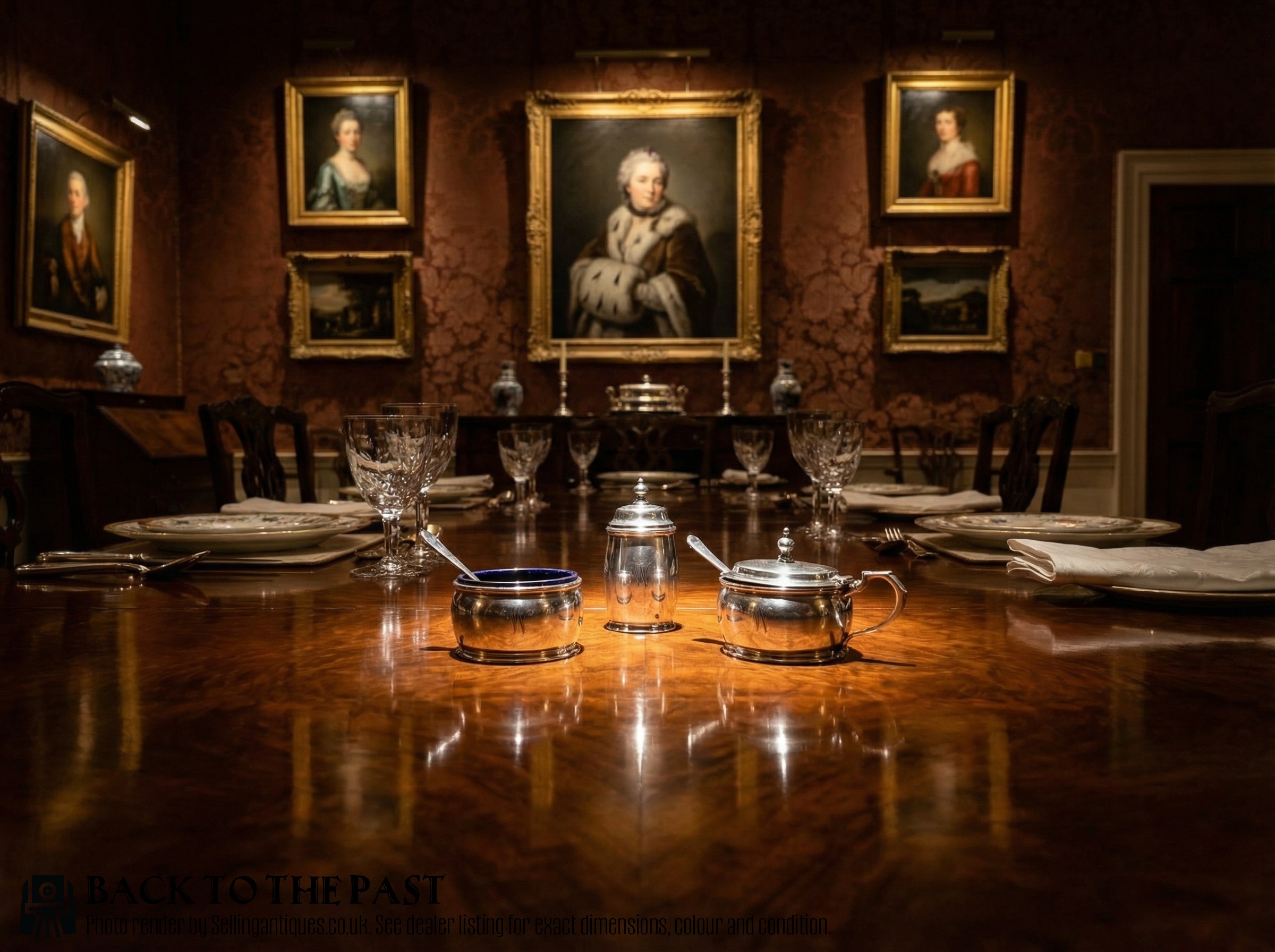
Engraved Silver Mustard
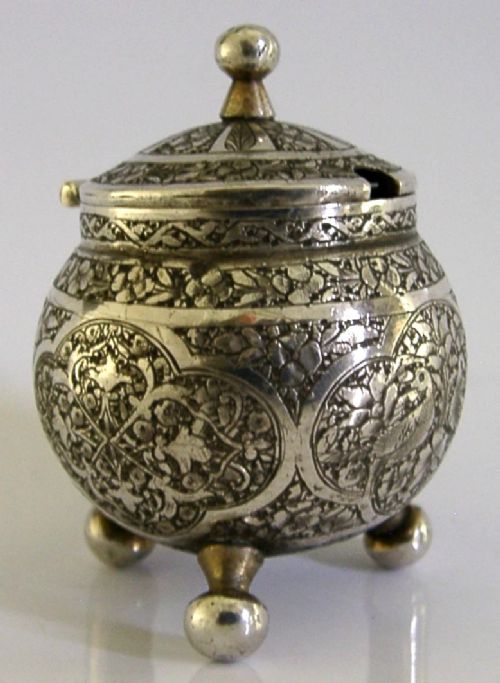
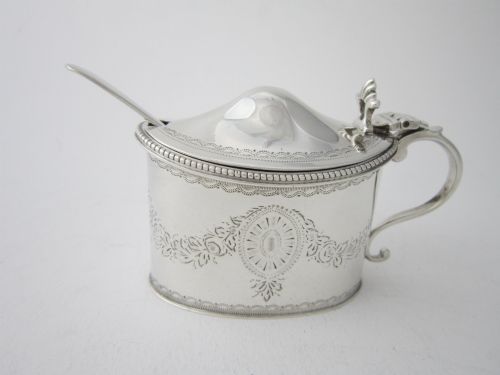
These pieces are small tableware vessels designed to hold mustard on the dining table, taking forms such as drum mustard pots, condiment pots, and oval or octagonal pots. When searching for engraved silver mustard, a buyer encounters items originating from the Georgian, Victorian, and George V periods, alongside Ottoman pieces.
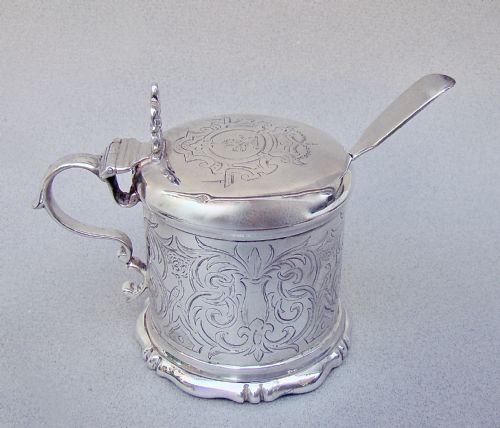
The version most commonly met on this page is the Victorian sterling silver mustard pot, frequently featuring engraved body decoration and often accompanied by a glass liner. Makers from the nineteenth and early twentieth centuries produced these items in various shapes, including drum and octagonal formats.
Materials and Construction
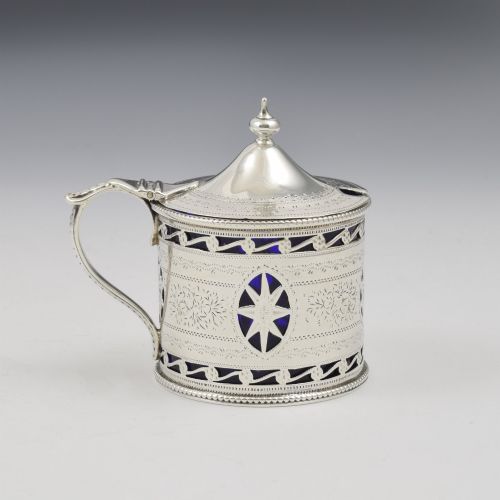
Silversmiths shaped sterling silver into vessels using techniques like piercing and engraving to pattern the bodies of drum and oval mustard pots. Many examples incorporate a blue glass liner, usually cobalt glass, which sits inside the pierced or solid silver exterior to hold the condiment safely.
Makers utilised solid silver and sterling silver for the main body, hinged lid, and handle, applying hand-engraved details directly onto the metal surface. The combination of reflective silver and coloured glass liners defines the physical construction of these condiment vessels.
Materials seen across these listings include sterling silver, glass, and cobalt blue glass.
Distinctions in Quality
The standard of an engraved silver mustard pot depends on the crispness of the hand-engraving and the structural integrity of the silver body and hinge. Finer examples display precise piercing work and well-balanced proportions in shapes like the drum or octagon.
The presence of a correct, undamaged glass liner inside a pierced silver pot influences the completeness of the piece. Maker attribution also separates standard production items from those bearing the marks of known silversmiths.
Nathan and Hayes·Charles and George Fox·Robert Hennell I·William Neale and Son·Charles Stuart Harris
The Engraved Silver Mustard Glossary
- Cobalt glass
- A deep blue glass used for the internal liners of pierced silver mustard pots. It provides a striking visual contrast against the polished silver exterior.
- Pierced silver
- Silverwork that has been cut through to create decorative patterns and openwork designs. This technique allows the coloured glass liner to be seen from the outside.
- Sterling silver
- An alloy consisting of pure silver and other metals, typically copper, used to ensure durability in tableware. Most British pieces on this page are formed from this material.
Engraved Silver Mustard: Frequently Asked Questions
What is an engraved silver mustard pot?
An engraved silver mustard pot is a small tabletop vessel created to serve mustard during meals. These pieces feature decorative surface engraving across various historical periods.
They generally include a hinged lid and often house a coloured glass insert to protect the metal from the condiment.
How were these mustard pots used?
These pots sat upon dining tables as part of a cruet set or as standalone tableware. Diners used a small spoon to transfer mustard from the pot to their plates.
The inclusion of a glass liner prevented mustard from corroding the interior silver surface during use.
How do I identify a Victorian mustard pot?
Victorian mustard pots often display specific stylistic traits such as rococo revival ornamentation or drum shapes with detailed surface engraving. Hallmarks stamped into the silver provide exact assay office and date letter information.
Examining the construction style and decorative motifs helps confirm the nineteenth-century origin.
Can I use an antique mustard pot today?
These pieces function well on modern dining tables for serving mustards and other fine condiments. Inserting the appropriate glass liner protects the antique silver from direct contact with foodstuffs.
Careful hand washing preserves the engraved surface and the historic metal finish.