


Engraved Silver Lid Dish
These engraved silver lid dish pieces bring Victorian and Edwardian serving elegance to the table.
Engraved Silver Lid Dish
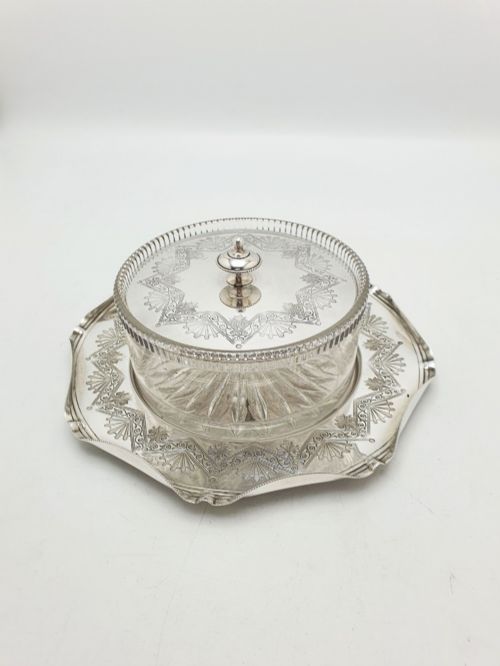
An engraved silver lid dish provides a covered vessel for butter, preserves, entrees, or dressing table items like vanity jars and trinket boxes. These nineteenth-century objects combine metal covers with glass liners, cut glass bodies, or solid metal bowls.
Victorian and Edwardian examples dominate the selection, spanning periods from eighteen fifty to nineteen hundred. Makers shaped these serving dishes and boxes in oval and round forms, adding intricate engraving to the lids.
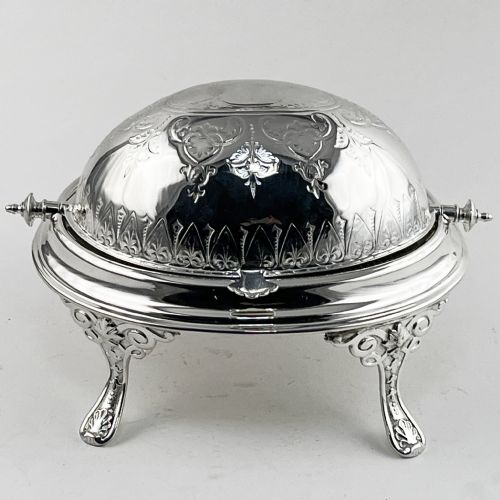
The assortment includes revolving lidded butter dishes, double rollover dishes, and serving tureens alongside smaller vanity jars. Each piece reflects the formal dining and dressing habits of the nineteenth century.
Materials and construction
Silversmiths utilised silver plate, old Sheffield plate, electroplated nickel silver, and solid silver over copper and nickel silver bases. Cut glass and frosted glass provided transparent bodies for butter dishes, vanity jars, and trinket boxes.
Lids received hand engraving to create decorative borders and floral motifs that complemented the polished metal surfaces. Makers incorporated mechanical elements such as revolving and rollover mechanisms into butter and preserve dishes.
Revolving butter dishes let nineteenth-century diners access morning toast spreads with a satisfying mechanical spin.
Determining quality
Quality rests on the crispness of the hand engraving upon the lid and the weight of the metal base. Superior examples retain intact silver plating without base metal showing through beneath.
The integration of fitted cut glass or frosted glass liners marks finer production standards. Mechanical components like revolving lids operate smoothly on better pieces, showing precise engineering.
Elkington·Cresswick
The Engraved Silver Lid Dish Glossary
- Old Sheffield plate
- A fused composite of silver and copper produced by heat and pressure before electroplating became common. This technique creates a rich dual-metal structure.
- Electroplated nickel silver
- A base metal alloy of copper, nickel, and zinc coated with a layer of silver through electrolysis. It became the dominant manufacturing method in the nineteenth century.
- Rollover dish
- A serving vessel featuring a lid that rotates or rolls backward on a pivot to reveal the contents. These mechanical designs appeared on Victorian breakfast tables.
- Entree dish
- A shallow covered container used for serving main course portions at the dining table. Pairs of these dishes often feature detachable handles.
Engraved Silver Lid Dish: Frequently Asked Questions
How were silver lid dishes used?
These dishes served butter, preserves, and hot entrees at formal nineteenth-century dining tables. Smaller lidded pieces held vanity items and trinkets on dressing tables.
The fitted glass liners protected the metal from food acids and allowed easy cleaning between courses.
How do I clean antique silver plate?
Wash the pieces gently in warm water using mild soap and a soft cloth. Avoid abrasive dips that strip the historic plating.
Dry thoroughly with a soft towel to prevent water spots on the engraved surfaces.
What is Old Sheffield plate?
Old Sheffield plate involves a thin sheet of real silver fused to a thicker copper core by heating. This early method creates a warm tone where copper edges occasionally show.
Items made this way predate standard nineteenth-century electroplating techniques.
How do I date these dishes?
Examine the style of the engraving and the construction methods used on the metal body. Victorian and Edwardian pieces often carry specific period design markers.
Maker marks and registration numbers stamped into the base provide precise chronological evidence.
Can I use these for daily dining?
Silver plate and glass items tolerate gentle daily use if hand washed carefully. Avoid dishwashers and harsh chemical cleaners.
Glass liners require separate washing to protect both the glass and the surrounding metal framework.