
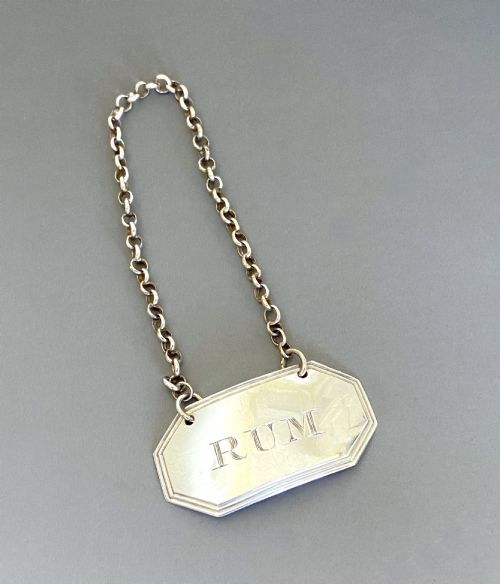
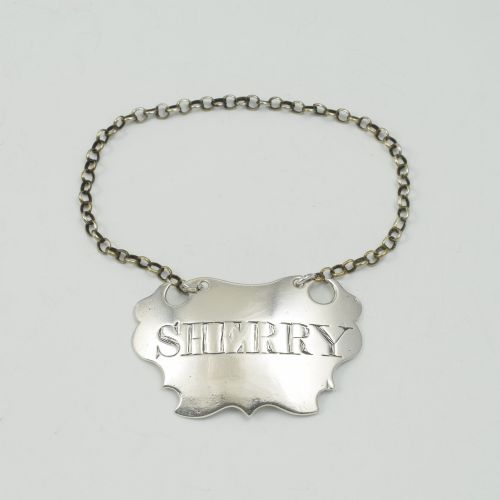
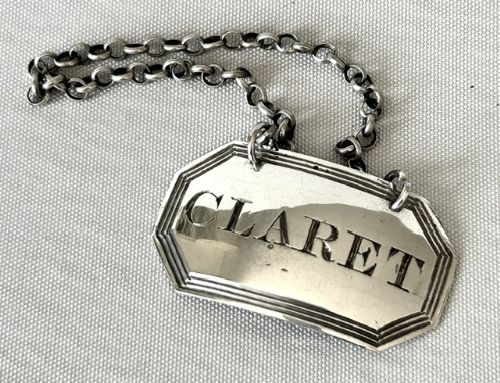
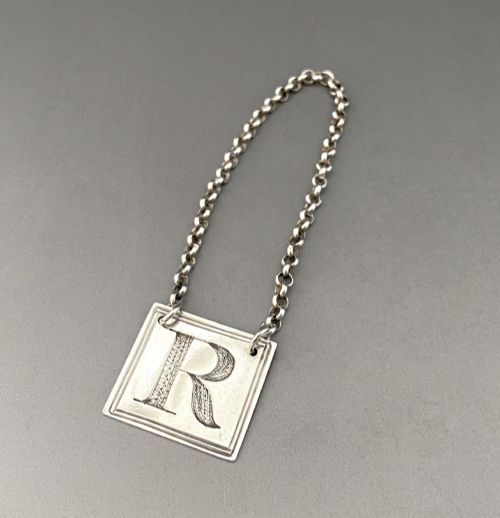


Engraved Silver Label
An engraved silver label rests on a decanter neck to name the wine within, uniting utility with Georgian and Victorian craftsmanship.
Engraved Silver Label
When you search for an engraved silver label, you are looking at small pieces of silver designed to hang from wine decanters and bottles. These decanter accessories identify spirits and wines such as sherry, claret, madeira, rum, gin, brandy, hock, and champagne.
The versions you are most likely to meet on this page span the Georgian, Regency, and Victorian periods, alongside Edwardian examples. They take forms including escutcheon shapes and matched sets suspended on silver chains.
Makers working within British traditions produced these identifiers in sterling silver and solid silver. Some bear specific regional provenance, such as Scottish provincial work from Peterhead.
What varies in quality
Quality rests in the crispness of the hand engraving and the depth of the metalwork. Pieces bearing legible lettering and well-defined Rococo Revival or traditional scroll borders stand apart from plainer stampings.
The presence of clear hallmarks adds distinction, particularly when attributed to known silversmiths like Elizabeth Morley, John Reily, or Peter and Anne Bateman.
Some labels named obscure spirits now rarely seen on modern dining tables, such as hock and madeira.
Elizabeth Morley·John Reily·Peter and Anne Bateman
The Engraved Silver Label Glossary
- Escutcheon
- A shield-shaped plaque commonly used as the blank canvas for engraving wine titles. This form allows space for elaborate border decoration.
- Hallmark
- Official stamps struck into precious metal to indicate standard of purity, place of assay, and year of manufacture. These marks help date the silver accurately.
- Provincial silver
- Silver manufactured outside London in regional assay towns or unassayed centres such as Peterhead. These pieces often show distinctive local stylistic traits.
- Decanter accessory
- An item designed to accompany glassware or bottles in dining service. Labels form the most common surviving category of these small items.
- Sterling silver
- An alloy consisting of silver and other metals, predominantly copper, meeting a specific standard of purity. Most British wine labels utilise this material.
Engraved Silver Label: Frequently Asked Questions
What is an engraved silver label?
An engraved silver label is a small piece of silverware hung around the neck of a decanter to name the beverage inside. They serve to distinguish between various white and red wines on the dining table.
These items date predominantly from the eighteenth and nineteenth centuries, reflecting changing dining customs and tastes in glassware.
How do I date a silver label?
Dating relies upon reading the hallmarks stamped into the metal surface, which indicate the year letter and assay office. Stylistic clues such as Regency shapes or Victorian scrollwork also point to specific decades.
Checking maker marks against historical silversmith records narrows down the period of manufacture further.
How were silver labels used?
Hosts hung them by chains around the necks of glass decanters and bottles to inform guests of the contents. This prevented confusion when decanting dark red wines or similar-looking spirits.
They remained a standard fixture of formal dining tables throughout the Georgian and Victorian eras.
Are matching sets available?
Matched sets of labels exist, often grouping three or more pieces together for different bottles on the sideboard. These collections usually share a common style, period, and silversmith.
Finding a matched set ensures a uniform appearance during formal dinner service.