


Antique Sherry Label
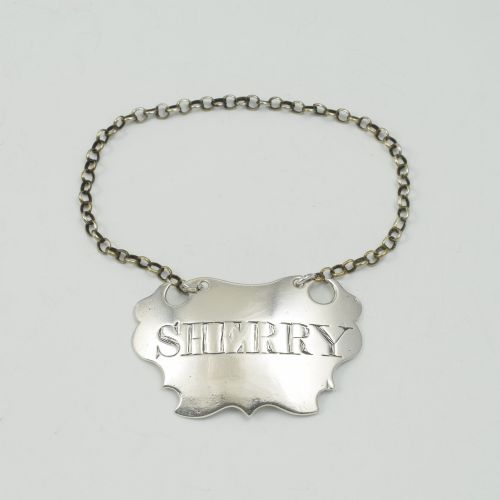
An antique sherry label marks out the decanter on the sideboard, taking forms from the Georgian and Victorian eras in silver, glass and creamware.
Antique Sherry Label
An antique sherry label identifies the fortified wine held within a decanter or bottle, sparing guests and hosts alike from guessing at the table. You will most frequently meet these as small silver tags hanging by a chain from the neck of a decanter, though ceramic bin labels and glass bottles also appear.
The pieces on this page span the Georgian and Victorian periods, reaching through the nineteenth century and into later decades. Escutcheon shapes, vine leaf motifs and simple pierced silver banners make up the core of what you will handle when searching for an antique sherry label.
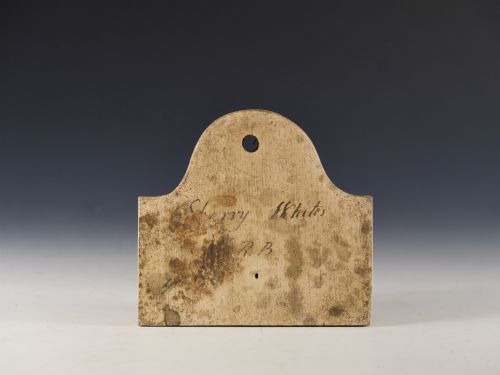
Makers ranged from specialist silversmiths working in London and provincial assay offices to larger firms producing matching sets. Alongside the hanging metal tags, the evidence includes ceramic bin labels designed to fit into cellar bins and blue glass bottles fitted with silver mounts.
How They Were Made
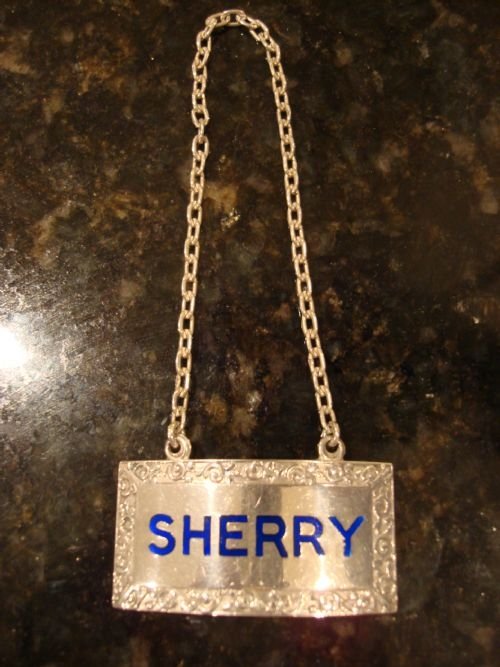
Silversmiths shaped these pieces from sterling silver and solid silver plate, cutting escutcheon, vine leaf and rectangular banner outlines from sheet metal. Piercing, engraving and stamping created the pierced letters spelling the drink name and the surrounding foliate borders.
Potters shaped creamware and glazed earthenware for the bin labels, firing the clay and painting or impressing the word sherry onto the surface. Glassmakers blew cobalt glass and clear glass to form bottles and decanters, sometimes pairing them with silver necks and hanging labels.
Materials recorded across the archive include sterling silver, solid silver, silver plate, creamware, cobalt glass and enamel.
What Varies in Quality
The distinction between standard production and finer work lies in the crispness of the stamping, the depth of the hand engraving and the substance of the metal. Early Georgian pieces by known makers display sharp piercing and clean hallmarks that mark them out from later or more commercial examples.
Design complexity also sets pieces apart, moving from plain rectangular strips to elaborate cast vine leaves, rococo scrolls and escutcheons with detailed borders. The presence of matching chains and original suspension rings adds to the integrity of the piece as a complete accessory.
John Reily·William Sharp·Peter and Anne Bateman·Mappin and Webb
The Antique Sherry Label Glossary
- Escutcheon
- A shield-shaped plate used for armorial bearings, keyholes or, in this context, wine labels. It forms one of the most common outlines for Georgian silver tags.
- Bin label
- A small ceramic or earthenware tile designed to be slotted into a wine cellar bin to identify the vintage and contents. These are distinct from hanging bottle tickets.
- Hallmark
- A series of official marks stamped on precious metals in Britain to indicate the standard of purity, the assay office, the maker and the year of manufacture.
- Solid silver
- Metal composed of sterling silver throughout rather than plated over a base metal core. The evidence records solid silver and sterling silver across multiple periods.
- Creamware
- A refined earthenware developed in Yorkshire during the eighteenth century, possessing a pale yellowish cream colour under a lead glaze.
Antique Sherry Label: Frequently Asked Questions
How do I hang a label?
Most antique sherry labels suspend from a fine silver chain that slips over the neck of the decanter, resting just below the stopper.
The length of the chain allows the label to hang freely against the shoulder of the glass without obstructing the pour.
Are all labels made of silver?
While the majority of hanging decanter labels are fashioned from sterling or solid silver, the evidence also includes silver plate, enamel, creamware and glazed earthenware.
Ceramic examples typically function as bin labels rather than hanging bottle tickets.
How do I date a silver label?
Dating relies primarily on the stamped hallmarks showing the assay office, maker's mark and date letter for the year of production.
Stylistic shifts, such as the transition from plain Georgian shields to ornate Victorian vine leaves, also offer a reliable guide to age.
Can I use these on modern decanters?
These labels adapt easily to modern decanters provided the neck circumference matches the drop of the accompanying chain.
Care should be taken with the chain length to ensure the metal does not scratch the glass surface during pouring.