
Antique Bottle Label
An antique bottle label identifies the contents of a decanter or pharmacy vessel, offering both practical service and bright metal gleam on the sideboard.
Antique Bottle Label
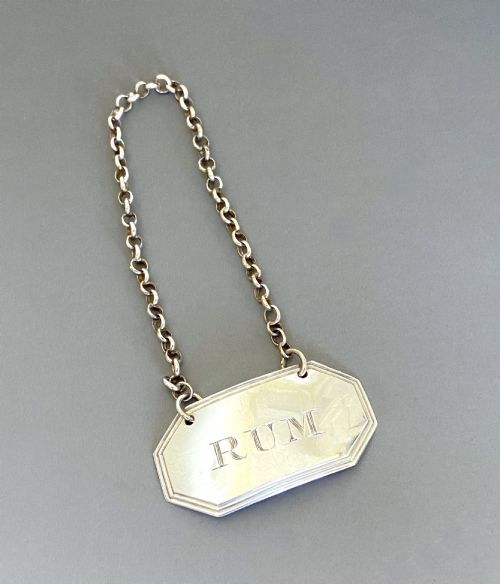
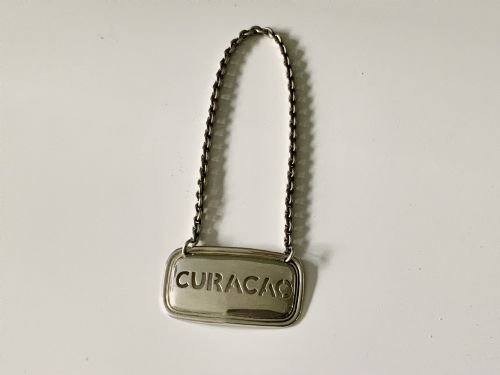
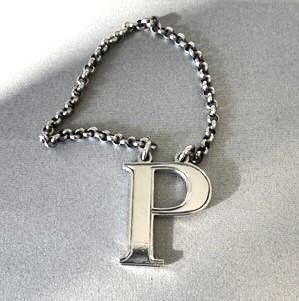
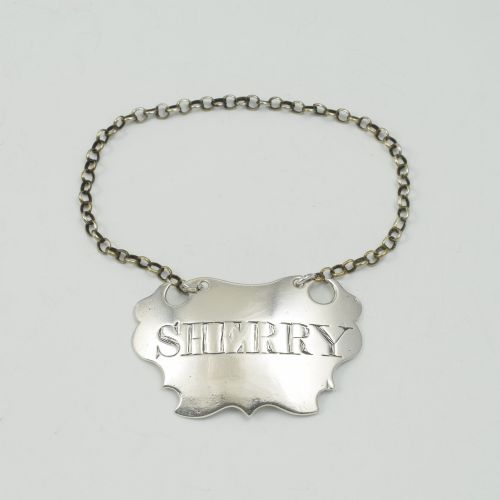
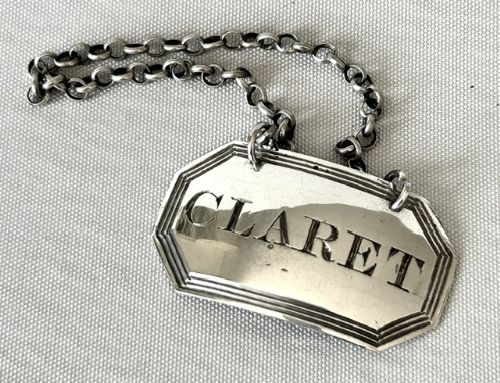
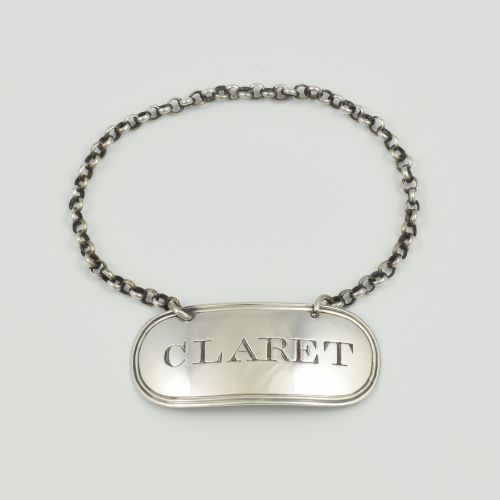
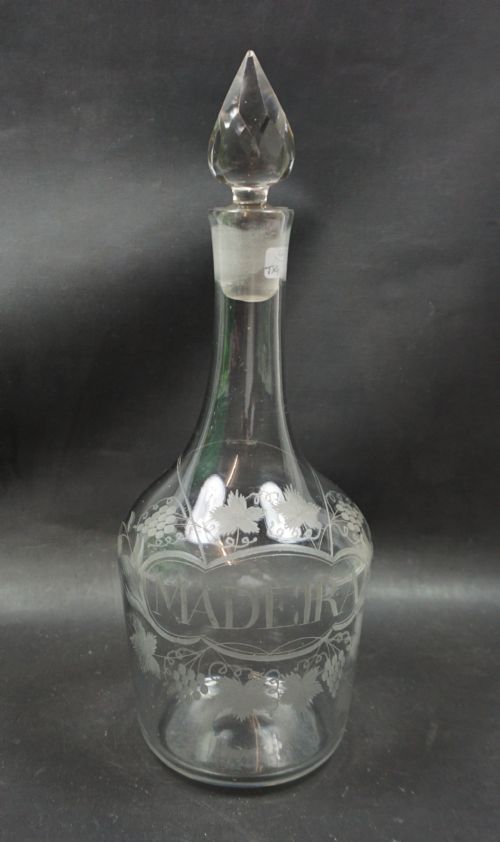
When you search for an antique bottle label, you encounter small silver tags, escutcheons, and neck rings designed to hang from glassware. These pieces identify spirits and wines such as port, sherry, madeira, claret, and rum, or mark apothecary vessels and cellar bins.
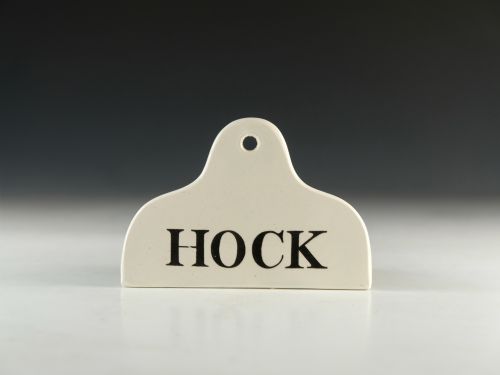
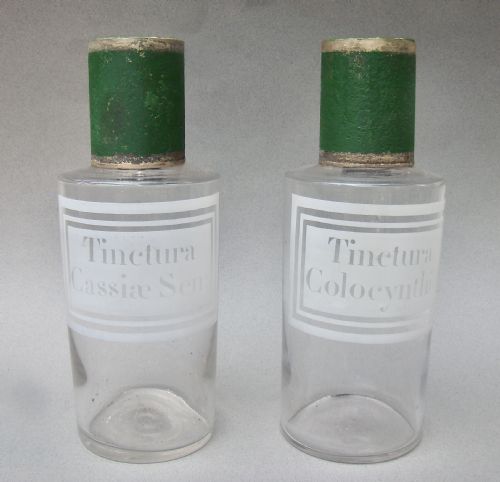
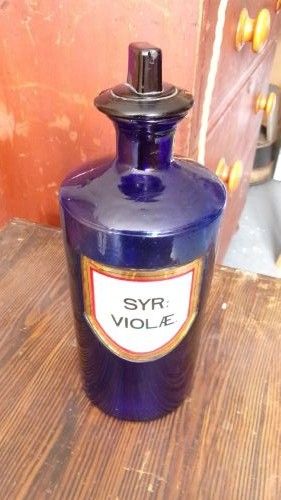
The version you meet most often on this page is the Georgian or Victorian sterling silver decanter label, pierced or engraved with a beverage title. Alongside these, the selection includes glass apothecary jars, chemist bottles with gold leaf or etched lettering, and porcelain bin labels.
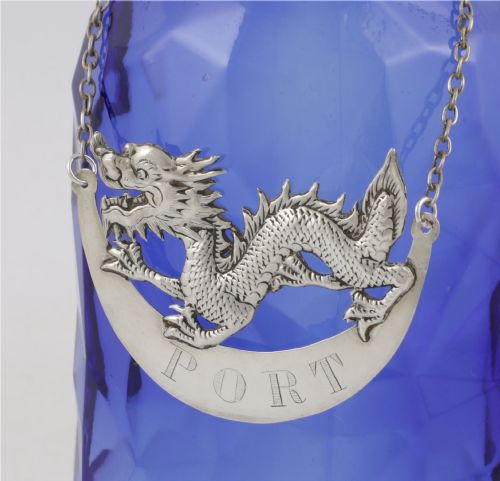
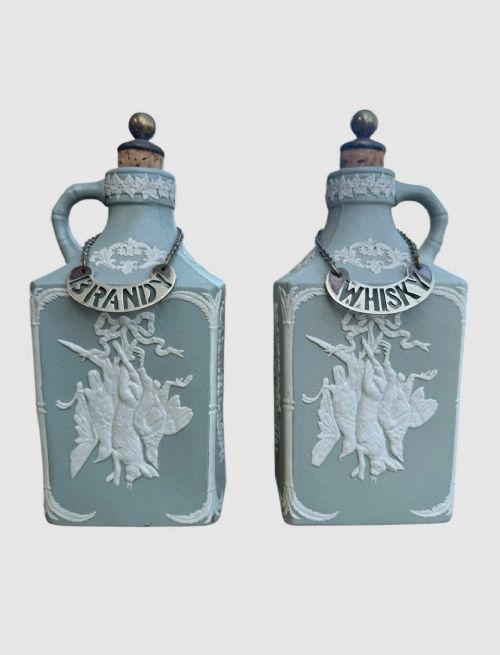
Origins stretch from English workshops in London and provincial towns to Chinese export silver and French apothecary wares. Makers range from specialist silversmiths to major firms, producing tags that hang on chains around the necks of crystal decanters.
Silver and glass fabrication
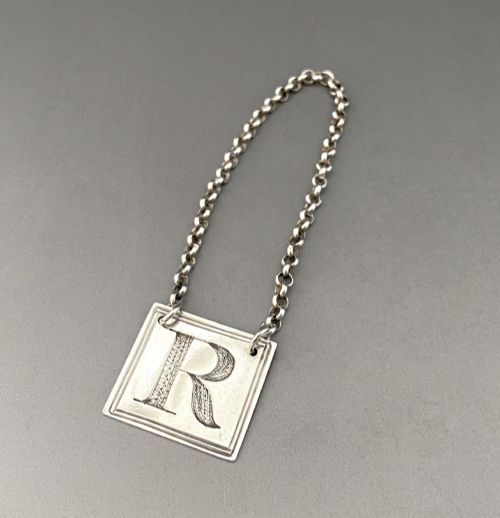
Silver labels are typically pierced, stamped, or hand-engraved from sterling silver sheet, often shaped as escutcheons, vine leaves, or simple scrolls. Silversmiths used punches to apply maker marks and hallmarks directly to the metal.
Glass pharmacy jars and chemist bottles utilise blown glass techniques, sometimes in deep cobalt or Bristol green, paired with gilt paper labels, gold leaf, or direct acid etching. Silver mounts and neck collars are then fitted securely to the glass vessels.
Listings feature sterling silver, cobalt glass, and enamel materials spanning the Georgian, Victorian, and Edwardian periods.
Craftsmanship and nomenclature
Quality rests in the crispness of the piercing, the depth of the hand-engraving, and the weight of the sterling silver. Superior examples exhibit well-defined maker marks, clean lettering, and undamaged suspension chains or original rings.
The rarity of the spirit title inscribed upon the label also dictates standing. Unusual titles such as cayenne, tennessee, or specific bin designations command greater interest than standard designations like port or sherry.
Elizabeth Morley·Tiffany·Digby Scott Benjamin Smith·John Reily·Thomas Wallis II·William Sharp
The Antique Bottle Label Glossary
- Decanter label
- A small metal tag hung by a chain around the neck of a decanter to name the wine or spirit held within. These items are also known as bottle tickets or wine labels.
- Escutcheon
- A shield-shaped form commonly utilised as the outline for Georgian and Victorian silver bottle labels. This shape allows ample space for engraved floral borders and beverage titles.
- Cellar bin label
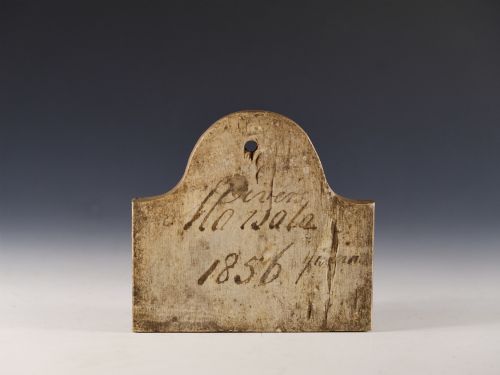
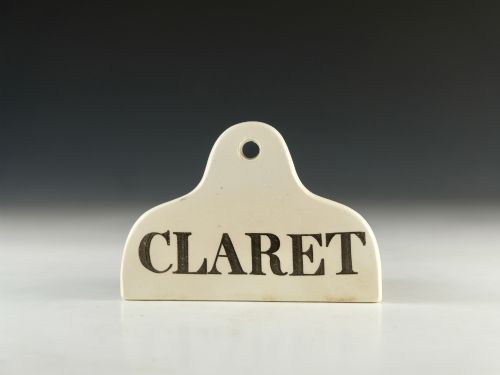
- A tile or marker placed in wine bins to identify the vintage and type of bottle stored in the cellar. They appear in ceramic, metal, and glass.
- Apothecary jar
- A vessel used in pharmacies to store medicinal herbs, liquids, or compounds. Many survive with original etched glass labels or gilt paper titles.
- Maker mark
- The punch stamp applied by a silversmith to verify the origin and standard of the metal. These stamps help attribute pieces to specific craftsmen and assay offices.
Antique Bottle Label: Frequently Asked Questions
How were antique bottle labels used?
These tags hung by small link chains around the necks of crystal decanters and spirit flagons on the dining table. They prevented confusion between dark red wines and fortified spirits when decanted from opaque glass.
In pharmacy settings, similar labels and painted glass jars organised medicinal ingredients on apothecary shelves.
How do I care for silver bottle labels?
Sterling silver labels require gentle cleaning with a soft cloth to preserve the dark patina in recessed engravings. Avoid harsh abrasive dips that strip the character from antique hallmarks.
Glass vessels and ceramic bin labels simply need warm soapy water and careful handling around any remaining gilt paper.
How can I date an old bottle label?
Assay office letters and monarch hallmarks stamped on the reverse of silver pieces provide exact decades of production. Stylistic shifts from neoclassical Regency shields to ornate Victorian vine leaves also indicate the period.
Glass chemistry bottles and apothecary jars are dated by pontil marks, glass colour density, and lettering techniques.
Are all decanter labels made of silver?
While the majority of collectible hanging labels are forged from sterling silver, other materials appear frequently. Examples include Chinese export silver, brass bin markers, and etched glass apothecary vessels.
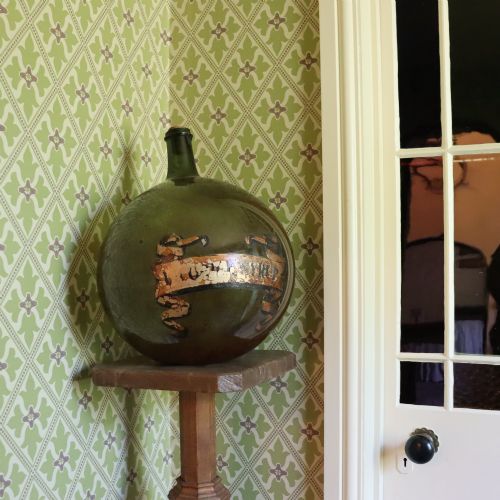
Some bottles feature direct gold leaf lettering on cobalt or green glass rather than a separate hanging tag.