
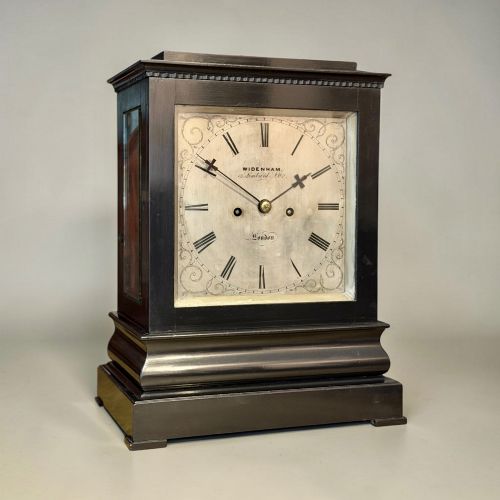


Engraved Silver Clock
An engraved silver clock is a precise timekeeper cased in decorated metal, combining mechanical utility with fine surface work.
Engraved Silver Clock
When you search for an engraved silver clock, you are looking at timepieces spanning the nineteenth century through the art deco period, taking forms such as carriage clocks, library clocks, desk clocks, and mantel clocks. These pieces range from miniature carriage designs to substantial bracket clocks and fusee library clocks.
You are most likely to meet Victorian and nineteenth-century examples on this page, alongside twentieth-century art deco pieces. The selection includes works by notable makers and retailers, combining sterling silver casings or silvered metal with brass, glass, mahogany, and rosewood.
How they were made
The construction of these pieces relies on solid silver casings, sterling silver, or silvered brass and metal, paired with interior brass movements and glass panels for fusee library and carriage clocks.
Makers integrated natural materials such as mahogany, rosewood, and ebonised wood alongside metalwork, employing hand-engraving techniques on the silver surfaces to create intricate surface patterns.
A mystery clock hides its mechanical secrets entirely, leaving bewildered guests staring at hands floating across a dial with no visible connection to gears.
What varies in quality
Quality separates simple timepieces from masterworks through the depth, crispness, and complexity of the hand-engraving on the silver casing. Deeper, more deliberate cutting by skilled hands distinguishes finer examples from shallow surface decoration.
The sophistication of the mechanical movement, whether single fusee, twin fusee, quarter striking, or eight-day capability, marks the difference between standard production and high-end horology.
Widenham of London·Mappin & Webb·Dent·Howell & James·Ganthony of London·Thomas Cole·Hunt And Roskell·Smiths Clocks·L.Donne
The Engraved Silver Clock Glossary
- Fusee
- A conical pulley used in clocks to maintain even driving force as the mainspring unwinds. This mechanism ensures steady timekeeping throughout the power reserve.
- Bracket clock
- A portable table clock designed originally to sit upon a wall bracket. They often feature complex striking movements and substantial wooden or metal cases.
- Carriage clock
- A small, spring-driven clock made for travel, typically featuring a brass or silver frame inset with glass panels. Many include a carrying handle on top.
- Silvered metal
- A base metal treated with a thin coating of silver to give the appearance of solid silver. It provides a bright finish while keeping the weight and cost manageable.
Engraved Silver Clock: Frequently Asked Questions
How do I wind a fusee clock?
Use the designated key on the dial or side to turn the winding arbor slowly until resistance increases. Stop immediately when tension meets the stopwork to avoid damaging the fusee chain.
Ensure you do not overwind the movement, as antique mechanisms respond best to gentle and measured turns during routine maintenance.
Are carriage clocks meant for travel?
Originally built for transport in carriages during the nineteenth century, these sturdy timepieces feature protective brass and silver frames with thick glass panels.
While they survived rough journeys on horse-drawn transport historically, modern owners generally keep them stationary to preserve their delicate internal gears.
How do I clean an engraved silver case?
Dust the engraved surfaces gently with a soft, dry cloth to remove surface particles. Avoid aggressive polishes that might wear down the fine hand-engraved lines over time.
Keep silver cleaning creams away from the clock movement and glass panels to prevent chemical damage to the interior mechanics.
What is the difference between a library clock and a mantel clock?
Library clocks typically utilise precise fusee movements housed in architectural brass and glass cases designed for reading rooms and studies. Mantel clocks often lean towards wooden or heavier metal housings placed in domestic living spaces.
Both categories utilise silvered components and detailed engraving, but library clocks place heavier emphasis on mechanical exactness.