



Engraved Metal Charger
An engraved metal charger brings centuries of decorative brass, copper, and pewter into a room, offering deep chased detail and reflective surface texture.

Engraved Metal Charger
An engraved metal charger serves as a large decorative dish, tray, or ceremonial shield, taking various circular forms across multiple centuries.
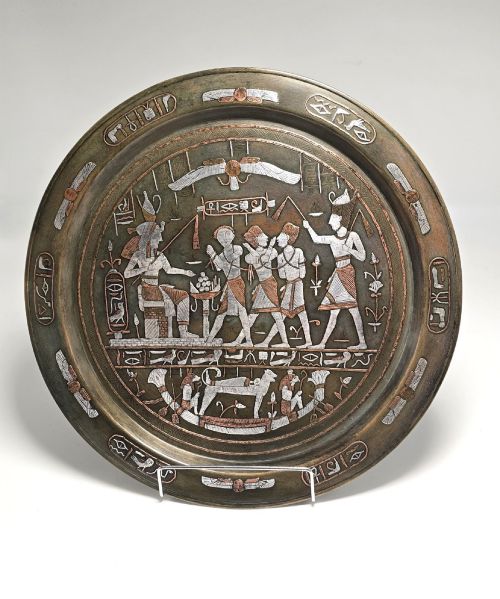
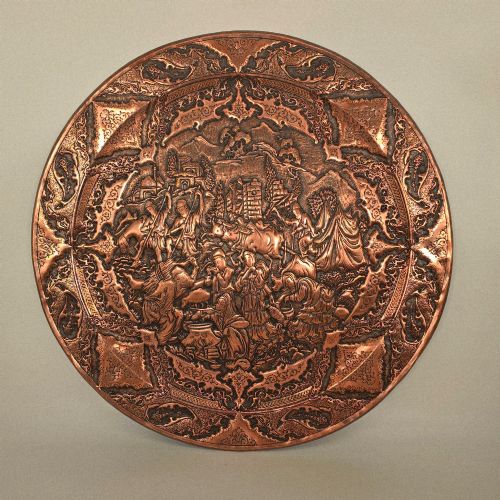
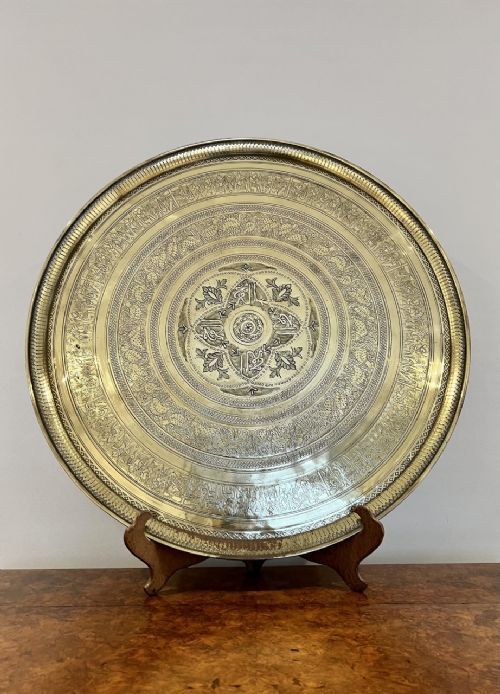
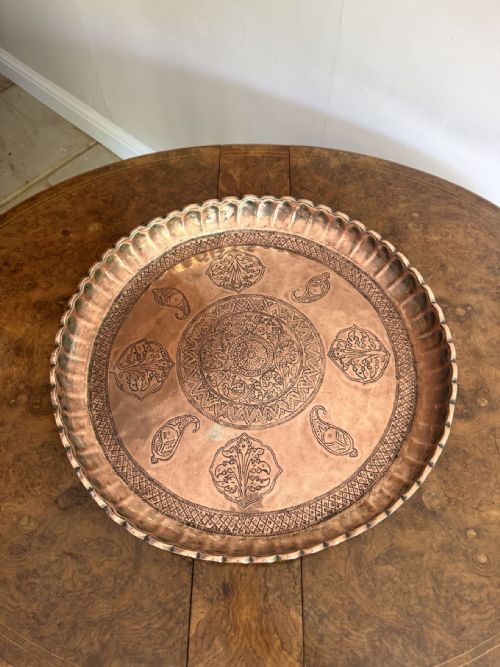
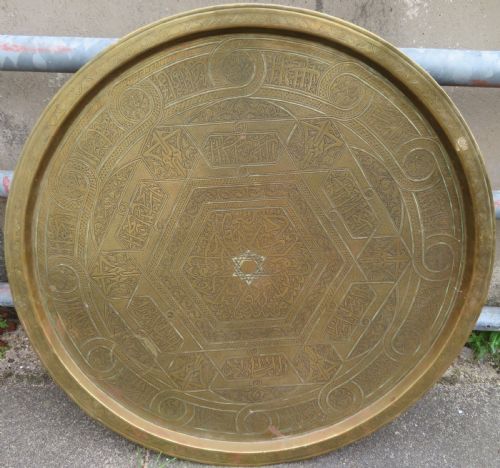
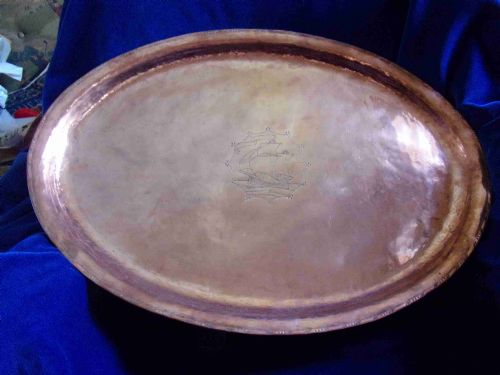
The version most commonly met on this page is a large copper, brass, or mixed metal tray, frequently showing Middle Eastern, Persian, or Arts and Crafts influence.
Pieces range from seventeenth-century pewter broad rim chargers bearing family crests to nineteenth-century Anglo-Indian and Caireware brass vessels.
How they were made
Maker's methods combine beating and casting with fine hand-engraving and repousse work, creating textured surfaces across copper, brass, and pewter.
Inlaid silver details appear on patinated copper pieces, while other items utilise mixed metal assemblies or simple plain rims shaped in domestic foundries.
Listings span seventeenth-century pewter, Victorian brass, and Arts and Crafts copper by makers such as Hugh Wallis.
What varies in quality
Quality rests upon the depth and clarity of the hand-engraving, alongside the crispness of repousse decoration and the integrity of the base metal.
Weight and balance distinguish sturdy seventeenth-century broad rim pewter from lighter later plates, while complex Islamic metalwork or silver inlay demands superior technical skill.
Hugh Wallis·Thomas Templeman·Lawrence Dyer·Yates Birch and Spooner
The Engraved Metal Charger Glossary
- Charger
- A large ornamental plate or platter, traditionally used for display or formal service rather than daily dining.
- Repousse
- A metalworking technique where the artisan hammers the design from the reverse side to form raised relief on the front.
- Cairoware
- Nineteenth and early twentieth-century metalwork produced in Egypt, typically brass inlaid with silver and copper in traditional Islamic geometric and calligraphic patterns.
- Broad rim
- A wide, flat outer border characteristic of seventeenth-century pewter plates and chargers.
- Mixed metal
- An object combining two or more distinct metallic elements or alloys, often contrasting copper and brass for visual depth.
Engraved Metal Charger: Frequently Asked Questions
What is an engraved metal charger used for today?
These large plates and trays function primarily as decorative wall hangings or striking tablescapes, anchoring a room with their metallic sheen and patterned surfaces.
Their substantial diameter allows them to hold smaller decorative objects or simply command attention on a sideboard.
How do I tell seventeenth-century pewter from nineteenth-century brass?
Seventeenth-century pieces present heavy pewter with broad rims and occasional maker's touchmarks, often showing centuries of handling in the duller grey patina.
Later brass and copper chargers display brighter mixed metal finishes, intricate Islamic or Arts and Crafts engraving, and lighter construction.
Are these chargers safe to clean with metal polish?
Standard commercial polishes can strip away the aged patination and delicate silver inlay that define the character of older copper and brass items.
Gentle dusting with a dry cloth preserves the historical surface and prevents damage to the engraved lines.
What distinguishes Caireware from other Islamic metalwork?
Cairoware specifically denotes nineteenth-century brass work originating from Egypt, heavily characterised by dense engraved foliate designs and contrasting metal inlay.
Other Middle Eastern and Persian pieces often utilise patinated copper or distinct repousse motifs without the characteristic Caireware silver wire.