
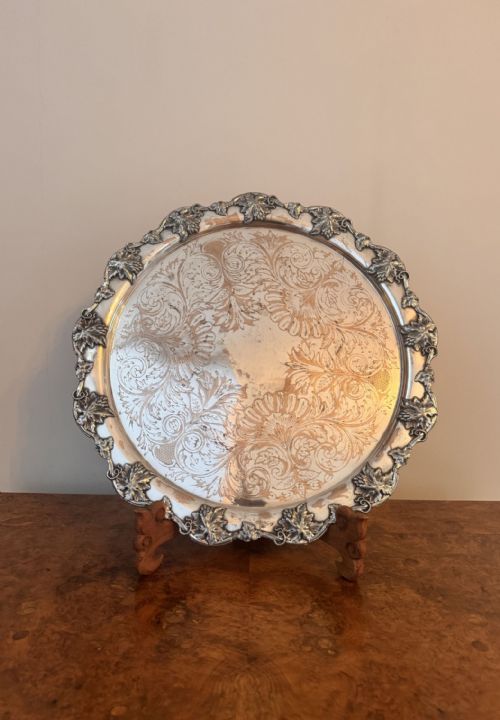
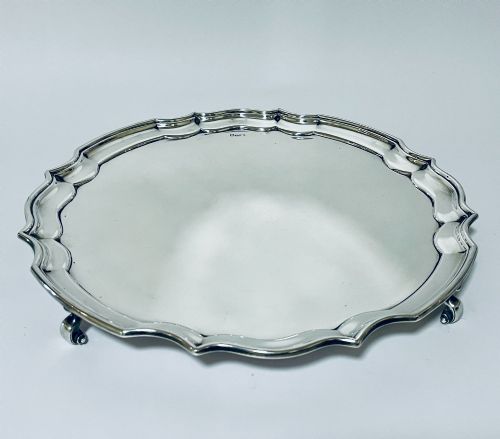


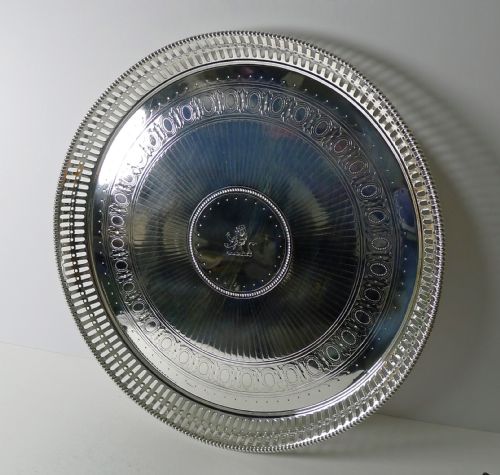
Antique Circular Salver
An antique circular salver is a round serving plate for drinks and silver, prized for its gleaming metal surface and traditional craftsmanship.
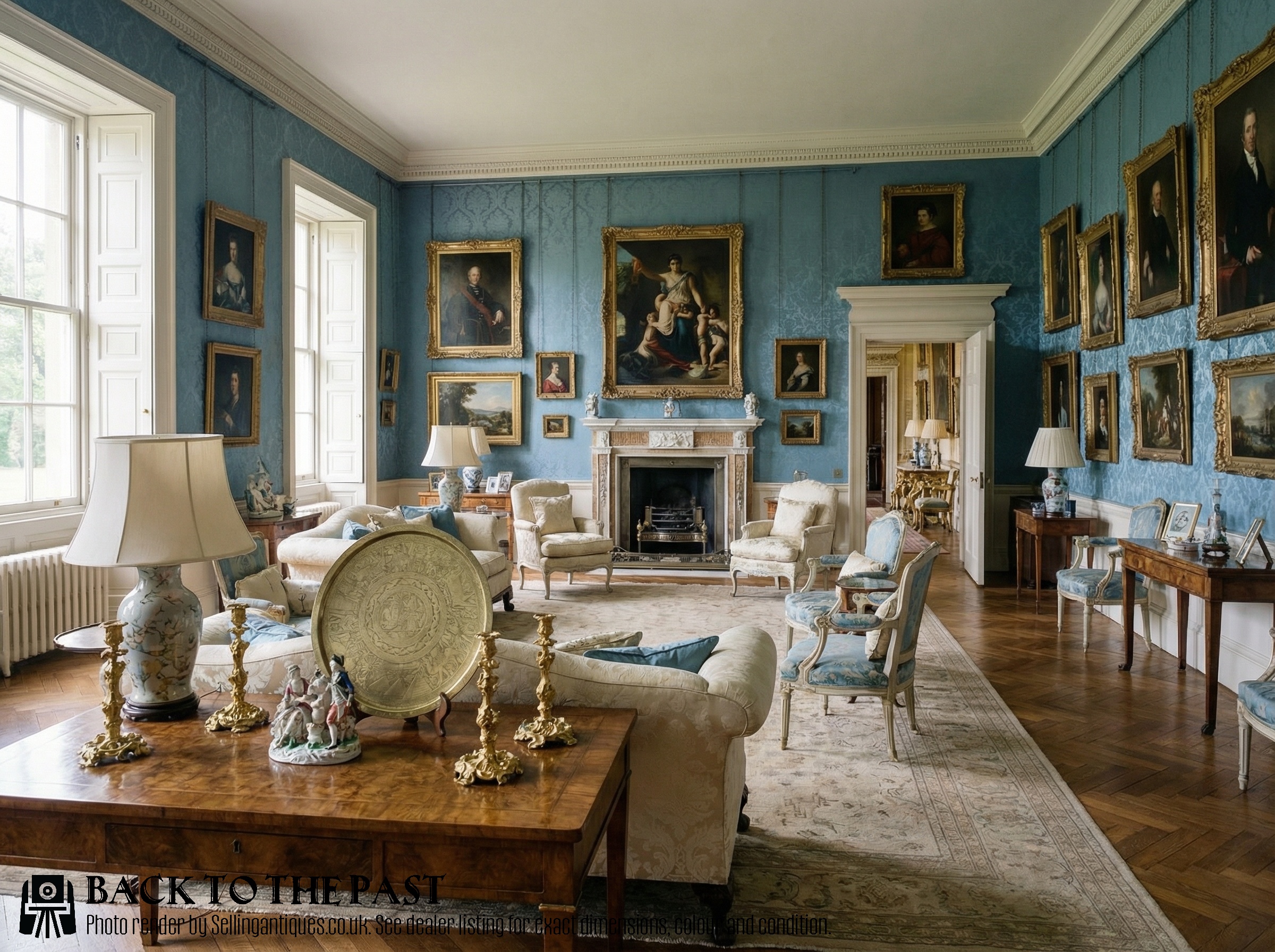
Antique Circular Salver
The objects span multiple eras including the Georgian period, the Victorian era, and Art Deco, showing shifts in taste from elaborate engraving to cleaner geometric lines. These pieces function as decorative table centrepieces as well as historical serving ware.
How they were made
Maker workshops utilised sterling silver, silver plate, EPNS, and Old Sheffield Plate alongside copper bases to form the rigid circular body of each tray. Cabinetmakers also turned to timbers such as mahogany, boxwood, and satinwood for wooden variants.
Techniques range from hand engraving and engine turning on metal surfaces to intricate inlaid decoration on wooden wine trays. Makers such as Walker & Hall, J Dixon & Sons, and Elkington applied professional plating and metalworking methods to achieve durable finishes.
What varies in quality
The distinction between standard pieces and the finest examples rests on the crispness of the engraving and the depth of the metal plating over the copper or base metal. Heavier gauge metal and substantial wooden timbers indicate superior original construction.
Maker attribution also influences standing, with pieces bearing marks from established firms like Elkington or Walker & Hall commanding greater attention from collectors. The complexity of surface decoration, such as engine turned patterns or elaborate borders, separates simpler utilitarian items from grand presentation pieces.
Walker & Hall·J Dixon & Sons·Elkington
The Antique Circular Salver Glossary
- Salver
- A flat round tray traditionally used for serving glasses and small vessels. These pieces usually stand on small feet or a raised circular rim.
- Old Sheffield Plate
- An early fusing technique where a thin sheet of sterling silver is fused to a thicker copper base. This method creates a durable material characteristic of older serving trays.
- EPNS
- Electroplated Nickel Silver. A common base metal composition coated with a layer of silver through an electrolytic process during the nineteenth and twentieth centuries.
- Engine turned
- A geometric pattern mechanically engraved into metal surfaces. This technique adds precise decorative texture to the face of the tray.
- Inlaid decoration
- Ornamental designs set flush into a wooden surface using contrasting timbers such as boxwood and satinwood. This appears frequently on Georgian mahogany wine trays.
Antique Circular Salver: Frequently Asked Questions
What is an antique circular salver used for?
These round metal or wooden trays were historically used for serving drinks, glasses, and small dishes in formal households. Today they function as decorative display pieces on sideboards or coffee tables.
Their sturdy construction also makes them practical for serving beverages during gatherings while adding traditional character to a room.
How do I clean a silver plated salver?
Clean silver plated and sterling silver trays using a mild, non-abrasive silver polish and a soft cloth to protect the underlying metal plating. Avoid harsh scrubbing or abrasive pads that can wear away the thin silver layer.
For wooden wine trays, use a gentle furniture wax and a dry cloth to maintain the polish of the mahogany, satinwood, or boxwood inlay.
How can I tell a Georgian salver from a Victorian one?
Georgian pieces, particularly those from the late eighteenth century, often feature wooden construction with detailed timber inlay or simpler, restrained silver forms. Victorian examples tend to display heavier silver plating, extensive hand engraving, and more ornate cast borders.
Looking at the weight, construction style, and any maker marks helps place the object within its correct nineteenth or eighteenth century period.
What is Old Sheffield Plate?
Old Sheffield Plate is an early manufacturing method where a thin sheet of real silver is fused to a copper core. This technique predates modern electroplating and produces a warm tone where the copper base sometimes subtly shows through areas of wear.
Pieces made with this method carry significant historical interest for collectors of antique silver ware.