


Engraved Liquor Decanter
These engraved liquor decanter pieces bring spirited Georgian, Victorian, and Edwardian craftsmanship straight to your sideboard with cut glass, crystal glass, and solid silver.
Engraved Liquor Decanter
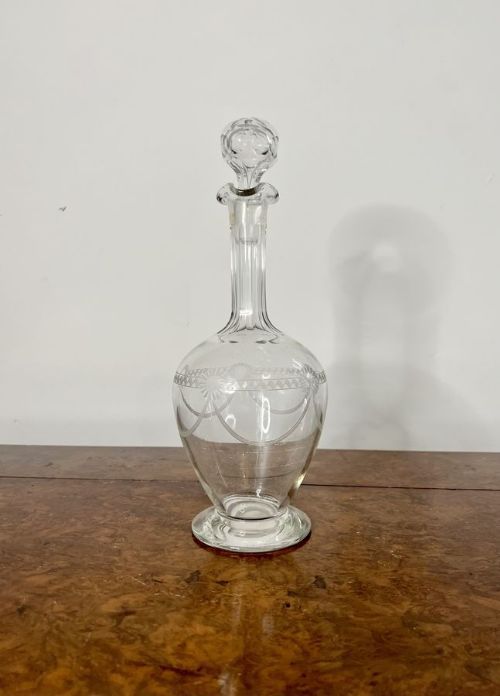
When you search for an engraved liquor decanter, you encounter functional vessels and accompanying silver labels from the Georgian, Regency, and Victorian eras. These items include matching glass pairs and individual bottles designed to hold rum, brandy, whisky, sherry, Madeira, gin, and champagne.
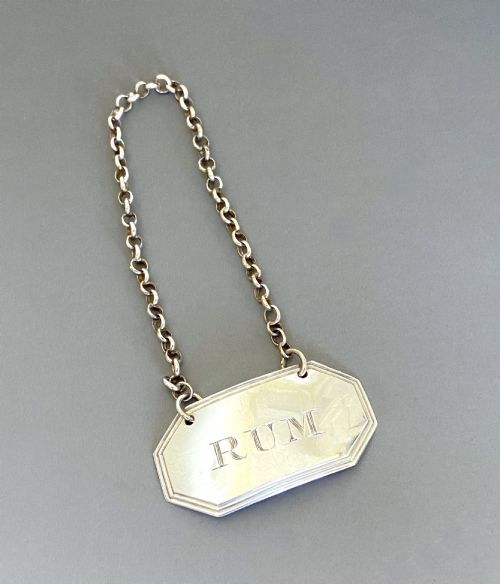
The selection ranges from cranberry overlay glass and ruby glass vessels to lead crystal decanters with engraved titles. You also find associated sterling silver labels hanging on silver chains to denote the specific spirit contained within.
Materials and construction
Makers utilised glass and crystal glass, often shaping pieces through optical blowing or cutting techniques to create faceted bodies. Coloured glass varieties such as cranberry and ruby feature decorative wheel-engraving depicting motifs like birds among vines.
Accompanying items employ solid silver and sterling silver, cast or stamped with specific titles and monograms. Silver collars and hallmarked plaques complete the vessels, while separate labels rely on suspension chains.
Listings span Georgian, Regency, William IV, Victorian, Edwardian, and later twentieth-century periods, utilising silver, crystal glass, and cranberry glass.
Distinguishing quality
Quality rests upon the crispness of the glass wheel-engraving and the clarity of the crystal material. Pairs with matching coloration and retained silver collars achieve a higher standard than mismatched components.
Silver labels vary according to the depth of the stamped or engraved lettering, the presence of legible hallmarks, and the inclusion of original suspension chains. Maker attribution, such as work by James Powell or Elizabeth Morley, elevates a piece.
Elizabeth Morley·James Powell
The Engraved Liquor Decanter Glossary
- Decanter label
- A small silver tag hung by a chain around the neck of a bottle to identify the contents. These items often feature specific spirit titles like brandy, whisky, or rum.
- Lead crystal
- A heavy glass variety containing lead oxide, which increases brilliance and makes the material softer for detailed cutting and engraving. This substance forms the body of many nineteenth-century vessels.
- Cranberry glass
- A transparent pinkish-red glass produced by adding gold chloride to the molten batch. Overlay versions feature this coloured glass layered over clear glass before engraving.
- Optical blowing
- A glassmaking technique involving a ribbed mould that imparts pattern lines into the blown vessel. This method creates subtle interior patterns within crystal decanters.
- Sterling silver
- An alloy containing a high proportion of pure silver combined with other metals for durability. This material appears frequently in both decanter collars and identification labels.
Engraved Liquor Decanter: Frequently Asked Questions
How do I identify a Georgian decanter label?
Georgian silver labels typically display early Hallmarks, softer hand-stamped lettering, and distinct stylistic motifs appropriate to the late eighteenth and early nineteenth centuries.
Many of these smaller pieces specify regional spirits like Madeira or gin, reflecting the drinking habits of the period.
What spirits do these decanters hold?
Historical evidence shows these vessels and labels designated for rum, brandy, whisky, sherry, Madeira, gin, and champagne. Engraved glass bodies or hanging silver tags specify the intended contents.
Using them today follows these traditional spirit categories for serving after dinner.
How should I clean antique crystal decanters?
Careful washing in warm water with mild detergent preserves the integrity of old glass and any delicate wheel-engraving. Avoid sudden temperature changes to prevent cracking the lead crystal.
Silver components and chains require gentle polishing separately to avoid abrasive contact with the glass body.
Are coloured glass decanters Victorian?
Coloured examples in cranberry overlay or ruby glass frequently date from the Victorian era, particularly around eighteen-eighty. Makers combined these rich hues with detailed bird and vine engravings.
Such decorative treatments mark a shift towards ornate table service during the later nineteenth century.