

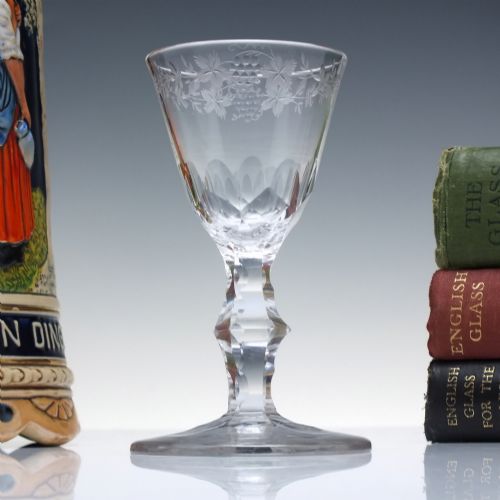
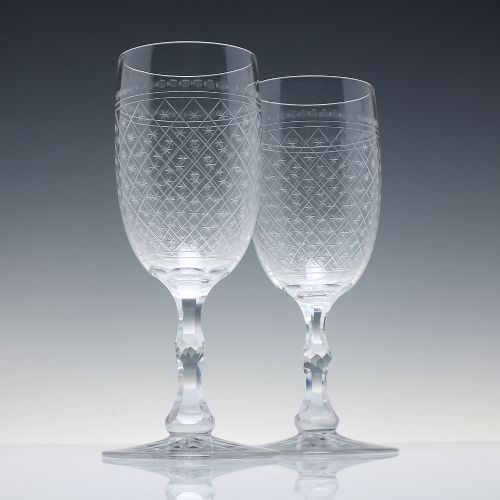
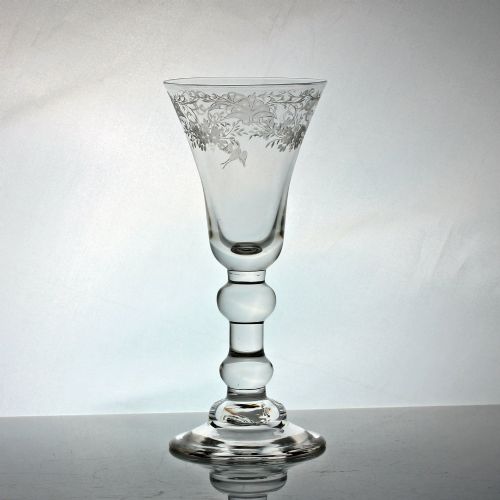
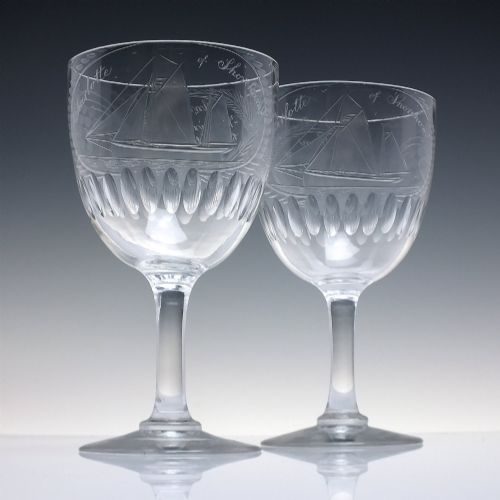
Engraved Glass Drinking Goblet
An engraved glass drinking goblet brings tangible history to the table, offering tactile connection to centuries of social toast and celebration.
Engraved Glass Drinking Goblet
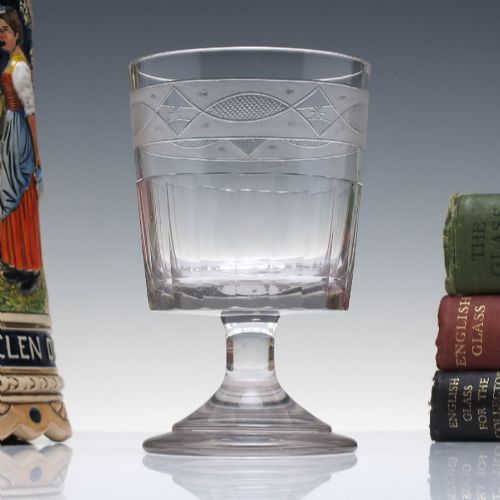
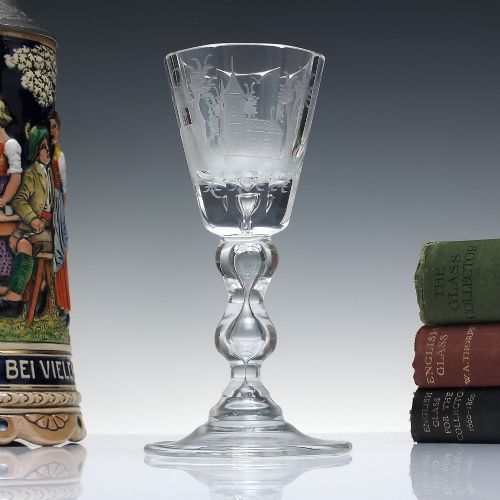
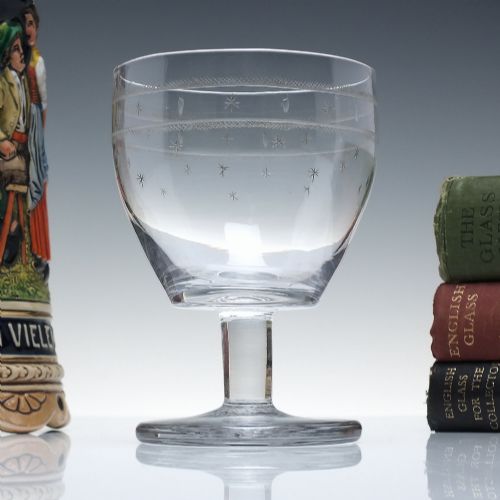
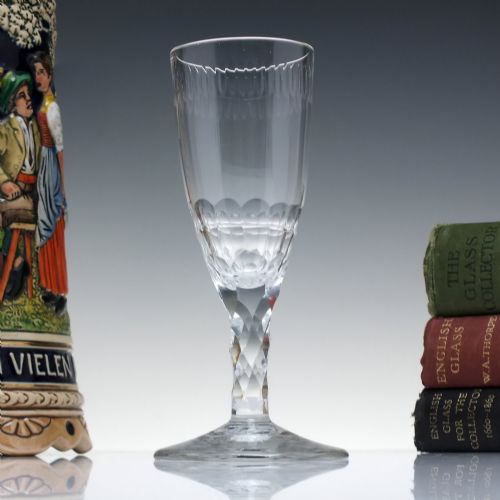
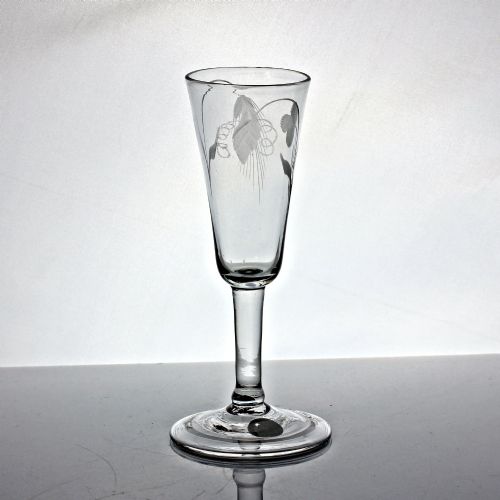
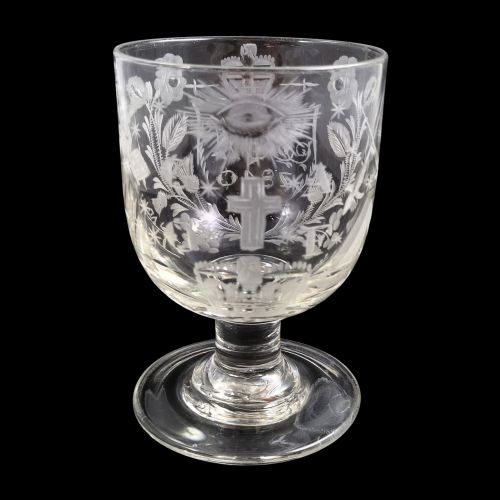
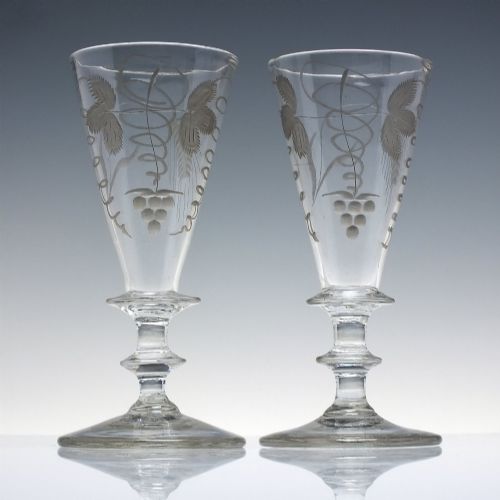
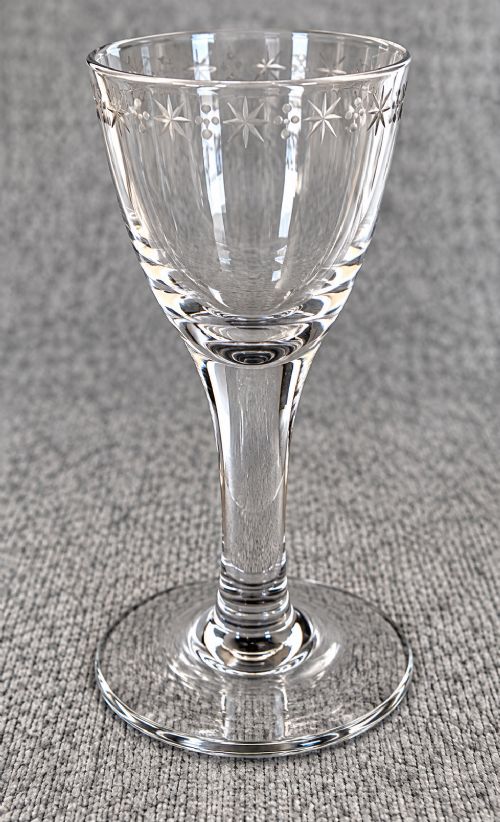
An engraved glass drinking goblet encompasses a diverse range of historic vessels designed for wine, ale, and spirits, spanning from the Georgian era through the Victorian period and into the Edwardian age. Buyers searching this phrase encounter everything from delicate 18th-century baluster stems and opaque twists to robust 19th-century rummers and intaglio-cut services.
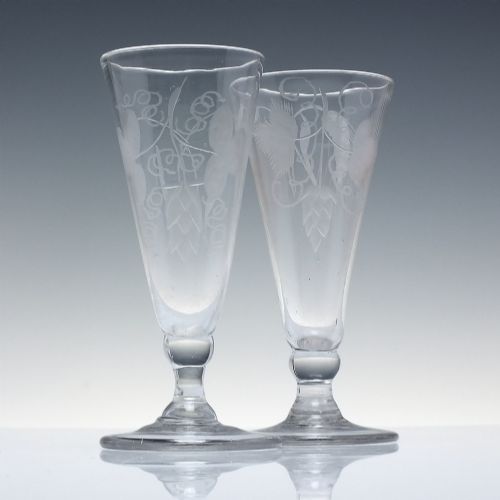
The pieces most frequently met on this page belong to the Georgian and Victorian eras, reflecting centuries of domestic and celebratory drinking customs. Forms vary widely from slender dram glasses and tall ale flutes to heavy square-based rummers and large presentation goblets.
Origins stretch across English workshops as well as Continental centres, notably featuring 17th-century Bohemian influences alongside domestic production hubs like Newcastle. Surviving examples demonstrate the evolution of drinking vessels from early baluster forms to later faceted and intaglio-engraved services.
How they were made
Makers utilised lead glass, lead crystal, flint glass, and clear glass, manipulating high-clarity materials to catch the light across cut facets and engraved surfaces. Techniques involved hand-blowing the vessel before applying intricate wheel-engraving, intaglio cutting, or acid etching to decorate the bowls.
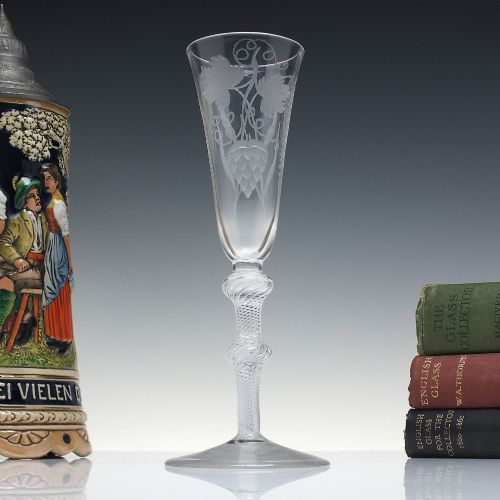
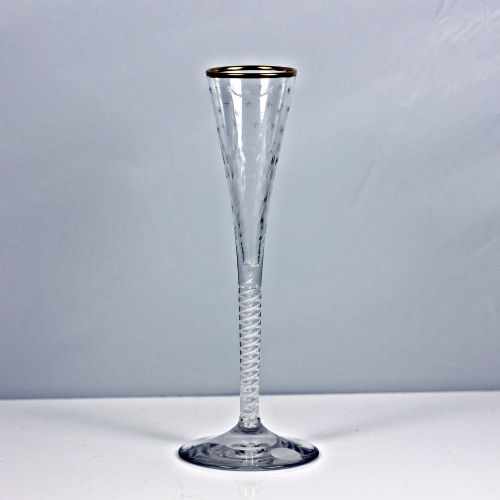
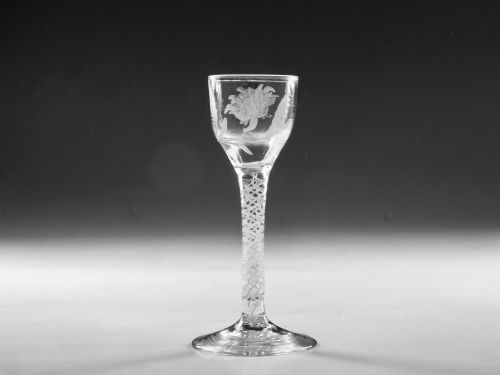
Stems required specialist skill, incorporating air twists, opaque white glass threads, or red colour twists formed within the molten material during manipulation. Feet were often folded for strength or shaped into square lemon squeezer bases using moulds.
Decoration extended beyond simple cutting to include enamelling and gilding upon select bowls, combining surface colour with deep wheel-work. Finishing touches involved polishing pontil marks on the undersides of feet to smooth the point of separation from the blowpipe.
Engraved Glass Drinking Goblet Retail Price Guide 2026
Typical asking prices for engraved glass drinking goblet among the pieces listed under this phrase on Sellingantiques today, from the lower quarter to the upper quarter. They describe what is for sale here now, not the wider market.
Listings feature lead glass, clear flint glass, and coloured twist stems spanning from the 1700s through the Edwardian period.
What varies in quality
Depth and precision of the wheel-engraving separate standard vessels from exceptional examples, with finer cuts showing distinct shading and dimensional detail. The clarity of the lead crystal or flint glass influences how light travels through the bowl and stem.
Proportion and weight dictate the tactile appeal of a goblet, where heavier lead crystal pieces like substantial rummers demonstrate considerable substance compared to lighter dwarf glasses. The complexity of the internal stem formation, such as multi-spiral air twists or dense opaque twist threads, requires advanced glassmaking mastery.
Integrity of form and the crispness of facet cutting define the upper tier of production, ensuring the vessel maintains balance and optical purity. Condition and the preservation of original polished surfaces complete the assessment of overall merit.
Stevens & Williams·Webb Corbett
The Engraved Glass Drinking Goblet Glossary
- Baluster
- A heavy, swelling stem form reminiscent of architectural pillars, common in mid-18th-century English drinking vessels. This shape provided substantial weight and balance to large wine goblets.
- Air twist
- A decorative stem feature containing elongated spiral bubbles trapped within the glass. Makers produced this effect by drawing out air channels inside the molten metal before twisting the stem.
- Opaque twist
- A stem containing fine white or coloured enamel glass threads drawn into spiral patterns. This technique gained immense popularity during the mid-Georgian period.
- Pontil mark
- A rough scar left on the base of a vessel where the punty rod was snapped away after blowing. Quality pieces generally feature a smoothed or polished pontil.
- Rummer
- A capacious, heavy-bottomed drinking glass designed for ale, wine, or punch during the late 18th and 19th centuries. These sturdy vessels often rested on square lemon squeezer bases.
Engraved Glass Drinking Goblet: Frequently Asked Questions
How do I tell an 18th-century goblet from a Victorian copy?
Eighteenth-century pieces typically exhibit characteristic tool marks, darker metal weight variations, and authentic wear patterns on the foot ring. Stem formations like air twists and opaque twists also offer reliable chronological indicators.
Victorian reproductions often feature heavier lead crystal, different wheel-cutting depths, and chemical compositions detectable under ultraviolet light. Examining the pontil scar and overall vessel proportion helps clarify the true period.
Can I use antique goblets for drinking today?
Many sturdy rummers and heavy lead glass goblets remain robust enough for gentle everyday use or special toasts. Hand washing in lukewarm water without abrasive detergents preserves the historic glass surface.
Delicate 18th-century wine glasses and fine intaglio-cut stemware require greater caution due to their fragility and susceptibility to thermal shock. Displaying them safely protects the glass from accidental chips or rim damage.
What distinguishes an ale glass from a wine glass?
Ale glasses generally feature taller, narrower bowls designed to preserve carbonation, frequently decorated with engraved hop and barley motifs. Their stems tend to be shorter and sturdier to withstand tavern or home use.
Wine glasses usually present broader, more open bowls suited to aromatics, paired with longer stems like air twists or balusters. Rummers bridge these categories by offering versatile capacity for various beverages.
What does Jacobite mean on an engraved glass?
Jacobite glasses feature secret political iconography supporting the exiled House of Stuart, such as engraved portraits, roses, and specific hidden symbols. Supporters used these vessels to toast the king over the water during clandestine gatherings.
Genuine examples display period-appropriate engraving techniques and glass metal characteristics consistent with mid-18th-century production. The subtlety of the symbolism reflects the danger associated with expressing loyalty to the banned cause.