






Engraved Crystal Rummer
These heavy drinking vessels are a substantial piece of British drinking history, prized for deep wheel-engraving and satisfying heft.
Engraved Crystal Rummer
When you search for an engraved crystal rummer, you are looking at substantial drinking vessels designed for spirits, ale, and wine from past centuries. The pieces on this page span the eighteenth and nineteenth centuries, featuring Georgian, Regency, and Victorian examples.
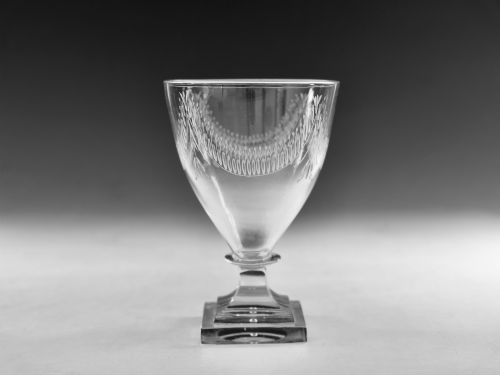
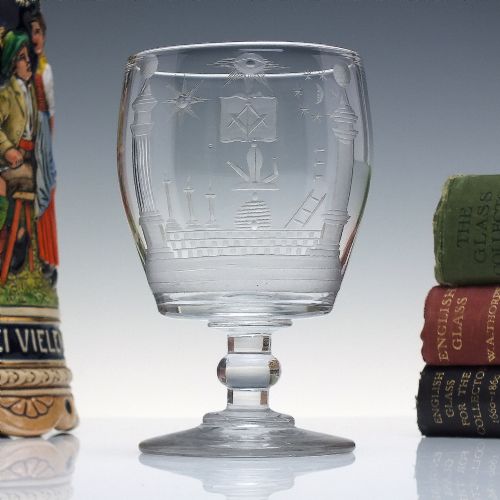
You are most likely to meet English lead-glass specimens featuring traditional motifs like hops and barley, alongside square-based lemon-squeezer designs and larger serving vessels. Forms range from ovoid bowls on plain stems to wide-bowled drinking glasses with armorial or Masonic engravings.
Origins include North-East English workshops as well as Bohemian variations, offering collectors a diverse range of regional engraving styles and foot configurations. These drinking glasses served both everyday domestic use and commemorative functions, recording everything from local bridges to personal initials.
What varies in quality
The distinction between ordinary and superior pieces rests largely on the depth, clarity, and precision of the wheel-engraving. Crisp detail in complex motifs like hops and barley or architectural subjects elevates a piece significantly.
Engraved Crystal Rummer Retail Price Guide 2026
Typical asking prices for engraved crystal rummer among the pieces listed under this phrase on Sellingantiques today, from the lower quarter to the upper quarter. They describe what is for sale here now, not the wider market.
Several glasses record local landmarks like the Sunderland Bridge, proving that eighteenth-century drinkers loved a local landmark as much as we do.
The Engraved Crystal Rummer Glossary
- Rummer
- A large drinking glass used primarily for wine, rum, or ale during the eighteenth and nineteenth centuries. These vessels typically feature generous bowls and sturdy stems.
- Lemon squeezer base
- A square, heavily moulded glass foot shaped to resemble a traditional kitchen lemon squeezer. This distinctive base style is frequently found on Georgian pieces.
- Lead glass
- Glass containing lead oxide, which increases the weight, refractive index, and clarity of the material. It provides the heavy feel characteristic of fine antique drinkware.
- Armorial
- Bearing a coat of arms or heraldic insignia. Engraved armorial details on glass often denote specific families or historical events.
- Roemer
- A continental European drinking glass, often amber or green, similar in function to the British rummer. Bohemian examples frequently appear under this classification.
Engraved Crystal Rummer: Frequently Asked Questions
What were rummers used for?
These large vessels were primarily utilised for serving ale, wine, and rum during social gatherings and dinners. Their robust construction made them suitable for robust toast-drinking.
Over time, larger versions functioned as serving pieces or commemorative objects, often engraved with ships, bridges, or fraternal symbols.
How do I date an antique rummer?
Dating relies on observing bowl shapes, stem formations, and the style of the engraving work. Eighteenth-century and Regency pieces often display heavy lead metal and square lemon-squeezer bases.
Victorian examples frequently introduce etched decoration, cranberry glass, or different foot profiles that distinguish them from earlier Georgian specimens.
Are these glasses safe to use?
Most antique lead crystal pieces remain structurally sound for gentle use, though collectors generally wash them by hand in lukewarm water. Sudden temperature changes can crack historic glass.
Given the age and historical significance of hand-engraved lead glass, many buyers choose to display them rather than use them at the table.
Why do some rummers have square bases?
The square lemon-squeezer base was formed by pressing hot glass into a mould during the late eighteenth and early nineteenth centuries. This design provided exceptional stability for tall, heavy bowls.
Such bases are a hallmark of Georgian and Regency craftsmanship, highly regarded for their geometric precision.