


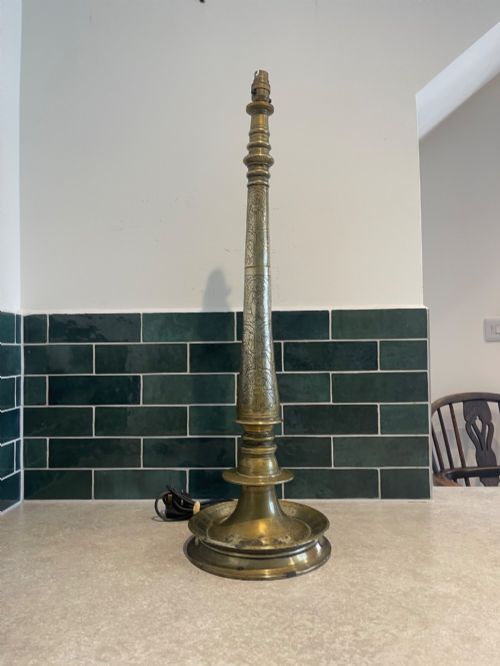



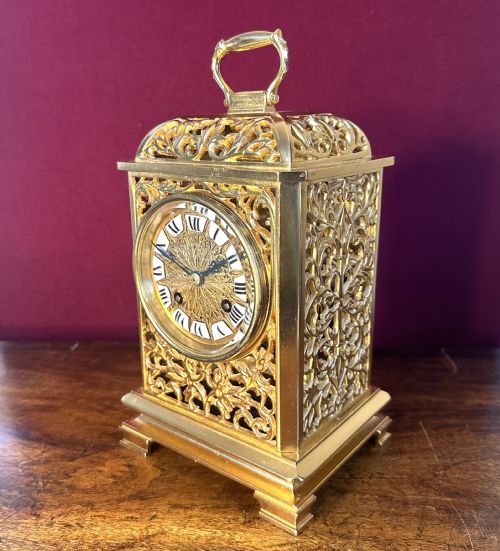

Engraved Brass Table
An engraved brass table brings complex surface work and rich metallic tone into a room, spanning Indian, Persian and European traditions.
Engraved Brass Table
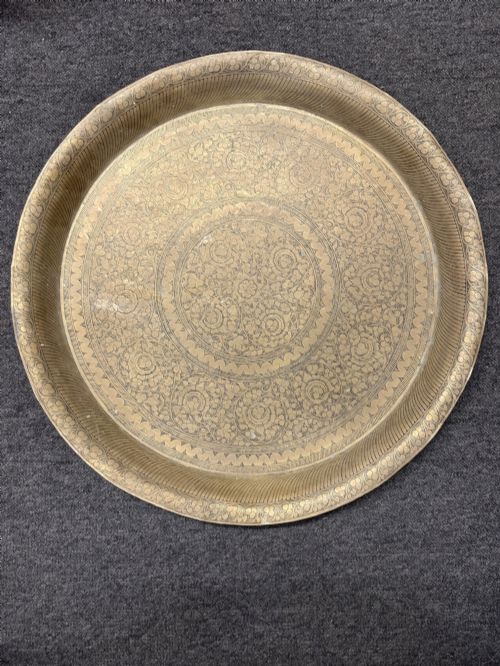
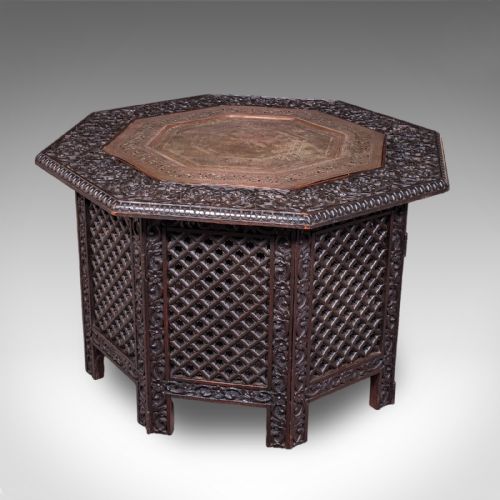
When you search for an engraved brass table, you encounter pieces originating from Indian workshops, Persian makers and European studios, dating from the nineteenth century into the twentieth century. These items include collapsible tray top tables, folding side pieces and tables paired with copper trays or hardwood stands.
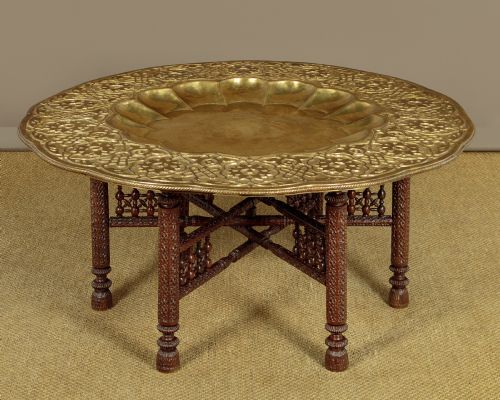
The version most commonly met on this page is the Indian brass table or tray top table, often featuring a folding wooden base alongside a heavily worked brass surface. Alongside these, examples surface from Persian traditions and Italian Art Nouveau production, incorporating engraved copper trays or distinct regional proportions.
Materials and Techniques
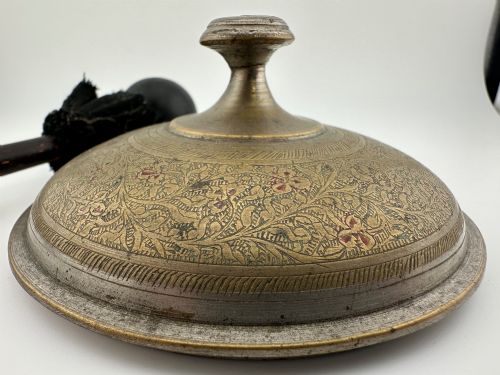
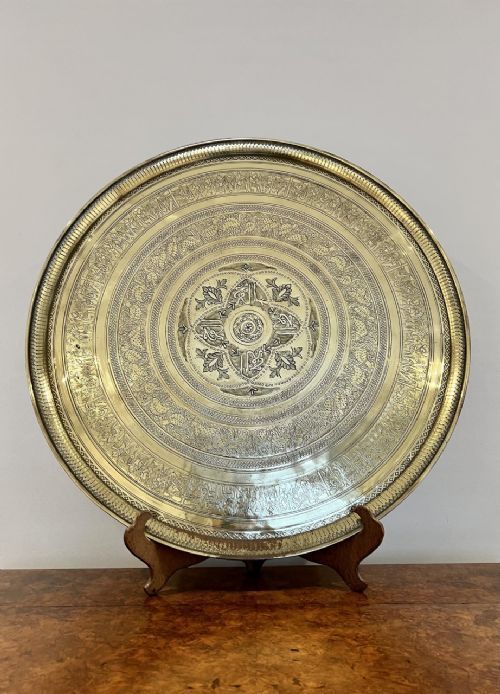
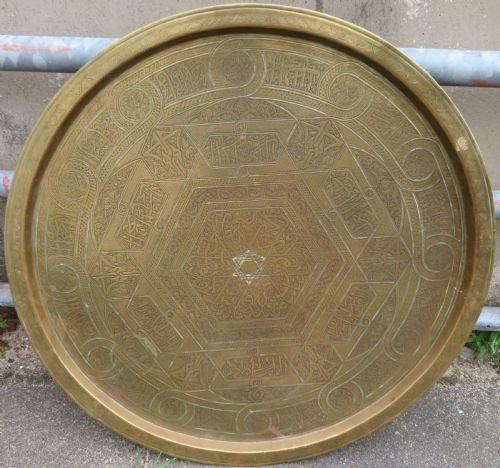
Makers utilised sheet brass and cast brass, often combining these metallic elements with hardwoods, mahogany, rosewood or folding wooden stands to support removable trays. Surface decoration relies on hand engraving, chiselling and occasional mixed metal inlays to create intricate geometric and floral motifs across the top.
Construction techniques balanced portability with stability, seen in collapsible bases designed for easy storage alongside heavy gauge metal plates secured by traditional rivets and joints.
Engraved Brass Table Retail Price Guide 2026
Typical asking prices for engraved brass table among the pieces listed under this phrase on Sellingantiques today, from the lower quarter to the upper quarter. They describe what is for sale here now, not the wider market.
Listings for engraved brass tables on this site span the nineteenth century and the early twentieth century, featuring both Indian and European production.
Assessing Quality
The distinction between ordinary production and superior work rests on the depth, crispness and continuity of the hand engraving across the brass surface. Finer examples display precise chisel work that maintains sharp geometry and clear botanical or calligraphic motifs without shallow areas or careless alignment.
Material thickness and structural integrity further separate the range, as heavier gauge brass resists warping while robustly joined wooden folding bases ensure the tray sits level without wobble.
Thomas Langley·Mappin & Webb·Howell & James·Thomas Cole·James Cole·Hunt And Roskell·Charles Frodsham·Holingue Frères·Drocourt·Tiffany·William Clement·Mathias Bauerle
The Engraved Brass Table Glossary
- Tray top table
- A piece of furniture featuring a removable metal tray resting upon a supporting base, which is frequently folding for convenience.
- Engraving
- The process of cutting designs into a metal surface using sharp hand tools, creating sunken lines that catch the light and shadow.
- Anglo-Indian
- A descriptive term for items made in India during the British period, blending local craftsmanship with European furniture forms.
- Mixed metal
- The decorative integration of different metallic elements, such as copper and brass, within a single surface or object.
Engraved Brass Table: Frequently Asked Questions
How do I clean an engraved brass table?
Dust the surface regularly with a soft, dry cloth to prevent dirt accumulation in the engraved recesses. Avoid harsh chemical polishes that strip away historical patination and age.
Apply gentle, non-abrasive metal cleaners only when necessary, working carefully along the grain and lines of the engraving to preserve the dark contrast within the cut details.
Are folding brass tables sturdy enough for daily use?
Most folding bases on these tables are designed to support standard household objects, but they require careful handling when moving. The stability depends heavily on the alignment of the wooden folding mechanism.
Ensure the support legs lock or rest evenly into position beneath the tray to prevent accidental tipping during use.
What is the difference between Indian and European brass tables?
Indian examples typically feature dense, all-over floral and geometric hand engraving across large brass plates paired with collapsible wooden stands. They reflect distinct regional craftsmanship traditions focused on portable surface decoration.
European interpretations, such as Italian Art Nouveau pieces, often integrate engraved copper or mixed metals into more rigid, stylised furniture frames designed for specific interior aesthetics.
How do I date an antique brass table?
Dating relies on examining the style of the engraving work, the construction methods of the wooden base and any associated hallmarks or stamps. Nineteenth-century pieces often display hand-beaten characteristics distinct from later mass-produced items.
Compare the mounting hardware, wood species and decorative motifs against documented periods like the Victorian era or the early twentieth century to narrow down the decade.