
English Victorian Lighting
English Victorian lighting brings warmth and substance to a room through heavy brass, ruby glass, and oil-burning mechanics.
English Victorian Lighting
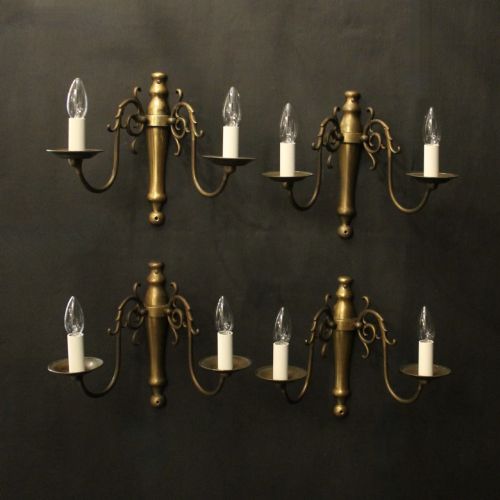
When you search for english victorian lighting, you encounter functional objects designed for illumination before general electrification took hold, spanning brass candlesticks, oil lamps, and wall lights. The nineteenth century yields practical domestic pieces intended for everyday use in hallways, parlours, and dining rooms across England.
You are most likely to meet brass candlesticks and oil lamps from the middle and late nineteenth century on this page. These items reflect the domestic routines of the period, utilising oil, candles, and early gas or electric adaptations to light period interiors.
How they were made
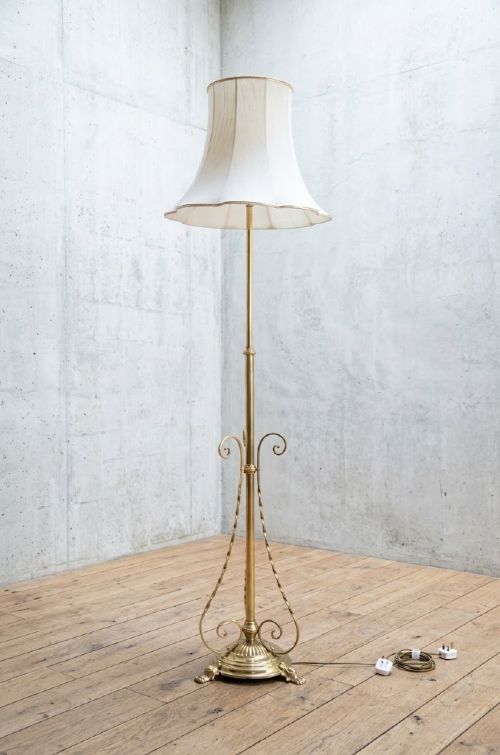
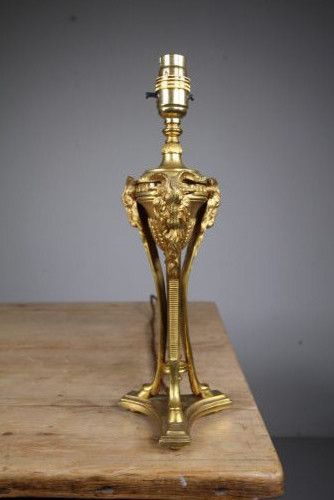
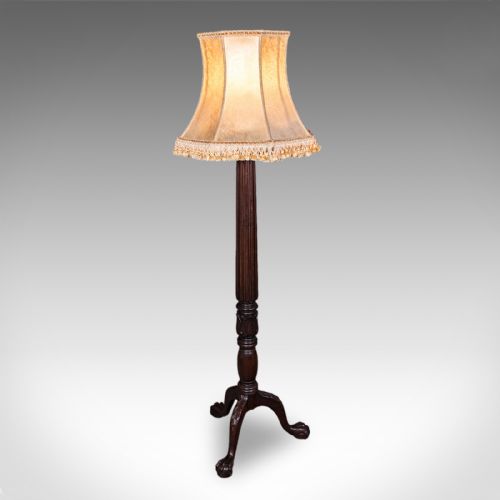
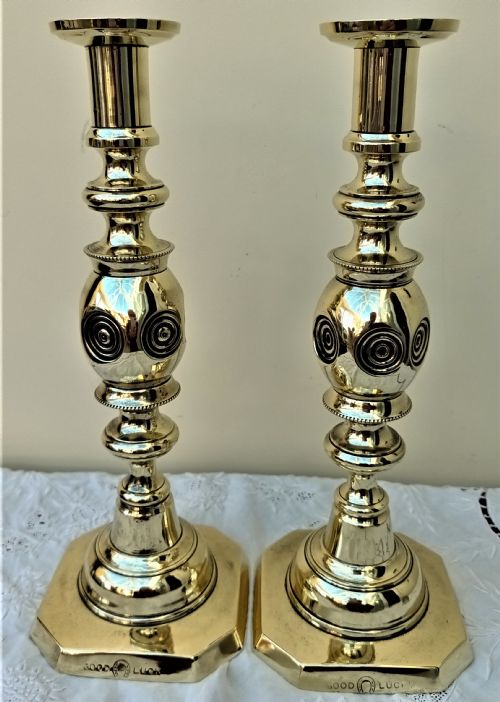
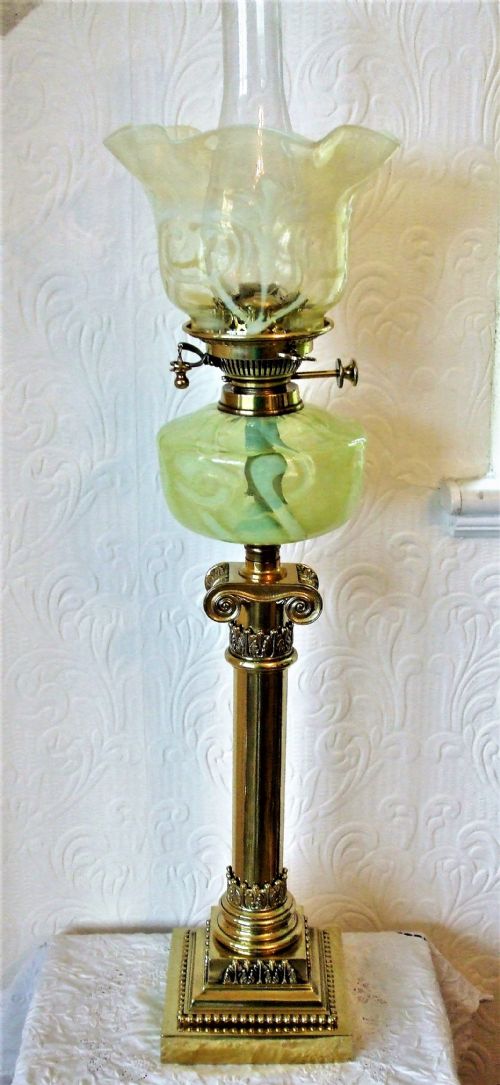
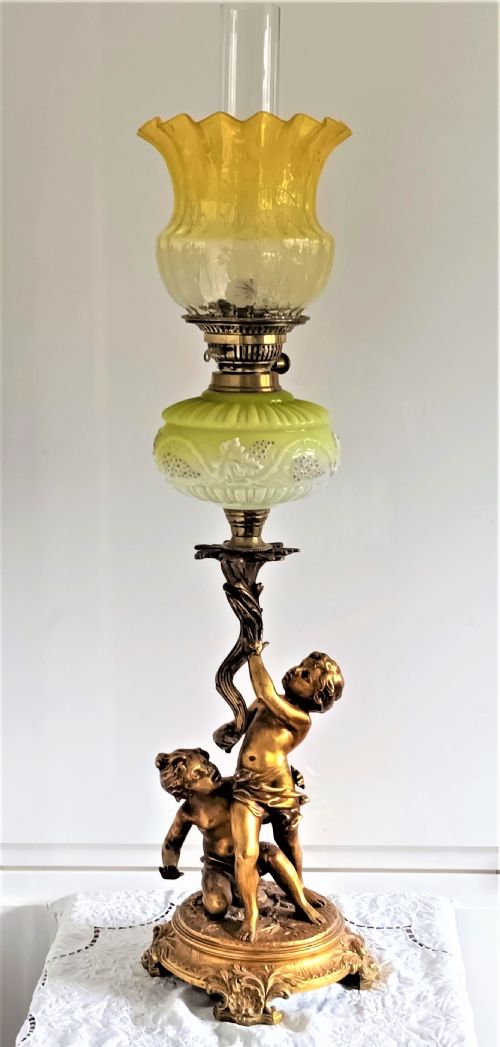
Makers shaped heavy brass, bronze, and ormolu into structural columns, wall brackets, and telescopic floor lamp stands. Metal parts were cast, turned, and sometimes gilded or polished to reflect flickering flame light.
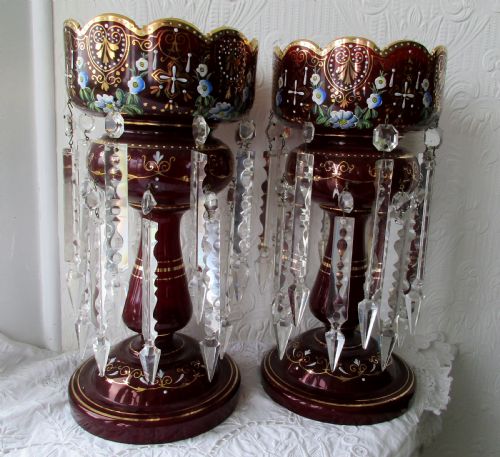
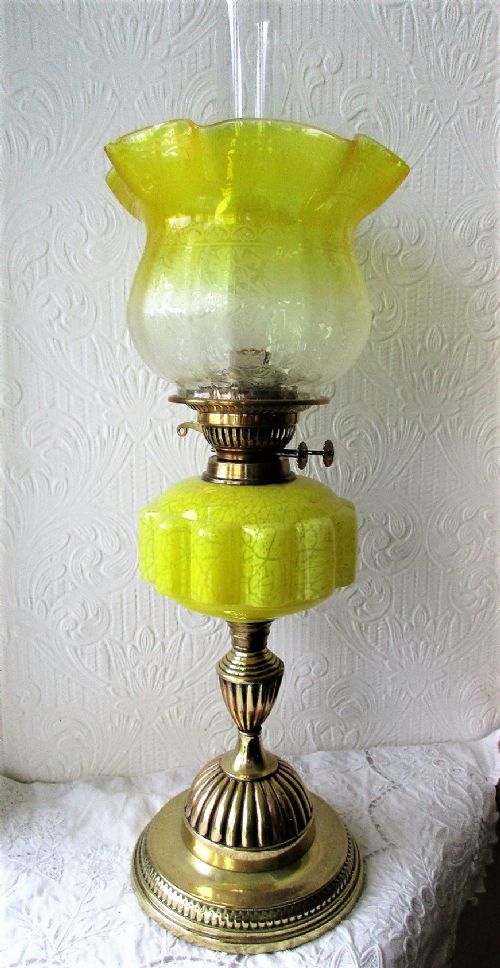
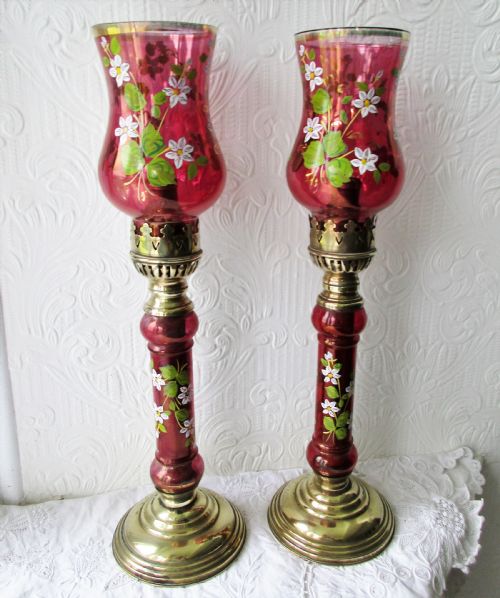
Coloured glass, crystal, and enamel formed decorative shades, reservoirs, and mantel lustres. Ruby, pink, blue, and yellow glass components were mouth-blown and cut, often paired with ceramic bases and iron or wooden supports.
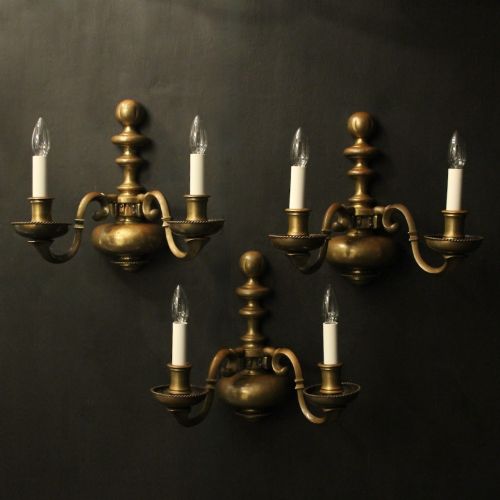
The selection includes nineteenth-century brass, glass, enamel, and ceramic forms spanning oil lamps, candlesticks, and wall lights.
What varies in quality
The weight and gauge of the metal separate sturdy structural pieces from lighter domestic items. Substantial brass castings, thick cut glass, and crisp chased ornamentation indicate superior craftsmanship compared to plain, thin pressings.
Articulated joints on candelabras and complex mechanical burners on oil lamps demonstrate precision engineering. Simpler domestic brass sticks lack these moving assemblies, relying purely on solid form and proportion.
Hinks·Taylor Tunnicliff·Maple & Co.·Thomas Hope
The English Victorian Lighting Glossary
- Lustre
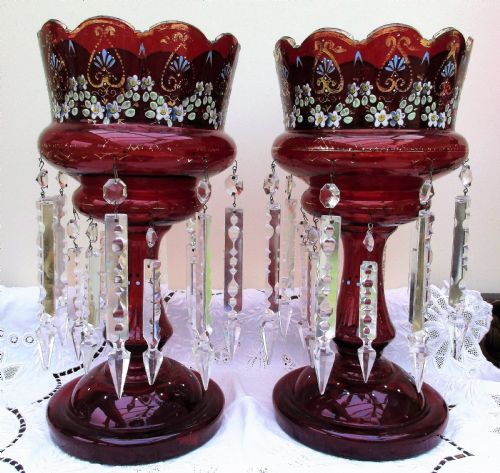
- A decorative tabletop ornament featuring hanging crystal prisms around a glass body. These pieces caught and refracted the light from candles in nineteenth-century rooms.
- Candelabra
- A branched candlestick holding multiple lights on a single stand. These items often incorporate articulated brass arms for adjustable illumination.
- Ormolu
- Gilded bronze applied to decorative mounts and lamp bases. The technique gives a rich gold appearance to cast metal elements.
- Chamberstick
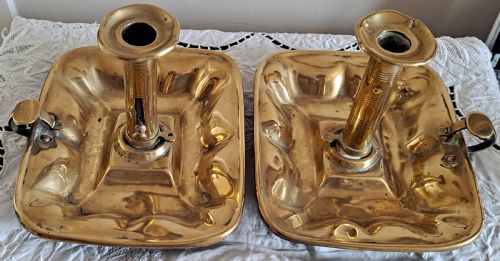
- A short candlestick fitted with a saucer base and a handle. People carried these portable lights through darkened Victorian hallways before bed.
English Victorian Lighting: Frequently Asked Questions
How do I use an oil lamp today?
Many oil lamps are converted for modern electric use while retaining their original burners and reservoirs. Others remain set up for burning paraffin with intact wicks.
Check the collar and burner mechanism to understand how the lamp was adapted or if it requires rewiring by a professional.
What is a mantel lustre?
Mantel lustres are decorative glass vessels hung with crystal prisms, placed on fireplace mantels to reflect candlelight. They bring colour and sparkle to a room.
Coloured ruby, pink, and yellow glass examples dominate nineteenth-century English interiors.
How do I identify Victorian brass?
Victorian brass tends to be heavy and cast in distinct sections rather than stamped from thin sheet metal. Look for hand-finished surfaces and patination built up over decades.
Component parts often screw together with threaded brass fittings characteristic of the nineteenth century.
Where were these lights placed?
Candlesticks and chambersticks travelled through the house on side tables and dressing chests. Larger oil lamps and standard lamps anchored living rooms and libraries.
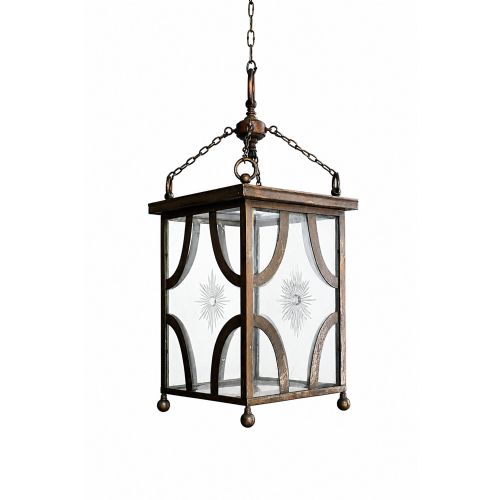
Wall lights and hallway lanterns illuminated transitional spaces like corridors and stairwells.