




English Victorian Footstool
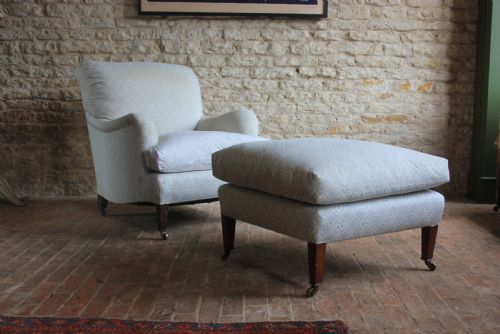
An english victorian footstool brings immediate low-level comfort to a fireside or dressing room, combining solid nineteenth-century timber frames with rich period textiles.
English Victorian Footstool
The english victorian footstool encompasses various low seating forms from the nineteenth century, ranging from compact fireside pieces to generous leather centre stools. Traditional vernacular and country house rooms utilise these items beside armchairs, dressing tables, and window seats.
Makers produced these low seats across the Victorian era, with specific pieces dating from the eighteen-fifties and eighteen-seventies alongside Edwardian examples. Buyers frequently encounter walnut and mahogany frames alongside elm and oak country variants.
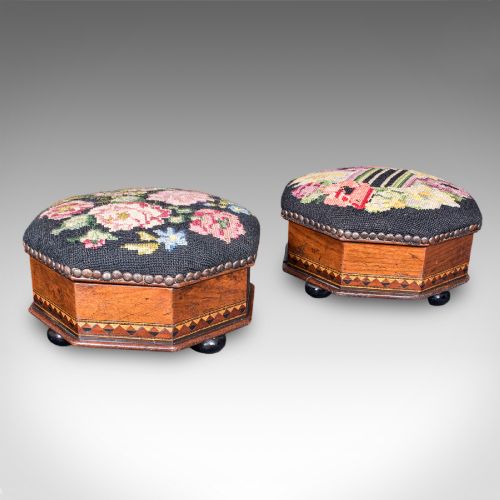
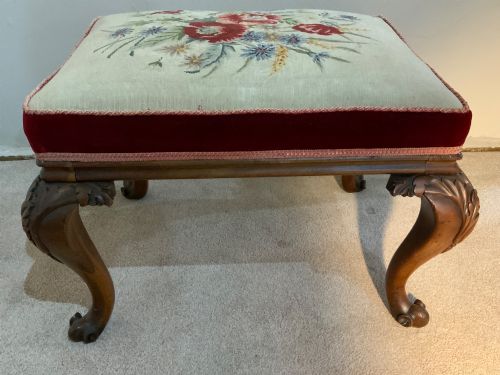
Standard formats include needlepoint fireside stools, gout stools designed for leg elevation, and large upholstered ottomans. Proportions vary from small footrests to substantial salon and parlour seating companions.
Gradations of quality
Quality rests upon the selection of timber and the complexity of the frame's carpentry, distinguishing simple vernacular work from fine cabinet-made salon pieces. Richly figured walnut and mahogany display superior joinery compared to utilitarian elm or oak variants.
The sophistication of the upholstery and needlework elevates a piece, with intricate hand-stitched petit point or heavy buttoned leather representing the upper tier of period production. Maker attribution, such as documented Victorian firms, further elevates the standing of an individual stool.
English Victorian Footstool Retail Price Guide 2026
Typical asking prices for english victorian footstool among the pieces listed under this phrase on Sellingantiques today, from the lower quarter to the upper quarter. They describe what is for sale here now, not the wider market.
Nineteenth-century gout stools offered adjustable sloping tops to soothe weary feet after long parlour evenings.
Howard and Sons·James Shoolbred
The English Victorian Footstool Glossary
- Gout stool
- A specialised nineteenth-century footrest featuring an adjustable sloping top designed to elevate and support the foot or leg of a sufferer. These items often utilise walnut frames and cushioned platforms.
- Centre stool
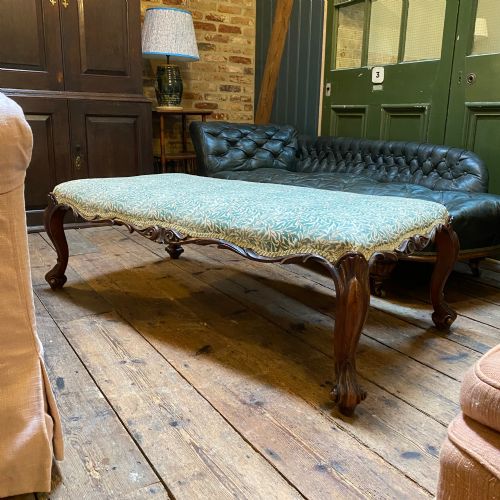
- A large freestanding upholstered seat intended for the middle of a room rather than against a wall. These substantial pieces frequently feature buttoned leather and heavy proportions.
- Needlepoint
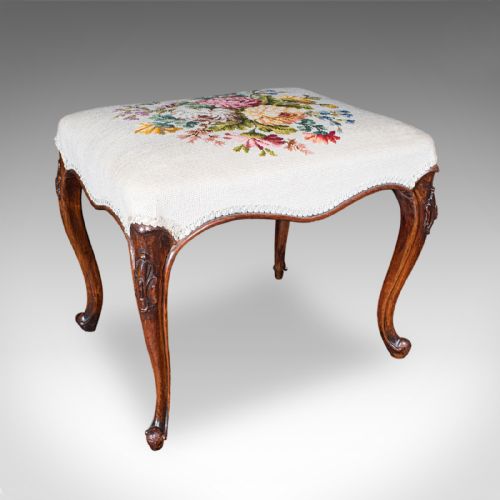
- Hand-stitched canvas work using wool or silk threads to create dense floral or geometric patterns. It covers the upper surfaces of many nineteenth-century fireside stools.
- Cabriole leg
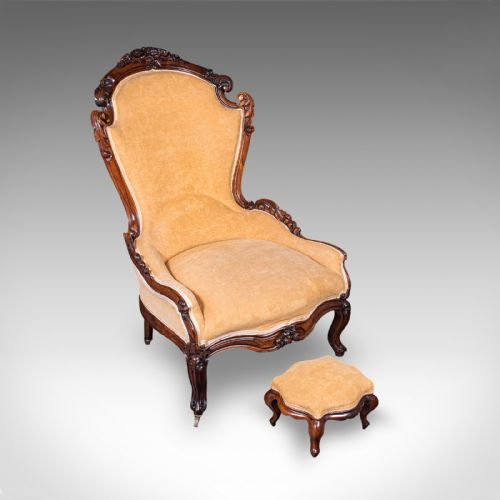
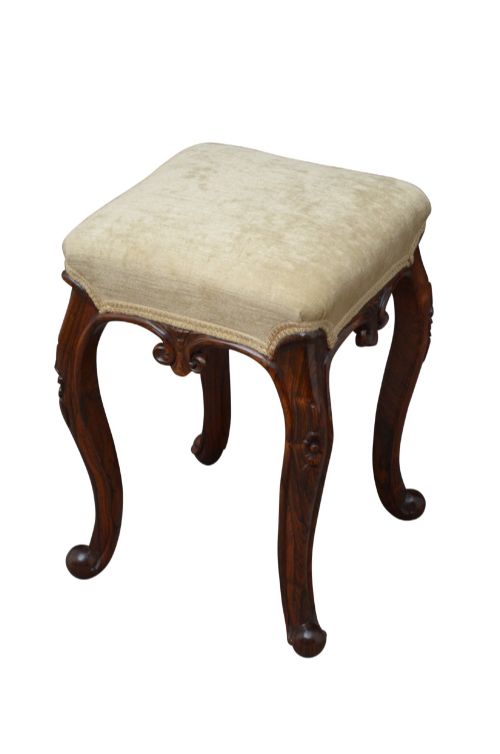
- A furniture leg that curves outward in a convex arc and then bends inward in a concave arc, terminating in a foot. This stylistic feature appears on refined Victorian dressing table stools.
- Windsor stool
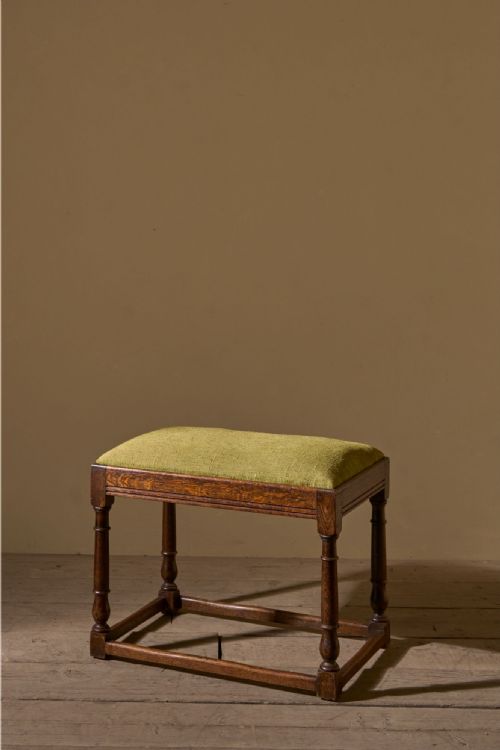
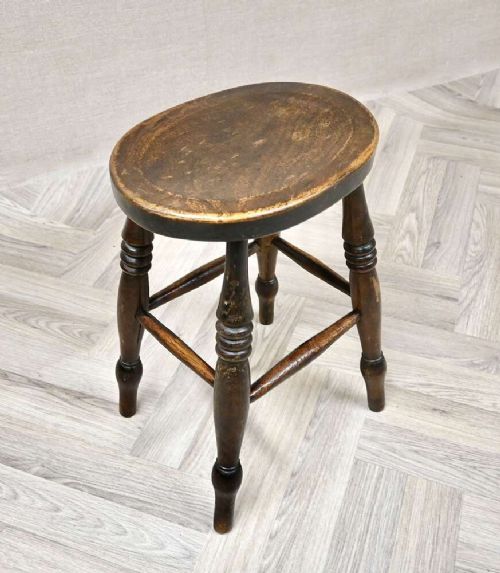
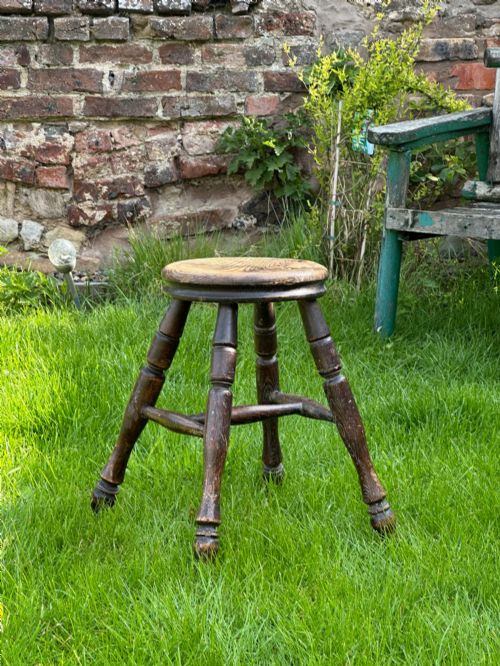
- A sturdy country seat constructed with turned legs wedged into a solid wooden seat block. These vernacular pieces reflect traditional regional woodworking methods.
English Victorian Footstool: Frequently Asked Questions
What is an english victorian footstool used for?
These low seats served multiple domestic functions across nineteenth-century homes, primarily providing foot support beside parlour armchairs and firesides. Smaller variants functioned near dressing tables, while larger centre stools provided flexible extra seating in principal rooms.
Today, they suit similar placement in living spaces, serving as movable footrests, low coffee table alternatives, or decorative accents beneath windows.
How do I identify a true victorian footstool?
Authentic pieces exhibit nineteenth-century construction methods, including traditional joinery, timber shrinkage, and period hardware such as brass castors. Materials typically match Victorian preferences, showcasing walnut, mahogany, elm, or oak frames paired with hand-stitched needlepoint or leather upholstery.
Check the underside and framing for signs of age and tool marks consistent with nineteenth-century workshop practices. Exact dating relies on stylistic clues like cabriole legs or documented mid-century proportions.
Are these stools suitable for daily use?
Solid nineteenth-century timber frames and traditional joinery make these pieces remarkably durable for contemporary living. Many retain robust structures that easily withstand regular resting of feet or occasional sitting.
Historic upholstery may require professional conservation or reupholstery to support heavy modern use. Sturdy frames in good condition integrate seamlessly into active household routines.
How should I care for antique wood and upholstery?
Protect wooden frames by avoiding direct sunlight and excessive humidity changes that can dry out walnut or mahogany. Regular dusting with a soft, dry cloth preserves the finish without chemical buildup.
Upholstery requires gentle vacuuming with a low-suction attachment to remove surface dust from needlepoint or velvet. Professional textile cleaning safeguards fragile antique threads and historic fabric structures.