

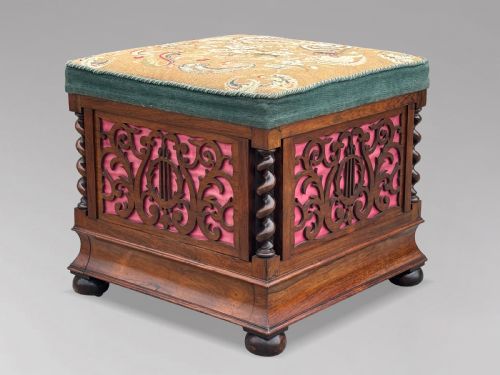


Embroidered Ottoman Stool
These embroidered ottoman stool examples combine period timber frames with needlework tops, offering functional seating and rich textile history.
Embroidered Ottoman Stool
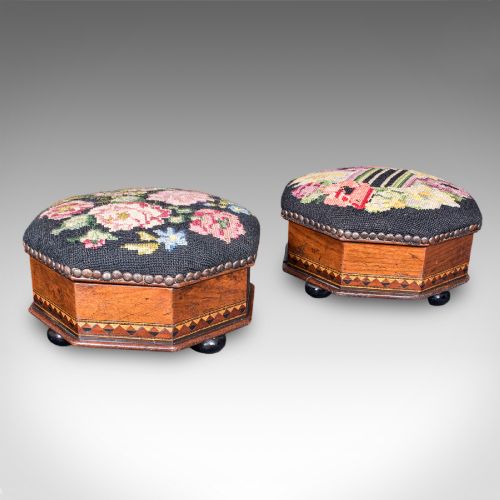
An embroidered ottoman stool takes several forms across the nineteenth century, including footstools, piano stools, dressing stools, and larger ottoman seats. You will most frequently encounter Victorian pieces, alongside items from the 1850s, 1860s, 1870s, 1880s, 1890s, and 1920.
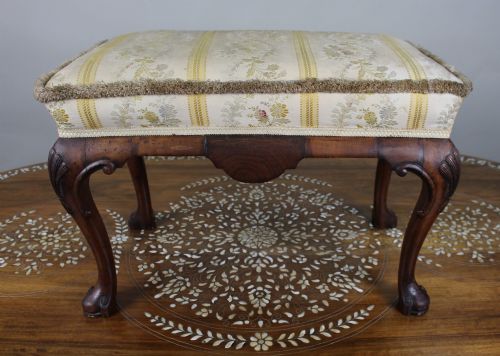
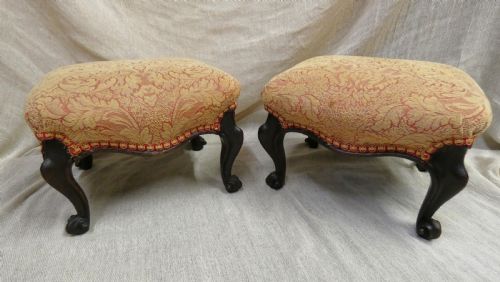
The underlying timber frames vary in style from Georgian and Queen Anne Revival to Louis XV Revival, Chippendale Style, and Victorian Rococo Revival. These sturdy supports carry upholstered tops worked in wool, needlework, tapestry, and needlepoint.
Makers shaped these low seats for specific rooms in the house, from the piano stool and dressing stool to the bedroom bedding box and the parlour footstool. Each version provides a tangible link to domestic textile crafts of the Victorian era and adjacent decades.
How they were made
Cabinetmakers constructed the supportive frames using hardwoods such as mahogany, walnut, rosewood, burr walnut, and oak. These timbers were shaped into cabriole legs, turned supports, and curved stretchers to match prevailing revival styles.
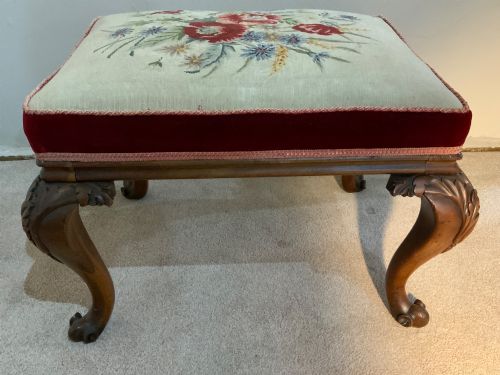
Artisans applied dense needlework, tapestry, and wool embroidery across the top surfaces, often framed by fabric trim or backed with velvet and damask fabric. This needlepoint work required weeks of hand stitching before being secured over padding onto the wooden base.
Embroidered Ottoman Stool Retail Price Guide 2026
Typical asking prices for embroidered ottoman stool among the pieces listed under this phrase on Sellingantiques today, from the lower quarter to the upper quarter. They describe what is for sale here now, not the wider market.
Periods represented span from the Georgian era through the Victorian decades up to the 1920s.
What varies in quality
The sophistication of the timber carving and the choice of primary wood dictate the foundational grade of the piece, moving from standard mahogany and oak up to figured burr walnut and rosewood. Finer frames exhibit crisp detailing in revival styles like Louis XV and Chippendale.
The density and pictorial complexity of the wool embroidery, tapestry, or needlepoint set the upper tier apart from simpler textile coverings. Intricate hand-worked needlework paired with rich velvet or damask fabric indicates superior original commission value.
The Embroidered Ottoman Stool Glossary
- Needlepoint
- A type of canvas work embroidery stitched with wool or silk threads, frequently forming the decorative top of an ottoman stool. This technique allows for detailed pictorial and geometric patterns.
- Tapestry
- A hand-woven or heavily embroidered textile depicting figurative scenes or floral motifs. It provides a durable and colourful surface for nineteenth-century seating.
- Cabriole leg
- A furniture leg that curves outward and then tapers inward, finishing in a pad or scroll foot. This shape is characteristic of Queen Anne and Louis XV revival styles.
- Damask
- A reversible figured fabric woven on a jacquard loom, often utilised for the side upholstery or trimming of stools. Its woven patterns catch the light through contrasting matte and lustrous finishes.
Embroidered Ottoman Stool: Frequently Asked Questions
What rooms were these stools used in?
These pieces served multiple functions across the home, appearing beside pianos, dressing tables, and fireplaces. They provided movable seating and foot support in Victorian parlours and bedrooms.
Larger variations also functioned as bedding boxes or central ottomans. Their dual role combined comfort with practical interior storage or foot elevation.
How do I date an upholstered stool?
Dating relies on observing the secondary woods, frame construction methods, and the style of the carved woodwork. Revival motifs like Chippendale or Louis XV often indicate specific decades within the nineteenth century.
The style of the needlework and the type of underlying fabric also offer clues to the period. Victorian pieces frequently display distinct wool tapestry patterns from the 1850s to the 1890s.
What is the difference between a footstool and an ottoman?
Footstools are generally smaller, lower pieces designed primarily for resting the feet while seated in a chair. Ottomans often provide larger upholstered surfaces and sometimes include internal storage for bedding.
Both forms utilise similar timber frames and embroidered textile tops. The distinction usually rests on the overall scale and the presence of a lidded compartment.
How should I care for vintage needlework?
Protect the wool embroidery and tapestry surfaces from direct sunlight to prevent fading of the coloured threads. Gentle vacuuming through a mesh screen helps remove dust without damaging the old fibres.
Avoid placing these textiles in areas of high humidity to protect both the fabric and the underlying wooden frame. Professional conservation cleaning is recommended for delicate antique upholstery.