




English Victorian Art Glass
English victorian art glass brings together vivid cased colours, satin finishes and iridescent surfaces created during the nineteenth century.
English Victorian Art Glass
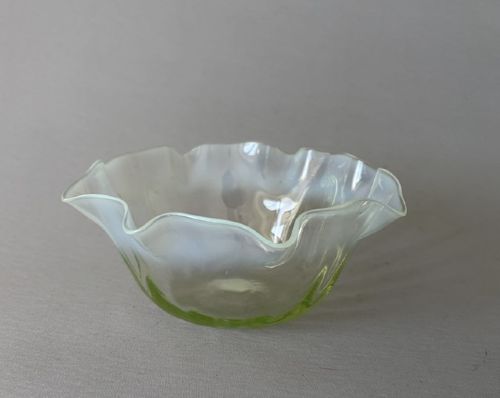
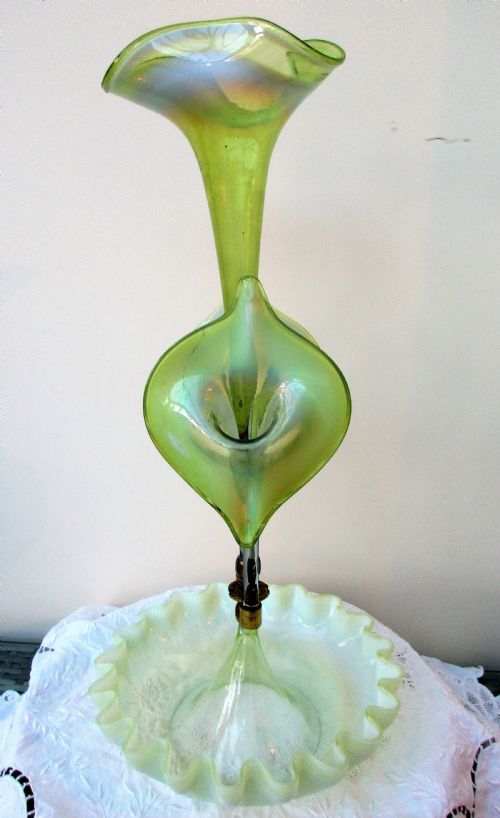
English victorian art glass encompasses domestic vessels and decorative objects produced primarily in the nineteenth century, reflecting various aesthetic shifts from the mid-Victorian period onward. The selection centres on vases, epergnes and table centrepieces, alongside related decorative pieces incorporating glass elements.
Vessels range from satin glass vases in blue and pink to crystal lily forms with delicate cane decoration and pink trails. Pieces often display specific Victorian styles, including the Aesthetic Movement and early Art Nouveau experiments.
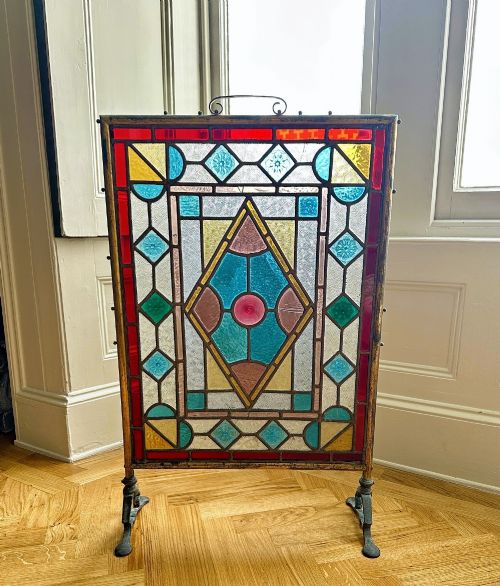
Makers and designers working in England during this era produced distinctive textured and coloured wares, frequently utilising techniques developed by leading glassworks. The category also captures associated works of the period such as framed glass panels and stained glass screens.
Materials and Techniques
Makers shaped these objects using blown and cased glass, layering different coloured metals within the molten material to achieve rich optical depth. Satin finishes required acid-etching the exterior of a cased vessel to produce a velvety texture.
Enamelling and applied trails added surface pattern and colour contrast, seen particularly in floral motifs and white cane decoration. Metal mounts in brass or iron frequently supported glass components like firescreens and oil lamps.
Rolling pins in Nailsea glass were traditionally filled with salt or tea by sailors and given to loved ones as tokens of safe return.
Judging Quality in Glass
Quality rests upon the precision of the glassblower's hand and the complexity of the vessel's construction. Double-walled and cased pieces demand high technical skill to maintain even wall thickness and clean colour boundaries.
The sophistication of surface decoration separates standard production from superior examples. Finely executed enamel work, well-finished metal mounts and identifiable attribution to workshops elevate a piece.
Webb·Stuart for Liberty·Powell or Nazeing·Messengers / Harrods
The English Victorian Art Glass Glossary
- Cased Glass
- Glass made from two or more distinct layers of different colours, often blown together and manipulated to reveal the underlying tint.
- Satin Glass
- Glass treated with hydrofluoric acid vapour to produce a characteristic matte finish that feels soft to the touch.
- Epergne
- A large table centrepiece featuring multiple branching holders or baskets, commonly used for fruit or flowers.
- Nailsea Glass
- Glassware characterised by looped or splashed white or coloured enamel threads embedded within a clear or tinted ground.
- Crystoleum
- A Victorian method of applying a hand-coloured print to concave glass and backing it to create a luminous image.
English Victorian Art Glass: Frequently Asked Questions
How do I clean antique glass?
Wash pieces gently by hand using lukewarm water and mild detergent, avoiding harsh abrasives that might damage enamel or satin surfaces.
Dry immediately with a soft, lint-free cloth to prevent water spots on delicate crystal and cased finishes.
Were these items used daily?
Many vessels served functional roles on nineteenth-century dining tables and mantelpieces, holding flowers, oil or confectionery.
Others functioned purely as decorative objects intended to catch the light in drawing rooms.
How can I tell the period?
Examine the pontil mark on the base, the weight of the metal components and the specific colour palette associated with Victorian production.
Stylistic cues such as Aesthetic Movement motifs or early Art Nouveau curves also help narrow the date.