







English Tin Glazed Charger
An english tin glazed charger brings centuries of earthenware history into a room with bold pigments and generous proportions.
English Tin Glazed Charger
When you search for an english tin glazed charger, you encounter large earthenware plates and platters shaped by 18th century makers in styles such as Delftware, Dutch Baroque, and Georgian Chinoiserie. These pieces served primarily as decorative displays rather than everyday tableware, showcasing broad surfaces suited to pictorial painting.
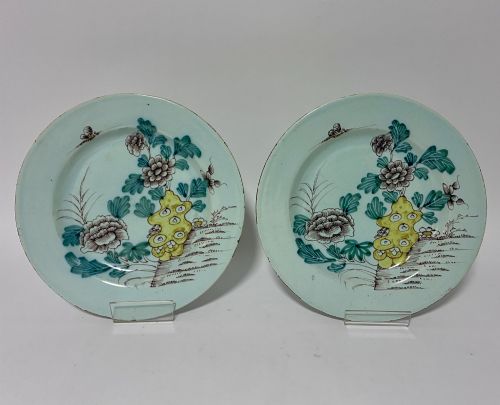
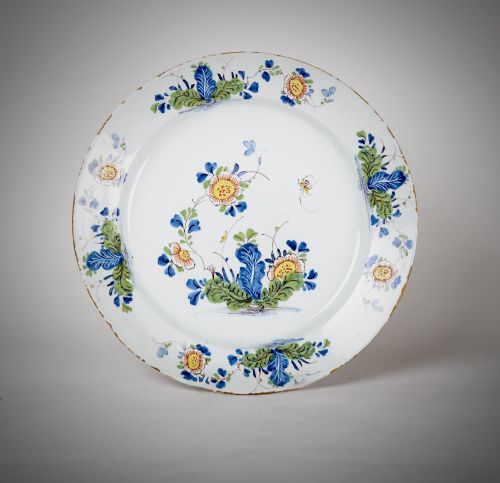
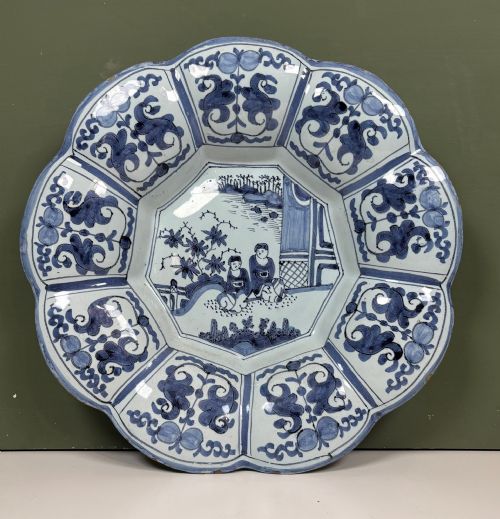
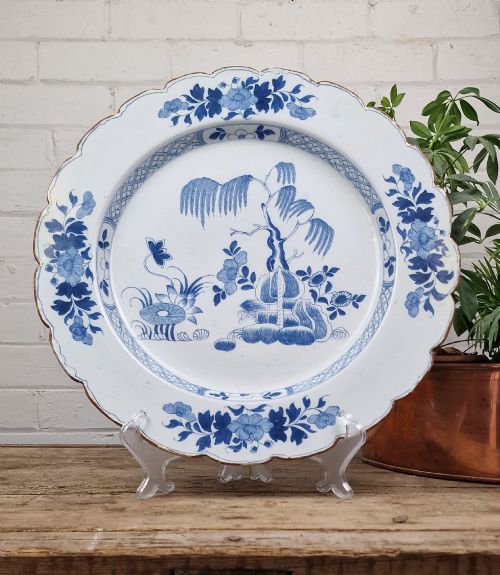
The objects on this page span the 18th century, appearing as blue and white chargers, polychrome dishes, marriage plates, and shallow bowls. Chargers dominate the selection, offering substantial diameters that make them focal points on walls or dressers.
Originating from English production centres like Lambeth and Bristol, these ceramics reflect trade influences and continental potter traditions adapted by domestic makers. Buyers find both matching pairs and individual plates bearing hand-painted floral, figurative, and abstract motifs.
How they were made
Potters shaped local clay into plates and chargers before firing the earthenware body to create a stable biscuit base. This porous ceramic body required a specialised coating to hold liquid decoration and provide a smooth surface.
Workers applied an opaque tin-glaze over the fired clay, turning the surface a milky white or pale cream tone. Onto this absorbent glaze, painters brushed cobalt pigment, cobalt oxide, and polychrome colours by hand before a final kiln firing fixed the design.
English Tin Glazed Charger Retail Price Guide 2026
Typical asking prices for english tin glazed charger among the pieces listed under this phrase on Sellingantiques today, from the lower quarter to the upper quarter. They describe what is for sale here now, not the wider market.
18th-century potters occasionally recorded wedding vows and initials directly onto tin-glazed surfaces, creating permanent ceramic cards for newlyweds.
What varies in quality
Quality rests upon the confidence of the brushwork and the clarity of the painted motifs across the tin glaze. Superior examples display fluid, deliberate brush strokes in cobalt or polychrome pigments, whereas weaker pieces show hesitant lines or muddy colour mixing.
The smoothness and opacity of the tin glaze itself dictate the visual appeal of the surface. Even firing and minimal kiln adhesion marks distinguish finer chargers from domestic utilitarian wares produced with less care.
Lambeth Delft·Bristol Delft
The English Tin Glazed Charger Glossary
- Tin glaze
- An opaque white glaze produced by adding tin oxide to a lead glaze mixture. This technique provides the characteristic pale background typical of delftware.
- Charger
- A large decorative plate or platter intended for display on sideboards or walls. These substantial ceramic pieces measure significantly wider than standard dining plates.
- Polychrome
- Decoration employing multiple colours rather than a single pigment. In these ceramics, it typically describes floral or figurative scenes painted in greens, reds, yellows, and blues.
- Cobalt pigment
- A metallic oxide used to create deep blue decoration on ceramic surfaces. It withstands high firing temperatures without losing its intense hue.
- Chinoiserie
- European artistic styles reflecting Chinese decorative motifs and landscapes. This aesthetic appears on mid-18th century plates featuring stylised pavilions, figures, and foliage.
English Tin Glazed Charger: Frequently Asked Questions
What is an english tin glazed charger?
An english tin glazed charger is a large earthenware plate coated in a tin-oxide glaze and painted by hand during the 18th century. These pieces feature cobalt blue or polychrome decoration and were made for display.
Potters in centres like Lambeth and Bristol produced these items in styles influenced by Dutch Delftware and Chinese porcelain imports.
How were these chargers used originally?
These large dishes were primarily displayed on sideboards, dressers, and walls rather than used for serving food at the dining table. Their generous size and painted scenes made them status items in Georgian homes.
Some specialised pieces, such as marriage plates, commemorated specific family events and were kept as heirlooms.
How do you hang a heavy charger?
Displaying a heavy earthenware charger safely requires a specialist spring-clip hanger padded with rubber or vinyl to protect the rim. The wall fixture must be secured directly into masonry or a stud.
Wire or makeshift cords should be avoided to prevent slipping and potential damage to the ceramic body.
How do blue and white differ from polychrome?
Blue and white chargers rely solely on cobalt oxide applied to the white tin glaze, creating designs reminiscent of imported Chinese porcelain. This monochromatic palette was widely produced throughout the 18th century.
Polychrome chargers incorporate additional mineral colours like yellow, red, and green, offering more varied floral and figurative compositions.