



English Still Life Artwork
English still life artwork brings domestic flora, gathered fruit and game onto paper and canvas through the hands of nineteenth and twentieth-century painters.
English Still Life Artwork
English still life artwork encompasses paintings executed in oil on canvas and watercolour on paper, framed by glass and wood. When you explore english still life artwork on this page, you encounter pieces spanning from the eighteenth century through the Victorian era into mid-century modern British production.
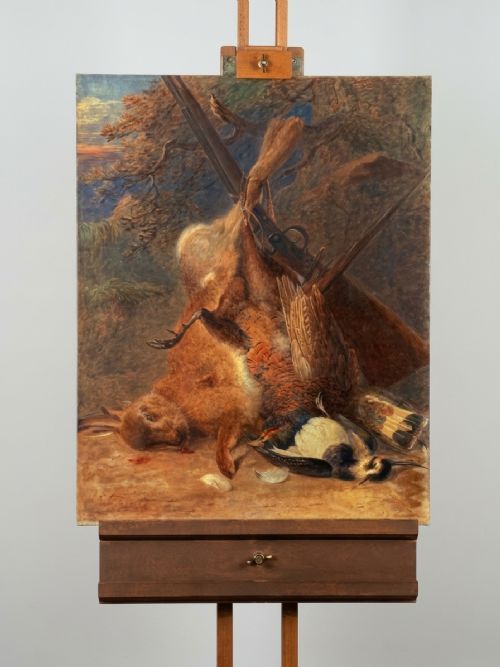
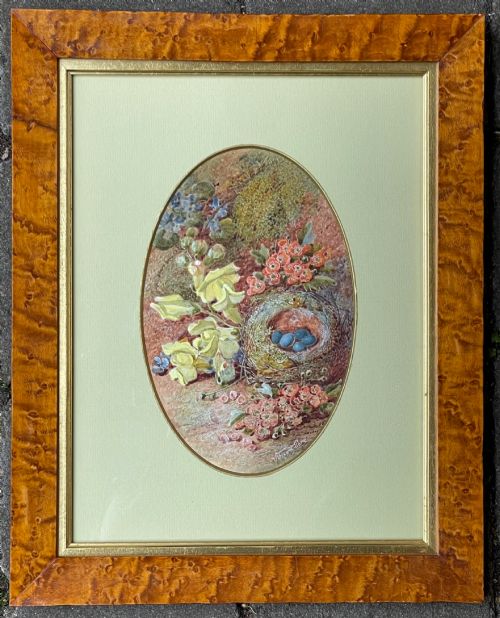
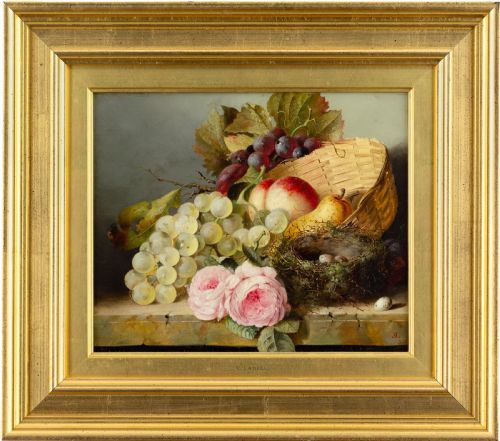
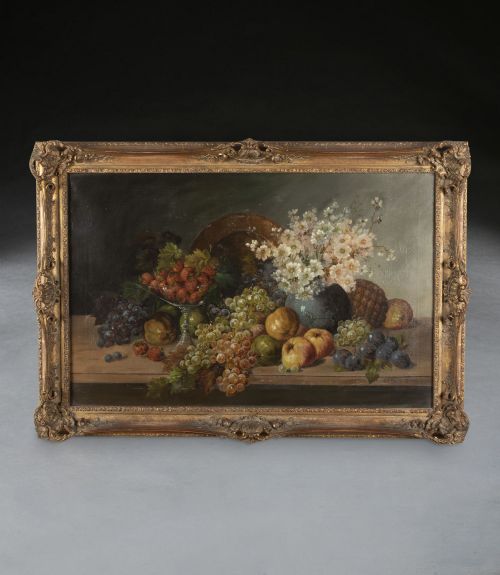
The dominant forms are oil paintings and watercolour paintings that capture botanical studies, cut flowers in jugs, and arrangements of fruit with bird's nests. Victorian naturalism sits alongside early twentieth-century compositions and mid-century modern works.
The makers represented range from named Victorian painters to mid-century British artists like James Tower. Works appear under styles including Edwardian traditional, Victorian, and trompe-l'œil.
Materials and execution
The physical basis of these pieces relies heavily on oil paint applied to canvas and watercolour or bodycolour applied to paper. Frames incorporate wood, giltwood, and glass to protect the delicate paper works and heavier canvases alike.
Pigments capture botanical subjects such as pansies, roses, wallflowers, and cosmos flowers alongside game and dessert fruit. Support structures range from unstretched paper sheets to heavy wooden stretcher frames holding primed canvas.
Several painters could not resist adding a tiny bird's nest filled with fragile blue eggs right beside the morning fruit.
Evaluating the work
Quality reveals itself in the handling of light across petals, mossy banks, and glazed pottery jugs. A stronger hand renders the texture of fruit skins and bird feathers with distinct conviction rather than generalised washes.
The integration of the composition across the picture plane dictates the visual success of the piece. Superior examples demonstrate confident draughtsmanship beneath the watercolour or oil, holding the arrangement together without stiffness.
George Sydney Shepherd·Vincent Clare·Edward Ladell·John Sherrin·Benjamin Blake·James Tower·William Hough·Grace Hastie·Thomas Hooper·Phyllis I Hibbert·Marian Chase·Marion Broom·Edith Alice Andrews·William Jones Of Bath·Herbert Davis Richter·Amy Reeve-Fowkes·James and William Ward
The English Still Life Artwork Glossary
- Watercolour on paper
- A painting medium where pigments are suspended in a water-based solution and applied to paper supports. This technique often produces luminous botanical studies.
- Bodycolour
- Watercolour mixed with a white pigment to make it opaque. Artists utilise this method to add dense highlights to feathers and flower petals.
- Oil on canvas
- Pigments bound in drying oils applied to a woven fabric stretched across a wooden frame. This medium allows for deep layering and rich tonal depth.
- Giltwood
- Wood that has been coated with a thin layer of gold leaf or gold paint. Frames of this material frequently encase Victorian and Edwardian canvases.
- Trompe-l'œil
- An art technique involving extreme realism that optical-illusions the viewer into perceiving three-dimensional objects. Such paintings trick the eye regarding depth and space.
English Still Life Artwork: Frequently Asked Questions
What subjects feature in english still life artwork?
The pieces display structured arrangements of cut flowers in jugs, bowls of apples, summer flora, and wallflowers. Other common subjects include game birds, hares, wicker baskets, and dessert fruit resting on mossy banks.
Compositions reflect botanical observation and traditional domestic interior studies across different decades.
How do I care for watercolour paintings?
Watercolour pieces require protection from direct sunlight to prevent the fading of delicate pigments on paper. Framing behind glass with acid-free mounts safeguards the paper support from atmospheric moisture and dust.
Keep these artworks in stable environmental conditions away from damp walls and excessive heat.
How are oil paintings on canvas structured?
Oil paintings utilise woven canvas stretched over wooden frames to hold the pigment layers. Giltwood or wooden frames support the outer edges and protect the canvas from physical impact.
The medium allows for rich textures that survive centuries when kept away from extreme humidity.
Can I identify the period from the framing?
Original frames often match the era of the painting, utilising giltwood or timber styles specific to Victorian, Edwardian, or mid-century aesthetics. However, many historic paintings have been reframed later in their lifespan.
Stylistic cues within the brushwork and the signature usually provide a more reliable date than the frame alone.