


English Sterling Silver Condiments
English sterling silver condiments are traditional dining table wares shaped from solid silver, offering lasting utility and timeless style for the home.
English Sterling Silver Condiments
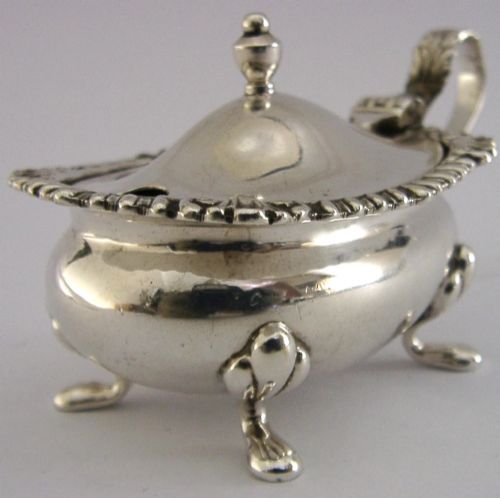
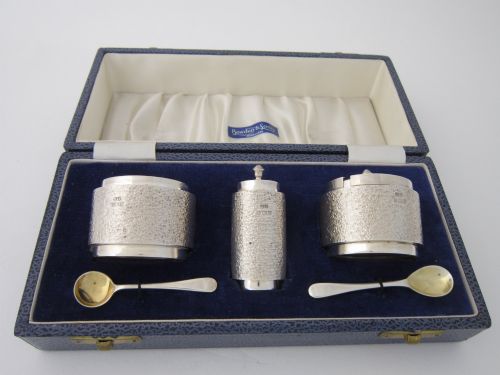
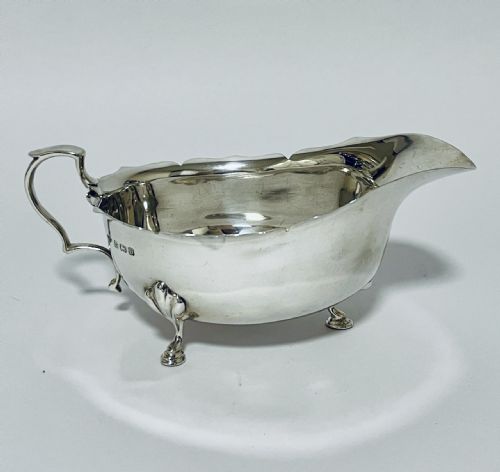
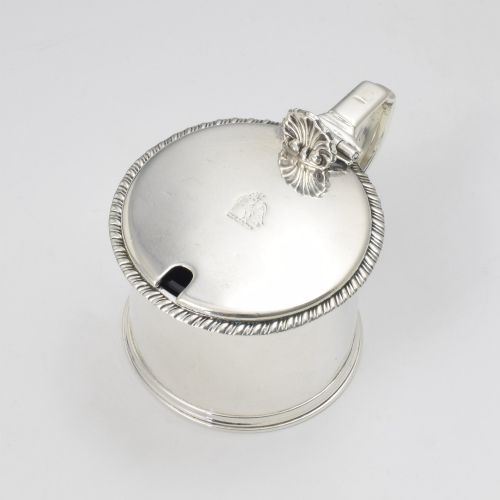
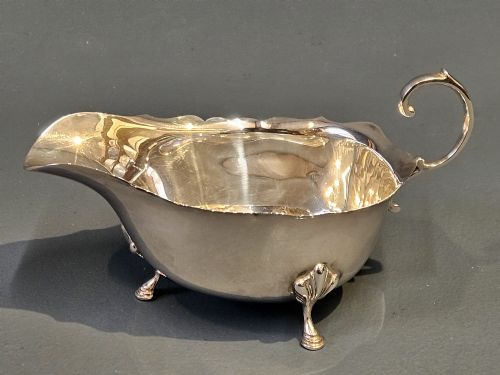
English sterling silver condiments comprise salt cellars, mustard pots, pepper pots, sauce boats, butter dishes and complete cruet sets designed to hold table seasonings. You will encounter various forms across this page, ranging from single sauce boats to boxed sets and matching cruet stands.
The pieces span several distinct periods, including Georgian, Victorian, Edwardian and mid-century modern eras. Styles such as William IV, Georgian revival and George V appear frequently among the listings, alongside fitted glass liners and fabric-lined presentation boxes.
Makers and silversmiths from Birmingham and Sheffield produced much of this tableware using sterling silver, frequently paired with blue glass inserts. Individual items serve specific functions at the dining table, from open salt cellars with spoons to covered mustard pots.
How they were made
Silversmiths shaped solid sterling silver through hammering, casting and piercing techniques to create drum mustard pots, sauce boats and pierced cruet stands. Naturalistic flower designs and detailed borders frequently embellish the outer bodies of these items.
Many hollowware pieces incorporate fitted blue glass liners or internal vermeil and gold plate coatings to protect the silver from corrosive salts and mustards. Fitted presentation boxes often feature silk and velvet interiors designed to hold salt cellars and spoons securely.
Listings feature items from the Georgian, Victorian and Edwardian periods, alongside mid-century pieces.
What varies in quality
The weight of the silver and the crispness of any pierced or naturalistic flower decoration distinguish different tiers of quality. Substantial metal thickness in sauce boats and mustard pots indicates superior craftsmanship.
Completeness alters the character of a piece, particularly when original blue glass liners, spoons or fitted presentation boxes remain intact with the set. Maker attribution also influences distinction, with marked works by known silversmiths carrying specific trade provenance.
Charles Fox II·William Bateman·Bricks And Sons·Wilmot Manufacturing Co·William Hutton And Sons·Walker And Hall
The English Sterling Silver Condiments Glossary
- Sterling silver
- A silver alloy containing 92.5 percent pure silver and 7.5 percent other metals, usually copper, ensuring durability for tableware.
- Cruet set
- A matched group of bottles, jars or pots for holding condiments like salt, mustard, pepper, oil and vinegar, often held in a dedicated silver stand.
- Sauce boat
- An open vessel with a lip and handle used for serving gravies or sauces at the table.
- Drum mustard pot
- A cylindrical container for mustard, frequently featuring a hinged lid and a fitted coloured glass liner.
- Vermeil
- Sterling silver plated with a thin layer of gold on its surface.
English Sterling Silver Condiments: Frequently Asked Questions
What is included in a condiment set?
A condiment set typically includes matching vessels for salt, pepper and mustard, sometimes housed together in a framed metal stand with a handle.
Many sets also incorporate matching spoons and fitted glass inserts designed to protect the metal from contents.
How do I clean silver condiments?
Silver condiments require gentle cleaning with a specialised silver polish and a soft cloth to remove tarnishing without scratching the metal surface.
Removable glass liners and fabric-lined boxes should be separated from the silver parts during the cleaning process.
Can I use these items daily?
You can use sterling silver condiments for everyday dining, provided you clean and dry them promptly after use.
Acidic substances like mustard and vinegar should not be left in contact with unlined silver for extended periods.
How do I identify the date of a piece?
English silver items feature hallmark stamps that indicate the assay office, standard mark and a specific date letter corresponding to the year of manufacture.
Additional maker marks and registry numbers stamped into the base help pinpoint the exact period of production.