


English Spirit Decanter
An English spirit decanter holds your chosen drink with heavy glass and bright silver, carrying the weight of centuries of social ritual.
English Spirit Decanter
When you search for an English spirit decanter, you encounter vessels designed for serving and preserving liquor on the dining table or sideboard. These pieces span Georgian, Victorian, and Edwardian periods, appearing alongside later 20th-century examples in various forms.
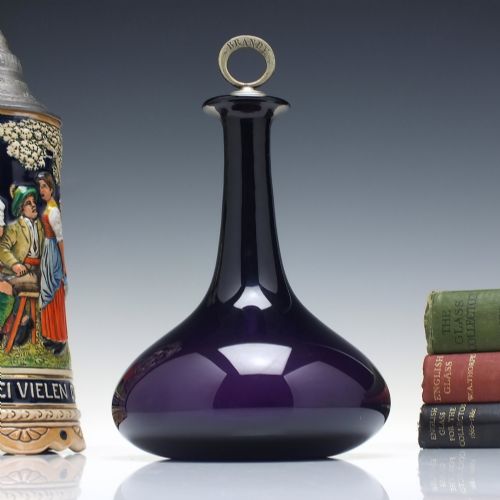
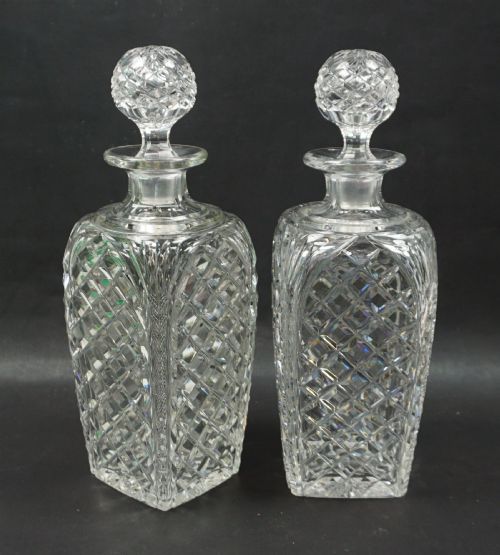
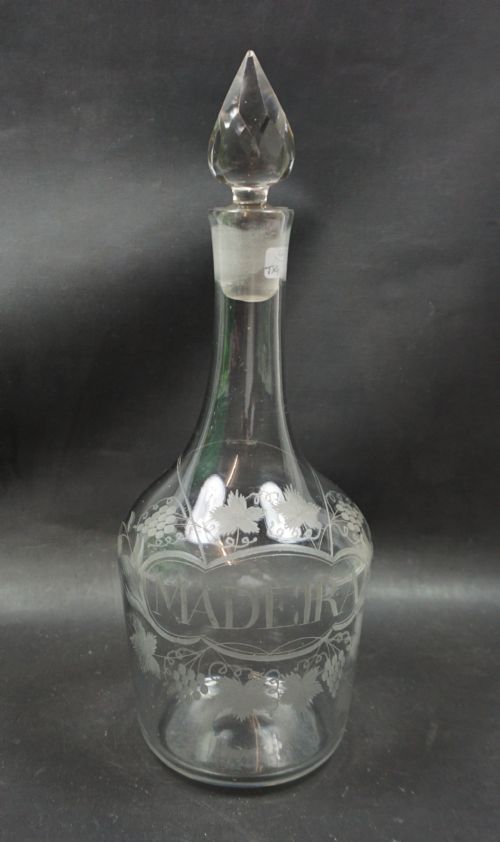
You are most likely to meet clear glass and crystal bottles shaped as squares, shafts, or ship's decanters with wide bases. Many incorporate sterling silver collars, stoppers, or associated silver labels marking contents like whisky, port, or brandy.
The selection ranges from single personal noggins and miniature spirit bottles to pairs of matching vessels and elaborate tantalus sets housing multiple bottles. Some examples extend into novelty barware, including spirit barrels and apothecary-style tincture jars.
Distinctions in standard
Quality rests in the crispness of the cut glass facets and the weight of the metal mounts. Deep, sharp hand-cutting reflects light differently than pressed or softly rounded glass, marking out the finer workshops.
The integration of fitted silver collars, hallmarked hardware, and original matching stoppers elevates a piece. Maker attributions, such as work by Mappin and Webb or Hukin and Heath, add documented substance to the craftsmanship.
Miniature "one go" decanter labels ensured guests poured exactly one serving of rum without argument.
Elizabeth Morley·Mappin and Webb·Hukin and Heath·Mappin Brothers
The English Spirit Decanter Glossary
- Ship's decanter
- A decanter with a broad, conical base designed to prevent tipping at sea. This low centre of gravity made them practical for use on vessels.
- Whisky noggin
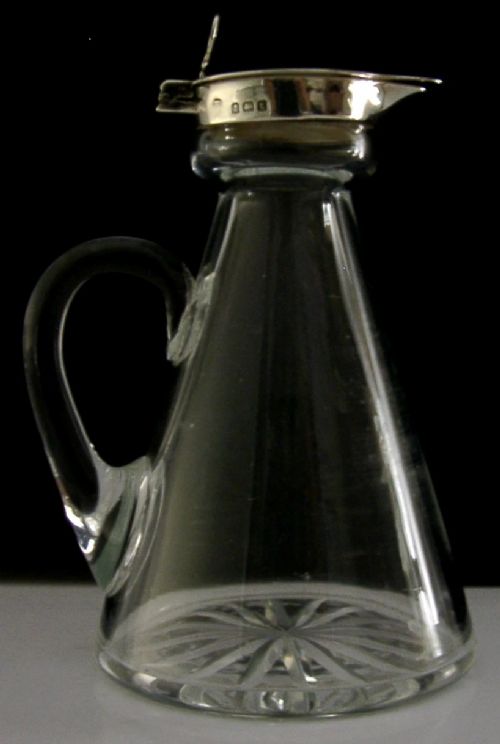
- A small individual spirit decanter or flask, often featuring a sterling silver top and handle. These miniature vessels were intended for a single serving.
- Tantalus
- A locking wooden framework holding decanters securely visible while preventing access without a key. Wealthy Victorians utilised these to restrict household staff from accessing spirits.
- Spirit barrel
- A novelty barware vessel shaped like a small cask, often mounted on a carriage or stand. They frequently incorporated silver-plated taps and Victorian registration marks.
- Lead crystal
- Glass containing a high proportion of lead oxide, increasing weight, brilliance, and refractive index. This material allows for deeper and sharper wheel-cutting.
English Spirit Decanter: Frequently Asked Questions
What is a spirit decanter?
A spirit decanter is a glass or crystal vessel designed to hold potable liquor such as whisky, brandy, or gin. They replaced earthenware and stoneware bottles for formal table service.
Over the Georgian and Victorian eras, these vessels evolved to feature cut glass patterns, silver collars, and matching stoppers to preserve the contents.
How do I date an English decanter?
Dating relies on glass manufacturing techniques, neck rings, and silver hallmarks. Early pieces from the 18th century often feature shaft and globe forms or hand-blown pontil marks.
Victorian and Edwardian examples frequently incorporate marked sterling silver collars or hinges that provide precise assay years.
Why do ship's decanters have wide bases?
The wide, conical profile of a ship's decanter provided stability against rolling waves on dining tables at sea. This practical form remained popular ashore for its sturdy footprint.
Such vessels appear in clear crystal, dark green glass, and cut designs across the Regency and later periods.
What is a tantalus?
A tantalus is a locking wooden caddy that restrains decanter stoppers so the bottles cannot be removed without a key. The name derives from the mythological figure punished by thirst.
Victorian households used them on sideboards to secure expensive spirits while displaying the crystal bottles clearly.