






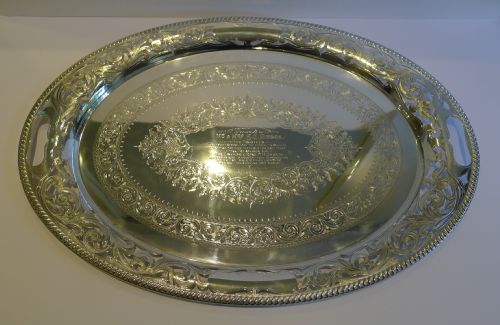
English Silver Waiter
An English silver waiter is a small serving tray for drinks or calling cards, valued for its fine metalwork and utility.
English Silver Waiter
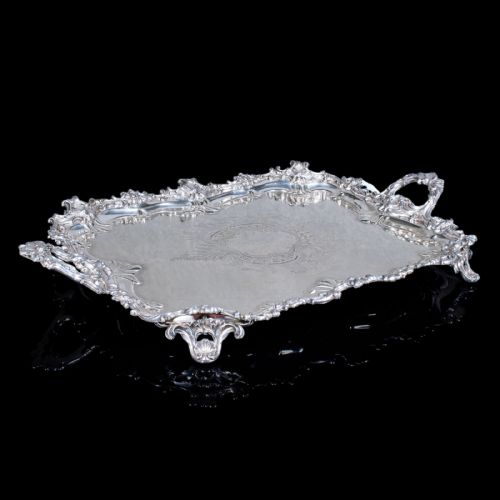
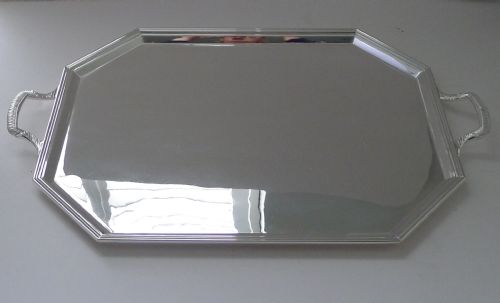
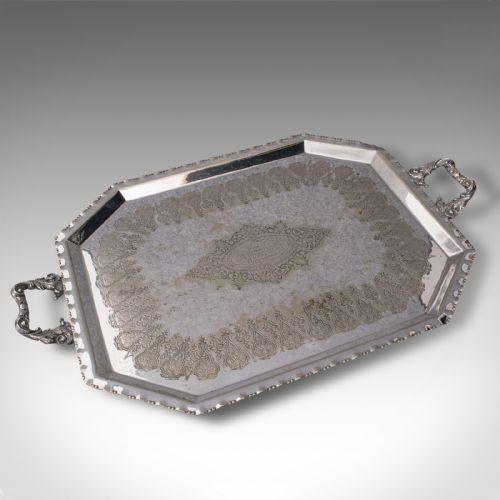
An English silver waiter takes the form of a small tray or salver designed for serving drinks, afternoon tea, or presenting cards. These serving vessels appear across several distinct periods, with Victorian and Edwardian examples joined by later Art Deco and mid-century modern pieces.
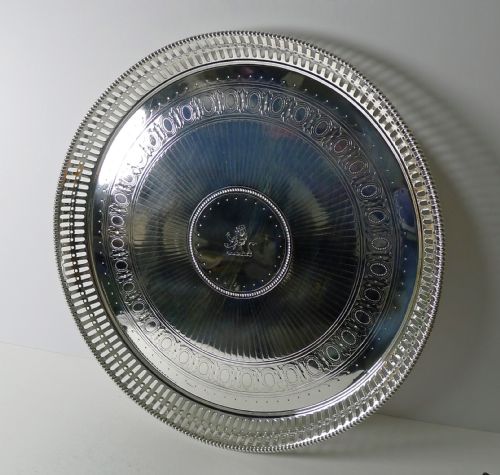
The pieces listed on this page run from early nineteenth-century sterling silver salvers bearing Sheffield hallmarks to later silver-plated cocktail trays and serving platters. Makers utilise circular, pierced, and reticulated forms alongside handled drinks trays for domestic service.
How they were made
Makers construct these trays using sterling silver or through plating techniques upon base metals such as nickel silver and EPNS. Electroplated nickel silver forms a sturdy core that receives a smooth layer of silver.
Surface decoration involves piercing, reticulation, and hand-engraving to create decorative borders and centres. Makers solder handles and cast feet onto the main body to complete the presentation tray.
Current listings include pieces spanning the Victorian, Edwardian, and Art Deco periods, alongside mid-century modern examples.
What varies in quality
Quality rests upon the weight of the metal and the crispness of any pierced or reticulated patterns. Heavier gauge silver plate or sterling silver provides greater rigidity to the tray body.
The fineness of maker marks and the precision of the engraved details separate standard production items from superior workshop output. Well-defined soldered joints and substantial cast handles elevate the piece.
S.C. Younge & Co.·J B Chatterley & Sons·James Dixon & Sons·Elkington·Atkin Brothers·Lee & Wigfull·J.H. Potter
The English Silver Waiter Glossary
- Waiter
- A small serving tray or salver typically raised on feet for handing round glasses or letters. These items are smaller than general serving platters.
- Salver
- A flat plate or tray of silver or other metal used for serving food or drinks. The term often applies to circular trays raised on small feet.
- EPNS
- Electroplated nickel silver. This designates a base metal alloy coated with a layer of silver through an electrolytic process.
- Reticulated
- Having a network or net-like pattern. Pierced metalwork often creates this openwork decorative border on trays.
- Sterling silver
- An alloy of silver containing ninety-two point five percent by mass of silver and seven point five percent by mass of other metals.
English Silver Waiter: Frequently Asked Questions
What is an English silver waiter used for?
These trays serve drinks, cocktails, and afternoon tea in domestic settings. They also function as surfaces for presenting calling cards or letters.
Historically, households utilised them to transport small items between rooms with proper decorum.
How do I date an English silver waiter?
Hallmarks stamped into sterling silver pieces provide specific assay office marks and date letters. Stylistic clues such as Art Deco geometric lines or Victorian reticulation help place plated items.
Makers often stamp names or registry marks on the reverse to narrow down the decade of production.
What is the difference between sterling and silver plate?
Sterling silver consists of solid precious metal throughout the entire object, marked by standard assay symbols. Silver plate applies a thin layer of silver over a base metal like nickel silver.
Both materials appear across the listed periods depending on the workshop and intended use.
How do I care for a silver waiter?
Regular dusting with a soft cloth prevents dust accumulation on the surface. Occasional polishing with a suitable silver cleaner maintains the lustre without harming the plating.
Store the tray in a dry environment to minimise tarnishing from atmospheric moisture.