


English Rural Scene
An English rural scene brings the quiet of village streets, cottage farms and open fields directly onto the wall through nineteenth and early twentieth century works.
English Rural Scene
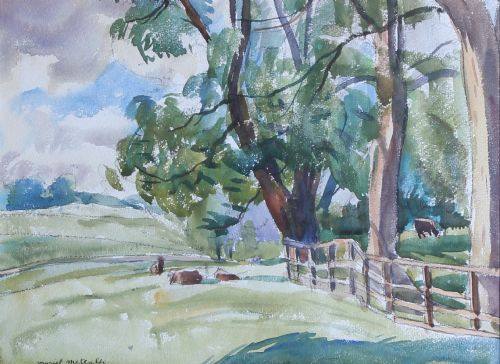
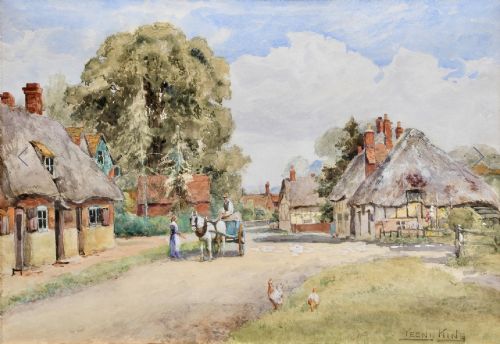
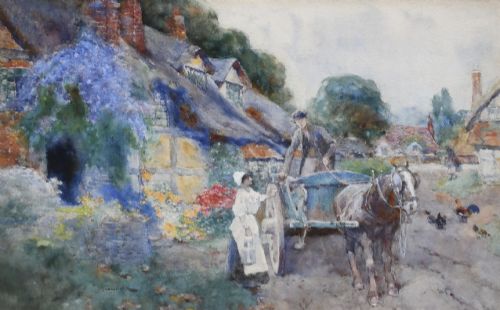
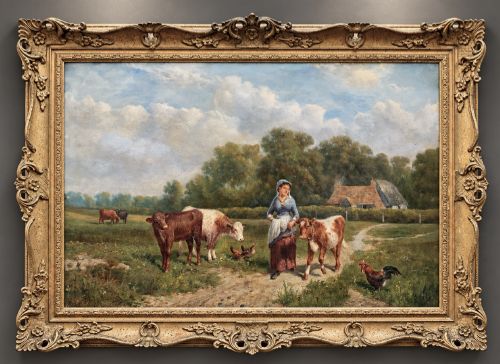
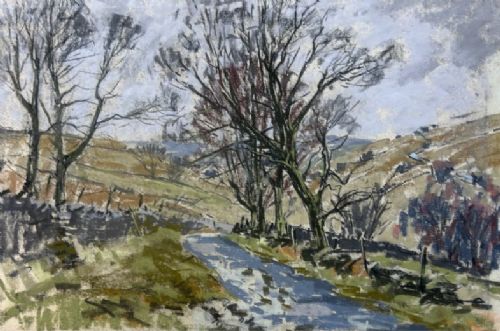
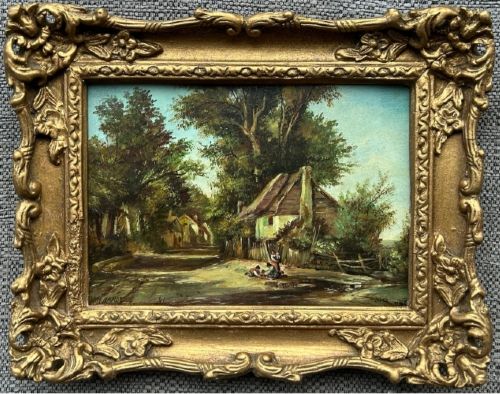
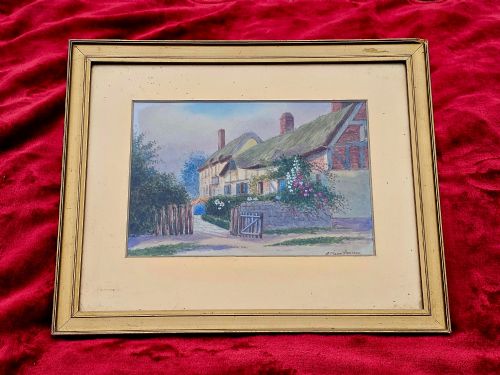
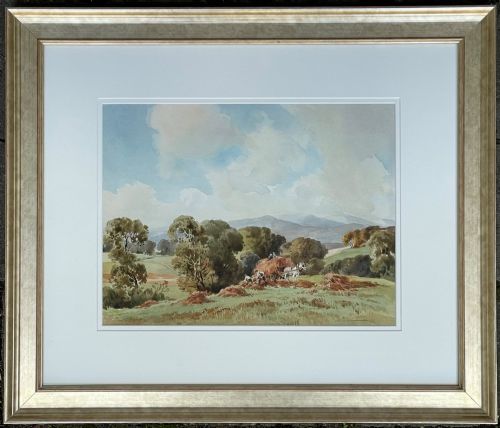
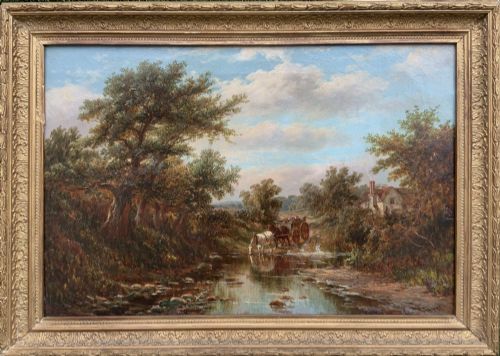
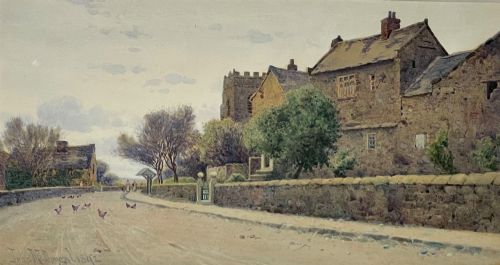
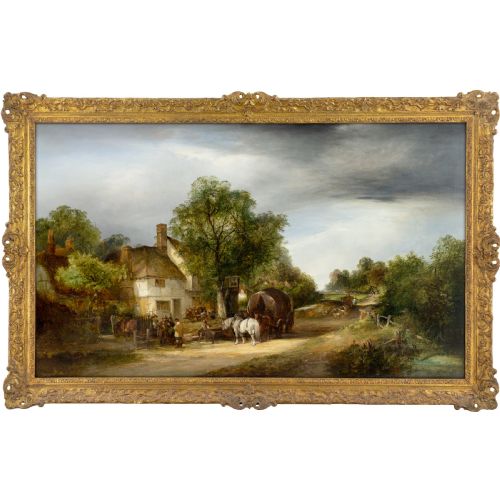
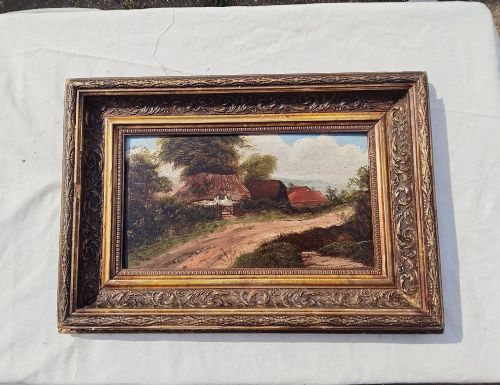
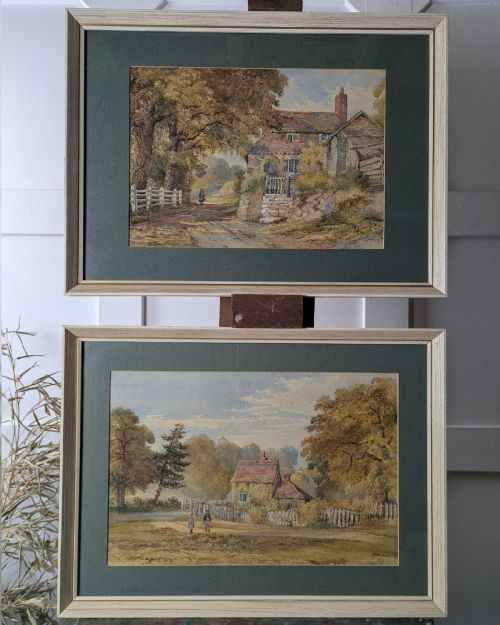
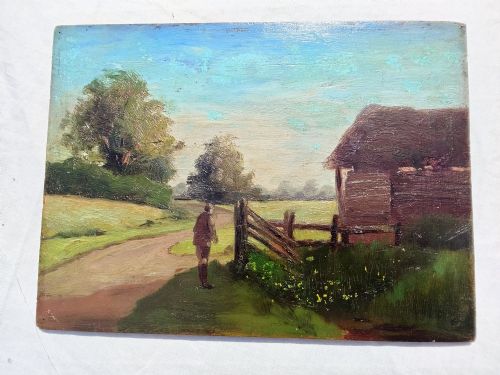
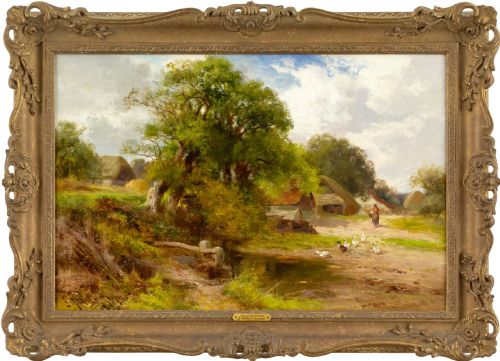
An English rural scene captures the traditional character of the countryside through depictions of farming life, village cottages, country lanes and agricultural landscapes. These works record pastoral subjects across the nineteenth century, the Edwardian era and the early twentieth century.
Most pieces encountered here take the form of framed watercolours, oil paintings on canvas, board or panel, and occasional pastels or lithographs. The subjects range from figures conversing outside cottages and children fishing to cattle herding and hay harvesting across Yorkshire, Sussex, Devon and other regional locations.
Materials and Technique
Artists relied upon oil paint and watercolour as the primary mediums, applying oil to canvas, wooden panels, board or card, and watercolour to paper. Gilt wood frames frequently house these paintings, enhancing the visual depth of the pastoral composition.
Techniques span detailed brushwork on canvas for rich textures in farmyard and landscape scenes alongside fluid watercolour washes on paper. Pastel drawing and lithography also appear, offering varied textures from smooth paper surfaces to heavy paint layers.
English Rural Scene Retail Price Guide 2026
Typical asking prices for english rural scene among the pieces listed under this phrase on Sellingantiques today, from the lower quarter to the upper quarter. They describe what is for sale here now, not the wider market.
Listings feature works spanning the nineteenth century, the Edwardian era and the early twentieth century in oil, watercolour, pastel and lithograph.
Assessing Quality
Quality rests upon the skill of the artist in handling light, atmosphere and the specific details of rural life, such as cattle, figures and foliage. Works by named painters with documented exhibition records display superior draughtsmanship and composition compared to anonymous school pieces.
The preservation of the medium contributes significantly to the standing of a piece, whether through the stability of oil paint on panel or the clean retention of watercolour on paper within original gilt frames.
David Bates·Percy Lancaster·George Oyston·William Shayer·Charles Edward Wilson
The English Rural Scene Glossary
- Watercolour painting
- A work created by applying pigments suspended in water-soluble binders to paper. This technique often produces translucent effects suited to landscape and atmospheric views.
- Oil on canvas
- A painting executed with pigment mixed in drying oil spread across a stretched fabric support. This combination allows for rich colour blending and textured brushstrokes.
- English School
- A designation for anonymous works produced by artists trained or working within the British tradition. These pieces reflect regional styles without attributing to a singular known master.
- Pastel drawing
- An artwork made using powdered pigment sticks shaped into crayons. The dry material provides soft textures and vibrant colour application on paper.
- Gilt wood
- Wood coated with a thin layer of gold leaf or metallic gilt paint. This material is standard for traditional frame mouldings surrounding nineteenth-century paintings.
English Rural Scene: Frequently Asked Questions
What periods do these artworks cover?
The works span from the nineteenth century through the Edwardian period and into the early twentieth century. This includes specific dates and decades such as the eighteen-fifties, eighteen-nineties and nineteen-tens.
Victorian and Georgian eras also contribute to the timeline, reflecting changing artistic approaches to the countryside across successive generations.
What subjects appear in these scenes?
Common subjects include farmyards with cattle, sheep and pigs, alongside figures conversing outside thatched cottages. Agricultural activities like hay carting, logging and fishing also feature prominently.
Village streets, rivers, country inns and regional landscapes across Yorkshire, Sussex and Derbyshire provide the setting for these rural narratives.
How should these framed works be displayed?
Most pieces arrive within original or period gilt wood frames that complement the painting style. Displaying them away from direct sunlight protects both watercolour paper and oil paint pigments.
Stable indoor humidity levels help preserve the integrity of canvas, wood panels and paper supports over time.
How are unsigned pieces attributed?
Works lacking a signature are often attributed to the English School of a particular century based on stylistic evidence, materials and regional subject matter. Comparative analysis with dated works helps place them within specific Victorian or Edwardian traditions.
Handling marks, framing styles and canvas stamps occasionally offer further clues regarding origin and date.