




English Rosewood Furniture
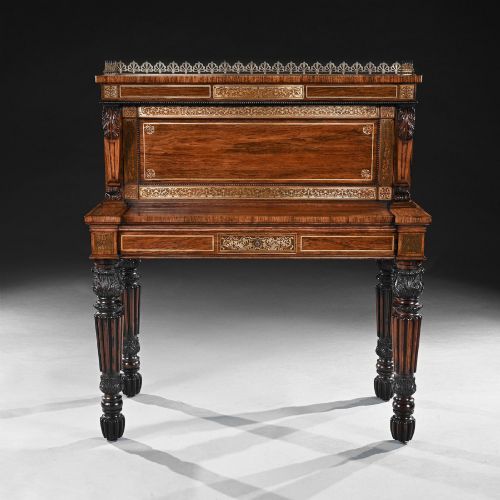
English rosewood furniture brings together rich, dark grain and fine brass inlay in dining chairs, tables, and cabinets from the Regency and Victorian periods.
English Rosewood Furniture
When searching for english rosewood furniture, buyers encounter pieces primarily originating from the Regency, George III, George IV, William IV, and Victorian periods, spanning the eighteenth and nineteenth centuries. The selection centres heavily on items designed for formal entertaining and daily domestic use.
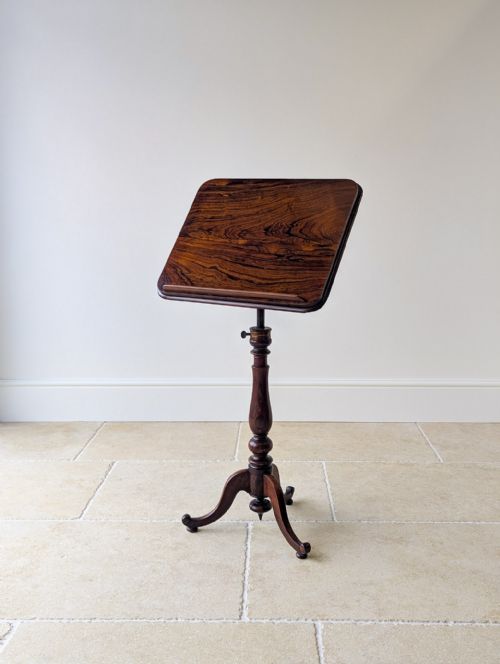
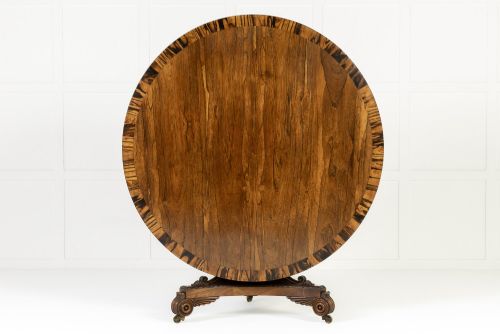
The most common forms appearing in these listings are side cabinets, chiffoniers, centre tables, sofa tables, writing tables, and dining chairs. Alongside these seating and surface options, specialised items such as teapoys, reading stands, magazine racks, and pole fire screens surface frequently.
Stylistically, pieces align closely with Regency, Grand Regency, and William IV aesthetics, though later Victorian examples extend into the eighteen-seventies and nineteen-hundreds. Workshops of the period utilised the dense, figured timber for domestic items that commanded prominent positions in drawing rooms and libraries.
Quality variations in rosewood pieces
Quality in these items rests upon the selection of timber figures, the precision of the brass or boxwood inlay, and the crispness of carved wooden details. Pieces attributed to documented makers demonstrate superior joinery and more ambitious proportions compared to standard commercial workshop output.
The integration of secondary elements, such as original brass castors, silk linings inside teapoys, and undisturbed tapestry panels on screens, distinguishes finer survivals from heavily restored or altered examples.
Listings feature items from the Georgian, Regency, and Victorian periods, constructed using rosewood, brass, boxwood, velvet, and silk.
Gillows Oxford Street Workshop·John McLean
The English Rosewood Furniture Glossary
- Teapoy
- A small box or chest on a central pillar and tripod base, originally used for storing loose tea leaves securely under lock and key.
- Canterbury
- A low stand featuring slatted partitions, designed to hold sheet music, newspapers, or periodicals near a seating area.
- Chiffonier
- A compact side cabinet featuring enclosed lower cupboards and often a raised shelf tier supported by slender pillars on top.
- Pole fire screen
- A vertical decorative panel mounted on an adjustable pole with a tripod base, positioned to shield a person's face from the direct heat of an open fireplace.
English Rosewood Furniture: Frequently Asked Questions
What is a rosewood teapoy used for?
A teapoy served as a secure, lidded storage chest for precious dry tea leaves in the nineteenth-century parlour. Inside, small removable canisters held different varieties of tea ready for brewing.
Today, these lidded boxes function well as occasional tables or small storage chests in living spaces, holding personal items while displaying dense wood grain.
How do I identify a Regency rosewood cabinet?
Regency cabinets typically display architectural proportions, dark rosewood veneers, and precise brass inlay or boxwood stringing. Brass grilles and silk panels often replace plain wooden door panels.
These side cabinets and chiffoniers rest on short feet or plinth bases, reflecting classical design influences popular during the early nineteenth century.
What is the difference between a chiffonier and a side cabinet?
A chiffonier is generally a compact form of side cabinet that includes a raised shelf superstructure supported by slender columns on the top surface. Side cabinets lack this upper tier, offering a flat surface instead.
Both forms provide enclosed storage behind panelled or glazed doors in dining rooms and parlours.
How should I care for antique rosewood furniture?
Rosewood requires stable indoor humidity levels and protection from direct sunlight to prevent the dark timber from fading or drying out. Gentle dusting with a dry, soft cloth preserves the polish without stripping historical finishes.
Avoid placing these items near direct heat sources or damp walls to keep the veneered surfaces and brass inlays stable.