




English Regency Portrait
An english regency portrait captures the likenesses, character and society of the early nineteenth century through oil, watercolour and miniature.
English Regency Portrait
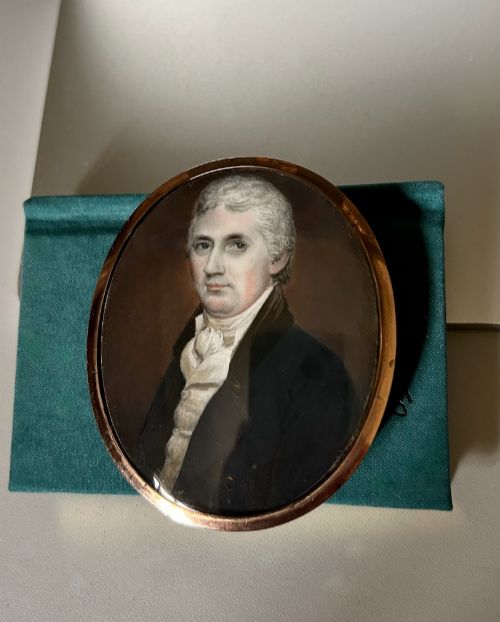
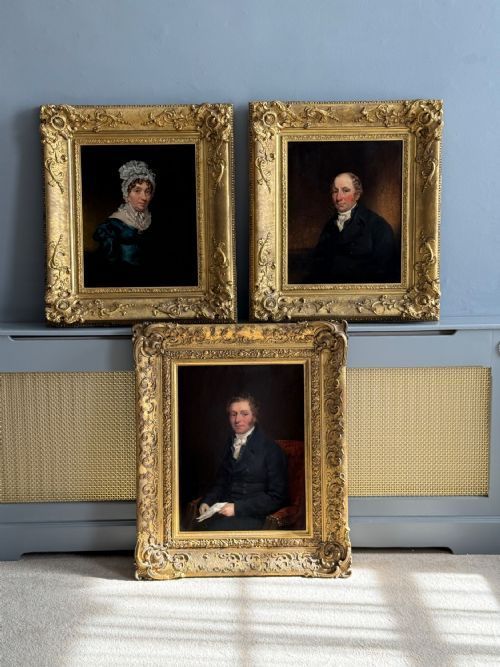
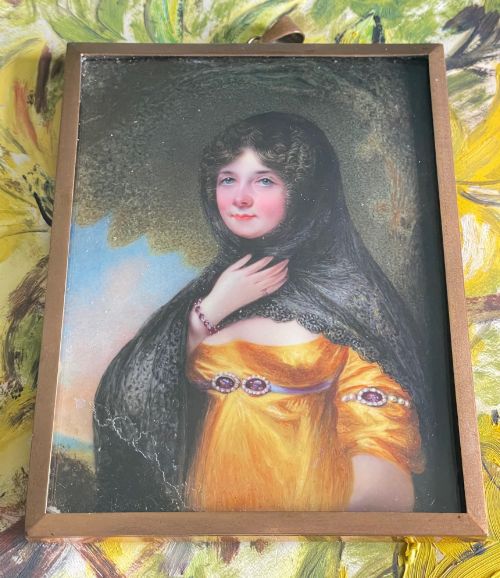
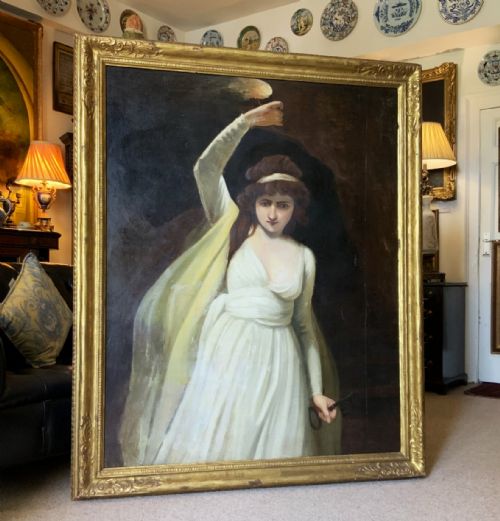
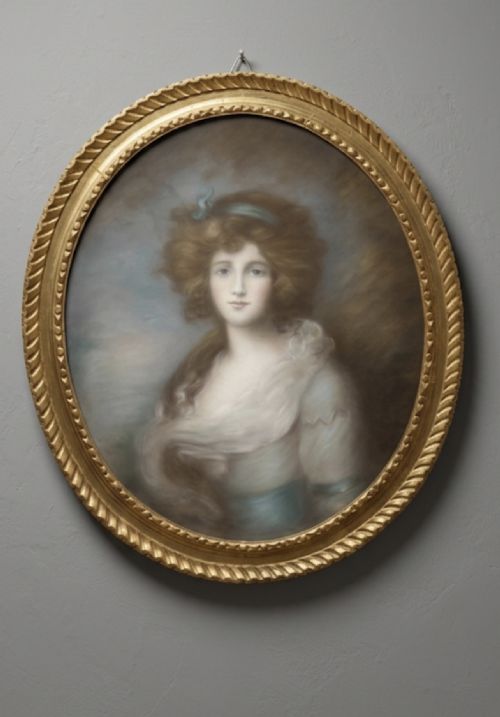
An english regency portrait typically takes the form of an oil painting on canvas or panel, a delicate watercolour, or a detailed enamel miniature. These works record sitters ranging from officers and country gentlemen to children and domestic animals within the distinct aesthetic of the period.
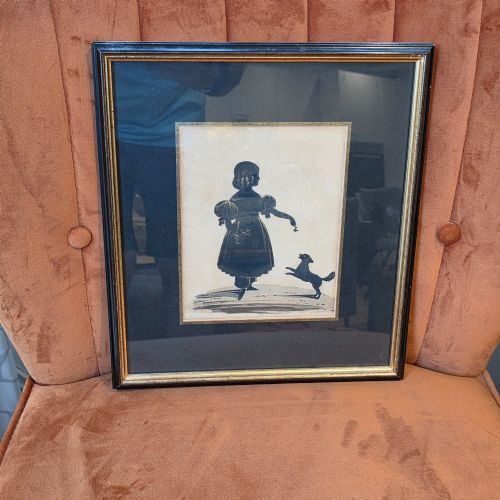
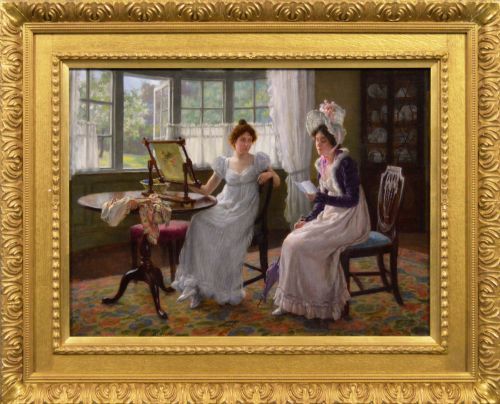
Buyers encounter both finished gallery works by named Royal Academicians and studies by regional artists or unidentified English school painters. The subjects span formal half-length likenesses, domestic interiors, sporting scenes and intimate profile silhouettes.
How They Were Made
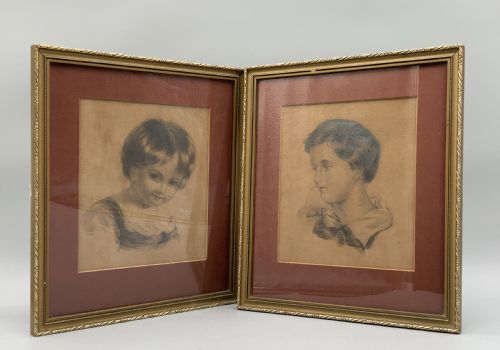
Painters built oil portraits using pigment suspended in oil on stretched canvas or wooden panels, often enclosed in giltwood frames. Watercolour and pencil works utilised paper supports, sometimes heightened with monochrome ink or cut paper silhouette techniques.
Enamel and miniature painting demanded precise brushwork on specialised surfaces, occasionally set within gold frames or lacquered boxes.
Several dogs appear as central sitters, including a hound and her litter alongside a pinned-up portrait of a pinscher.
What Varies in Quality
The distinction between standard works and exceptional pieces rests upon the confidence of the draughtsmanship, the psychological depth captured in the sitter's expression, and the handling of fabric textures and background light.
Works executed directly by established Royal Academicians demonstrate superior anatomical precision and tonal balance compared to routine output from contemporary provincial studios or follower circles.
Sir William Beechey·Joseph Clover·William James Hubard·Henry Bone·Horace Hone·Sir Thomas Lawrence·John Opie·Thomas Gainsborough·Charles Haigh Wood·Samuel Raven·William Egley·Clifton Tomson·Thomas Woolnoth·Rolinda Sharples·George Hayter·James Ward·Jeremiah Steele·Henry Singleton·William Owen·George Perfect Harding·Henry Scott·Samuel John Egbert Jones·Stephen Taylor·George Clint·John Hoppner
The English Regency Portrait Glossary
- Oil on Canvas
- Pigment bound in drying oil applied to a woven fabric support. This was the primary medium for major formal portraits of the era.
- Portrait Miniature
- A small-scale likeness painted on ivory, vellum or card, often designed to be carried or worn. These intimate objects required powerful magnification to execute.
- Enamel
- Powdered glass fused to a metal substrate through firing, yielding a durable glossy image. Henry Bone utilised this technique for cabinet portraits.
- Giltwood
- Wood carved and coated with gold leaf or gilt preparation to form ornate picture frames. It remains standard for framing significant period paintings.
- Silhouette
- A solid dark profile image cut from paper or painted, popular for profile likenesses before photography. Examples sometimes incorporated watercolour details.
English Regency Portrait: Frequently Asked Questions
What periods do these portraits cover?
The works primarily date from the late eighteenth century through the Regency era and into the early Victorian decades. Most pieces cluster tightly around the years between seventeen-ninety and eighteen-thirty.
Surviving examples reflect the shifting aesthetic preferences from Georgian formality toward the more expressive portraiture of the nineteenth century.
How can I identify the sitter?
Many portraits retain handwritten inscriptions on the stretcher, canvas reverse or old paper labels detailing names, dates and titles. Researching uniform details, heraldic crests or accompanying objects often provides further clues.
Unidentified sitters remain common, representing provincial gentlefolk whose names were lost over generations.
Where were these paintings displayed originally?
Full-scale oil portraits hung in the panelled reception rooms and long galleries of country houses and town residences. Smaller watercolours and miniatures populated intimate private chambers, desks and dressing rooms.
Portable miniatures and lacquered boxes were designed to travel with the owner as personal tokens of affection.
How do I care for antique watercolours?
Works on paper require protection from direct sunlight to prevent the fading of fugitive watercolours and pigments. Framing with acid-free mounts ensures the paper does not discolour over time.
Maintaining stable indoor humidity levels prevents warping and preserves the structural integrity of both the paper and the original frame.