




English Regency Music Stand
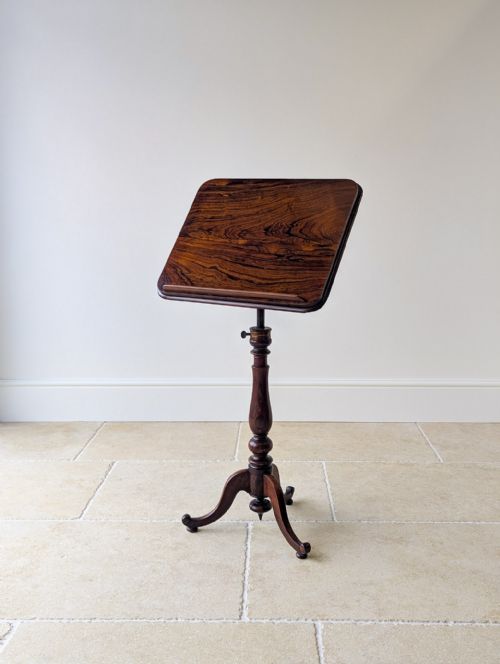
An English regency music stand brings functional elegance to a room, offering adjustable lecterns and turned supports designed for holding scores.
English Regency Music Stand
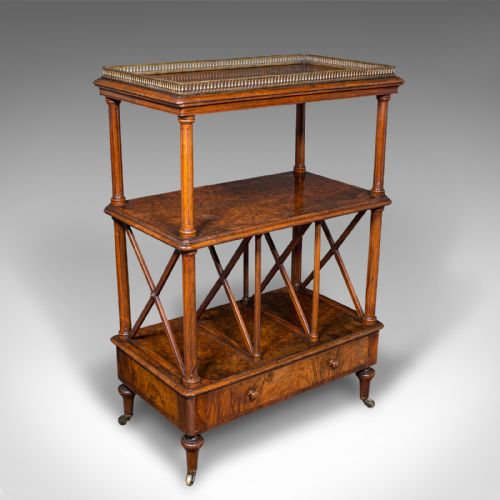
An English regency music stand encompasses adjustable recital lecterns, reading stands, and sheet music holders designed during the early nineteenth century. Buyers seeking an English regency music stand will find pieces spanning the Regency, George III, George IV, and William IV periods, alongside related forms such as canterburys, folio cabinets, and whatnots.
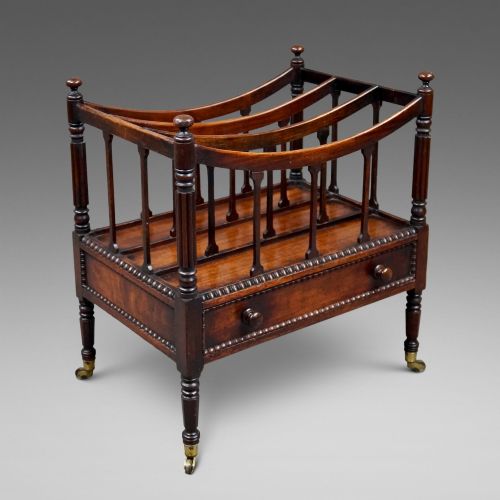
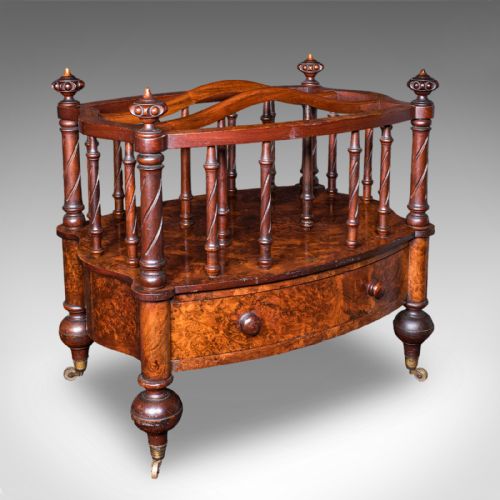
The most common forms on this page include mahogany, rosewood, and walnut canterburys with division racks alongside articulated music stands and reading tables. These items served gentlemen and musicians in country houses for holding folios, newspapers, and scores.
Pieces from this category draw upon George III, Regency, and William IV stylistic vocabularies, featuring turned pillars, brass castors, lyre motifs, and adjustable reading mechanisms. Origins trace to English workshops producing refined furniture for domestic music rooms and libraries.
How They Were Made
Cabinet makers utilised dense timber stocks including mahogany, rosewood, walnut, burr walnut, and birds-eye maple, often accented with ebonised wood details. These figured woods were selected for their rich grain patterns and polished to a deep lustre.
Metalwork played a structural and decorative role, with brass fittings, adjustable screws, reading ratchets, and castors incorporated into stands and canterburys. Turned columns and carved lyre supports demonstrated precision joinery and turning techniques of the period.
Materials recorded across the inventory include brass, mahogany, rosewood, walnut, burr walnut, birds-eye maple, and ebonised wood.
What Varies in Quality
The refinement of timber selection and secondary woods defines the upper tier, where burr walnut, figured rosewood, and birds-eye maple display superior grain alignment. Lesser examples utilise simpler mahogany stocks with fewer decorative flourishes.
Mechanical complexity separates standard pieces from sophisticated designs, seen in adjustable lecterns with articulated joints, double-size proportions, or integrated cabinet storage. The crispness of carved details, such as lyre frames and turned pillars, marks the hand of accomplished makers.
Gillows of Lancaster·J C Loudon
The English Regency Music Stand Glossary
- Canterbury
- A low stand with partitioned sections, originally designed for holding sheet music, newspapers, and periodicals. Most examples feature spindle divisions above a single drawer and rest upon castors.
- Lectern
- An adjustable reading desk or stand designed to hold books, scores, or folios at a convenient angle. Articulated versions allow the user to alter the height and slope.
- Folio Cabinet
- A case piece or stand constructed specifically for storing large paper sheets, prints, and music folios. These items often utilise birds-eye maple or mahogany.
- Whatnot
- An open set of tiered shelves used for displaying decorative objects or holding books and papers. Examples often combine display shelves with canterbury bases.
- Lyre
- A decorative motif shaped like an ancient stringed instrument, frequently carved into the central support of music stands and reading tables.
English Regency Music Stand: Frequently Asked Questions
How were canterburys used?
Canterburys were utilised in drawing rooms and libraries for organising newspapers, magazines, and sheet music. The partitioned upper sections kept unbound papers upright and accessible.
Many designs included a small drawer beneath the divisions for smaller accessories. They were easily moved about the room on small brass castors.
How do I identify a regency piece?
Regency pieces are identified by specific classical motifs, such as lyre supports, reeded or turned pillar legs, and brass accents. The timber choice frequently includes dark mahogany or figured rosewood.
Construction methods from this era involve precise joinery and early mechanical brass ratchets for adjustable stands. Stylistic crossover with George III and William IV periods remains common.
Where should I place a music stand?
Music stands and reading tables suit studies, libraries, and music rooms where their adjustable lecterns can be utilised. They also function as display surfaces for open books or folios.
Placement away from direct heat sources protects the polished rosewood and mahogany surfaces. Their compact footprints allow them to sit beside seating areas or against panelled walls.