





English Regency Music Furniture
English regency music furniture brings together sophisticated canterburys, reading stands and folio cabinets designed to organise sheet music and periodicals with elegance.
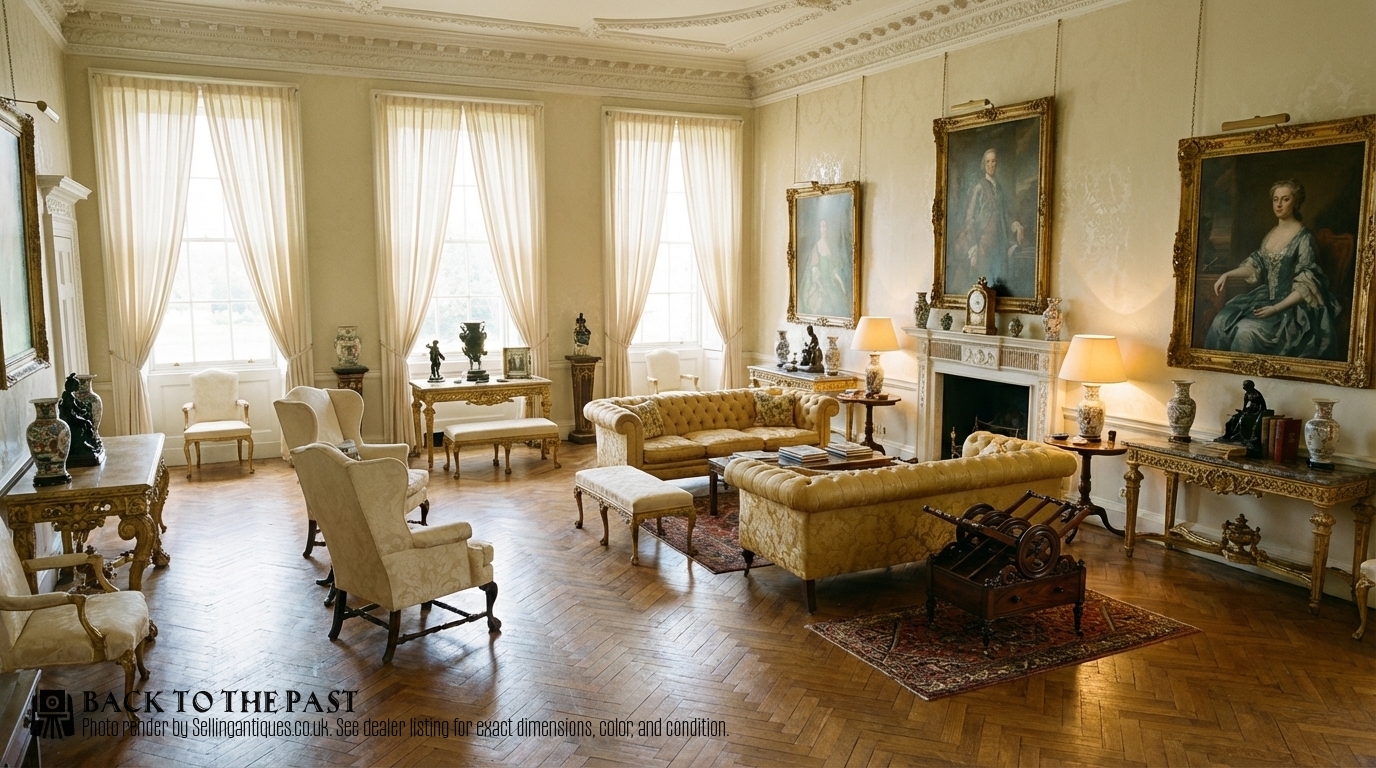
English Regency Music Furniture
English regency music furniture centres on the canterbury, alongside reading stands, folio cabinets and whatnots that served the musical and literary interests of the Georgian and Regency home. These pieces emerge across the Regency, George III, George IV, William IV and Victorian periods, reflecting the refined domestic interior of the early nineteenth century.
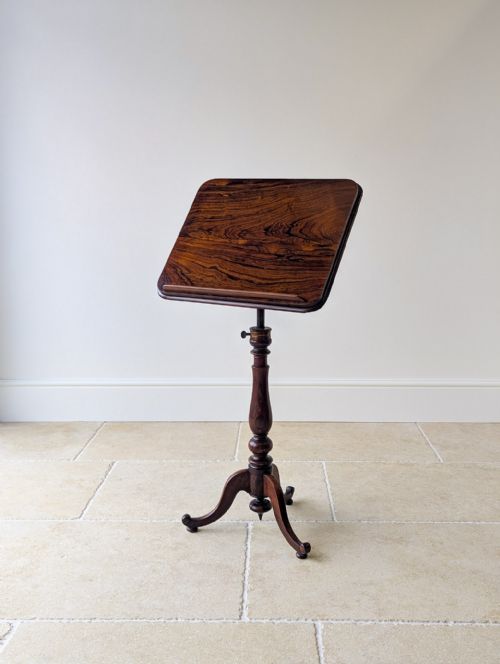
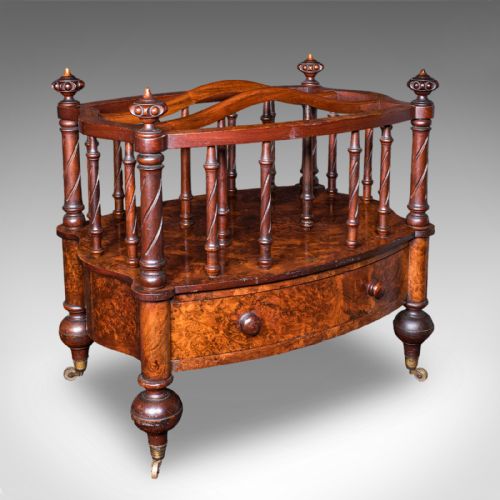
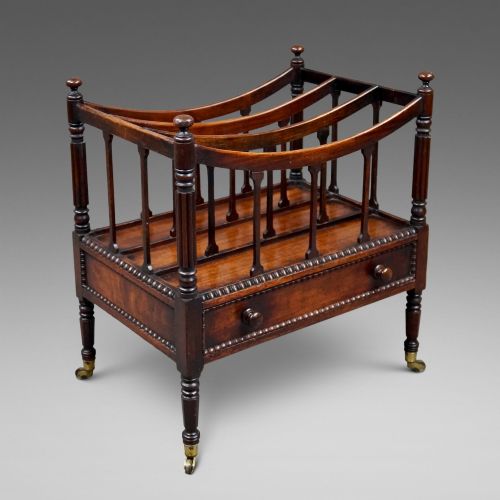
The canterbury appears most frequently on this page, taking the form of multi-division stands intended for sheet music, newspapers and magazines. Alongside these, examples like the gentleman's folio cabinet in birds-eye maple and the rosewood reading stand provide specialised storage for larger bound volumes and reading materials.
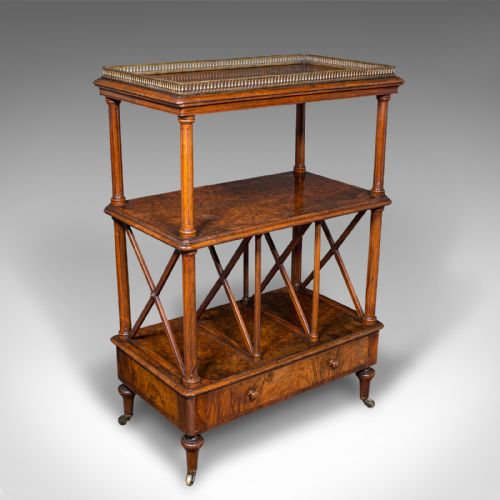
Originating in country houses and urban drawing rooms, these pieces combine utility with decorative presence. The selection ranges from compact four-division newspaper racks to substantial double-size rosewood canterburys and combined whatnot etageres.
Materials and Construction
Makers utilised rich timbers including mahogany, rosewood, burr walnut, walnut and birds-eye maple to construct these stands and cabinets. Rosewood and mahogany dominate the examples, often enhanced by contrasting ebonised wood details and polished brass fittings.
Construction techniques involve finely turned uprights, slatted dividers for sheet music compartments, and low castors that allowed these stands to move easily across carpets. Timber selection dictates the visual weight, from the deep red tones of George III mahogany to the striking grain patterns of burr walnut and birds-eye maple.
English Regency Music Furniture Retail Price Guide 2026
Typical asking prices for english regency music furniture among the pieces listed under this phrase on Sellingantiques today, from the lower quarter to the upper quarter. They describe what is for sale here now, not the wider market.
Listings feature rosewood, mahogany, burr walnut, walnut, birds-eye maple and ebonised wood across pieces from the Regency, Georgian and 19th Century eras.
Distinctions in Quality
Quality rests upon the choice of timber veneer, the crispness of turned supports, and the integration of secondary woods. Superior pieces display carefully matched burr walnut or figured rosewood across every surface, whereas standard examples rely on plainer mahogany grains.
Design ambition separates basic utility pieces from high-style workshops. Finer items incorporate complex divisions, drawer bases beneath the slatted rack, or attributions to prominent makers such as Gillows of Lancaster or designs in the manner of J C Loudon.
Gillows of Lancaster·J C Loudon
The English Regency Music Furniture Glossary
- Folio Cabinet
- A specialist piece of furniture designed to store large flat sheets of paper, prints or musical scores. These cabinets often utilise decorative veneers like birds-eye maple.
- Reading Stand
- An adjustable or fixed stand intended to support books, music scores or newspapers at a comfortable angle. They frequently combine with occasional tables.
- Etagere
- An open tiered piece of furniture used for displaying decorative objects or books. Some examples combine the functions of a canterbury and a display stand.
- Division
- An individual vertical compartment within a canterbury used to separate sheet music or periodicals. The count of divisions often defines the capacity and scale of the rack.
English Regency Music Furniture: Frequently Asked Questions
What is a canterbury used for?
A canterbury is a small compartmentalised stand designed specifically to hold sheet music, periodicals and newspapers within reach of a piano or seating area.
During the Regency period, these stands kept domestic spaces tidy while displaying current reading material and musical scores.
How do I identify Regency music furniture?
Look for characteristic materials such as rosewood, mahogany and burr walnut combined with turned uprights, brass castors and slatted vertical divisions.
Pieces span the George III, Regency, George IV and William IV periods, sharing a focus on refined utility for the drawing room.
Where should I place a music stand?
These pieces suit living rooms, studies or music rooms where they can function as mobile magazine racks or side tables.
Their compact footprints allow them to sit beside armchairs, sofas or pianos while keeping reading matter organised.