

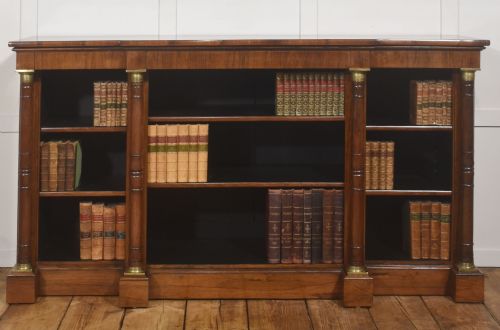
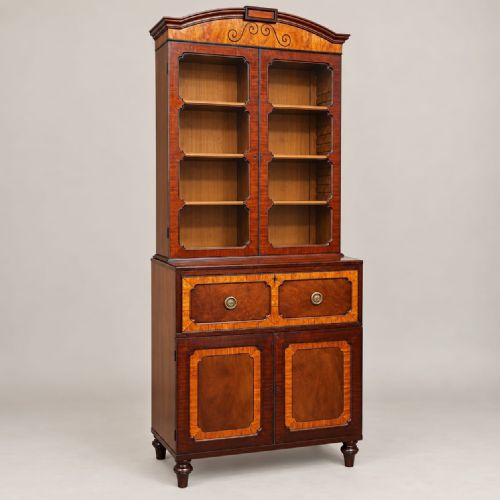



English Regency Display Cabinet
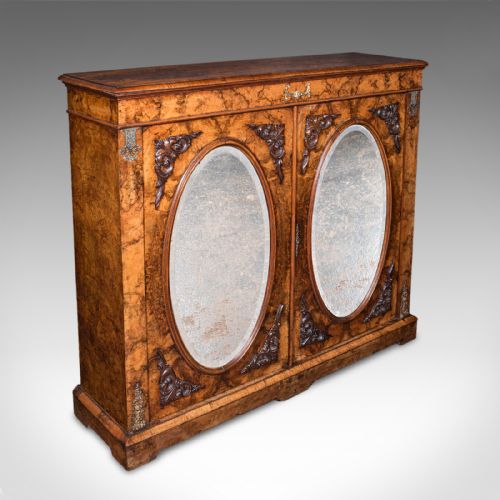
An English regency display cabinet brings formal elegance to a room with glazed doors and warm timber tones.
English Regency Display Cabinet
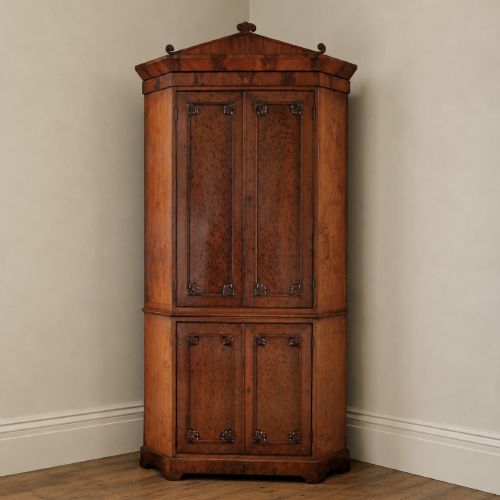
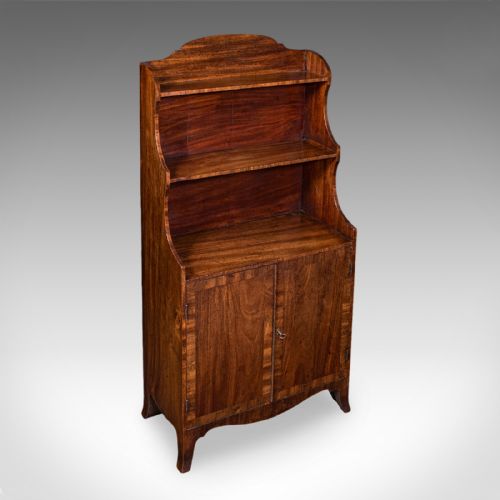
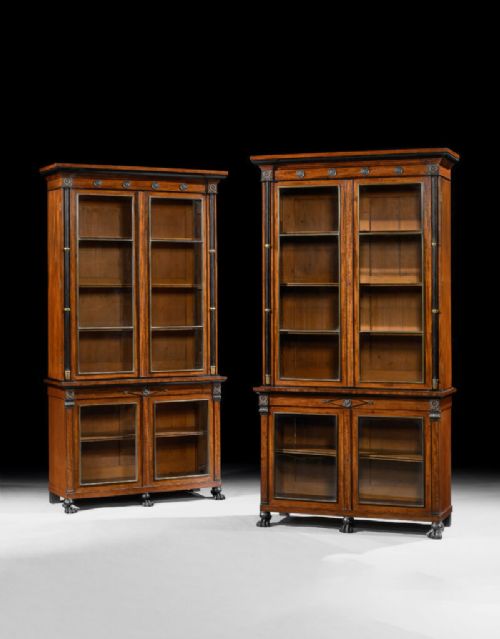
An English regency display cabinet combines the upright proportion of a bookcase with glass panels designed for showing ceramics and collected objects. These pieces emerge from the early nineteenth century, spanning periods from George III through William IV, with later revivals appearing toward the end of that hundred years.
Bookcases, breakfront library cabinets, and glazed cupboards form the core of what appears on this page. Makers construct these items using mahogany, rosewood, walnut, and satinwood, often raised on stands or fitted with drawer sections below the display area.
The layout typically involves glazed upper doors with astragal bars framing the glass, opening to reveal adjustable wooden shelves. Lower sections often feature solid wooden doors enclosing cupboards, while smaller pier cabinets and chiffoniers provide lower profiles for compact spaces.
Materials and construction methods
Cabinet makers selected dense tropical hardwoods such as mahogany and rosewood for their structural stability and rich grain patterns. Burr walnut and satinwood appear as decorative veneers on finer surfaces, adding depth through figured grain.
Glass production relied on hand-blown techniques that resulted in minor surface undulations visible across older panes. Joinery utilised traditional dovetailing for drawers and mortise and tenon joints for frames, supplemented by brass inlays and ormolu mounts on select examples.
English Regency Display Cabinet Retail Price Guide 2026
Typical asking prices for english regency display cabinet among the pieces listed under this phrase on Sellingantiques today, from the lower quarter to the upper quarter. They describe what is for sale here now, not the wider market.
Listings feature pieces spanning the nineteenth century, including the Regency, George IV, and William IV periods.
Distinctions in construction and finish
The choice of primary timber and the selection of veneer figure determine the initial visual impact of a cabinet. Highly figured plum pudding mahogany or book-matched rosewood distinguish ambitious workshops from standard commercial production.
Hand-carved astragal bars, finely chased ormolu mounts, and original brass hardware indicate higher execution levels. The crispness of carved mouldings and the precision of the glass framing separate standard utility pieces from exhibition quality items.
Gillows·Marsh and Tatham·James Winter and Sons
The English Regency Display Cabinet Glossary
- Astragal
- Wooden moulding bars that divide a glass door into smaller panes. These strips support the individual panes in early glazed bookcases.
- Breakfront
- A piece of furniture where the central section projects forward from the flanking wings. This architectural layout creates depth in large library bookcases.
- Chiffonier
- A low cabinet with doors enclosing shelves, frequently topped with a small raised shelf or mirrored back. These compact pieces serve smaller reception rooms.
- Secretaire
- A desk form incorporating a pull-down writing flap that conceals small drawers and pigeonholes. This compartment sits within the upper section of a bookcase.
- Ormolu
- Gilded bronze used for decorative mounts and furniture fittings. This material adds metallic contrast to dark timber surfaces.
English Regency Display Cabinet: Frequently Asked Questions
What is an English regency display cabinet?
An English regency display cabinet is a glazed storage piece designed during the early nineteenth century to showcase books, porcelain, and decorative items. These items feature timber frames with glass doors and frequently incorporate lower cupboards or desk compartments.
Cabinet makers of the period utilised mahogany, rosewood, and walnut, applying classical proportions influenced by architectural trends of the time.
How do you date an antique cabinet?
Dating relies on observing construction methods, timber choices, and hardware styles associated with the nineteenth century. Dovetail joints, glass pane characteristics, and secondary woods inside drawers provide key indicators.
Stylistic cues such as brass inlay, columnar supports, and cornices help narrow the period from Georgian through William IV and later revival eras.
Where were these cabinets placed?
These cabinets stood in principal rooms such as libraries, morning rooms, and drawing houses. Tall breakfront versions occupied grand wall spaces, while smaller pier cabinets fitted between windows.
Lower chiffoniers and corner cupboards made efficient use of smaller domestic interiors while providing secure storage for ceramics and glassware.
How should I care for timber furniture?
Maintaining antique timber involves keeping pieces away from direct heat sources and fluctuating humidity levels. Regular dusting with a dry cloth prevents particle buildup on polished surfaces.
Applying appropriate wax occasionally nourishes the wood grain without creating heavy buildup that obscures the original finish.