


English Regency Credenza
An english regency credenza brings architectural dignity and rich timbers to a formal room.
English Regency Credenza
When you search for an english regency credenza, you encounter low timber storage furniture designed for formal rooms, though the historical record shows side cabinets, sideboards, and chiffoniers fulfilling this same domestic purpose. These pieces emerge predominantly from the Regency and nineteenth-century periods, alongside later revival interpretations.
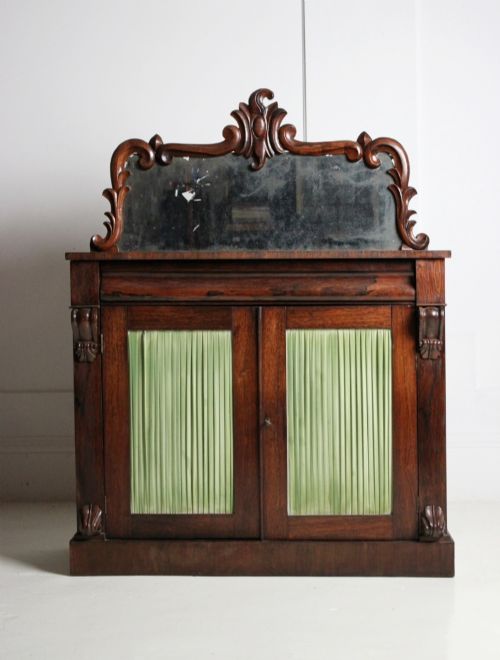
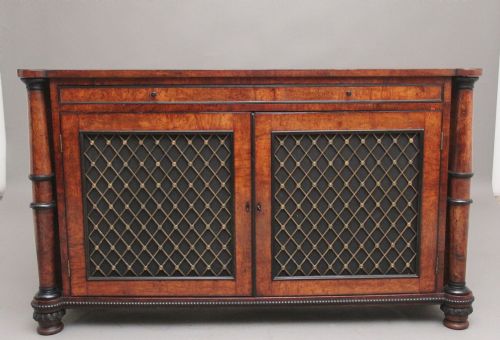
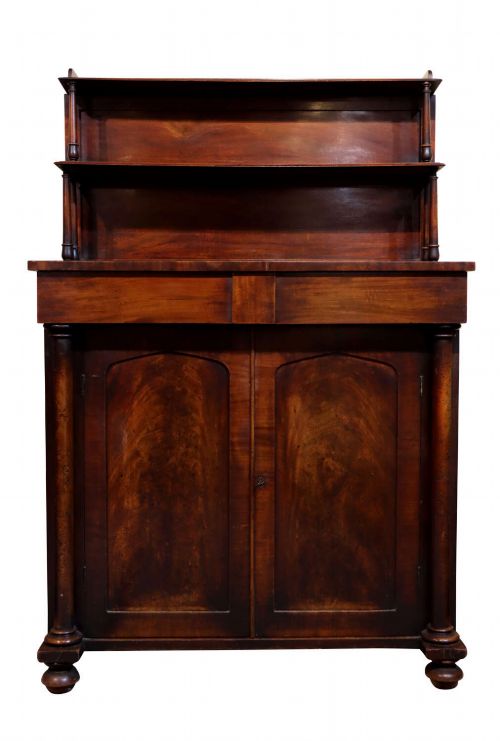
Rosewood and mahogany form the core of what you meet on this page, often shaped as breakfront or pedestal units with doors fitted with glass or brass grilles. Makers utilised these dense timbers to create substantial yet elegant sideboards that anchored dining rooms and libraries.
Materials and Technique
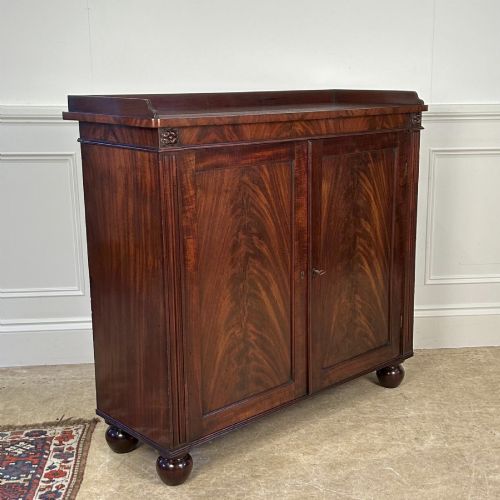
Cabinetmakers selected flame mahogany veneer and rosewood for their striking grain patterns, laying them over sturdy oak and walnut carcases. Brass inlay and ormolu mounts added metallic contrast to the dark polished surfaces, reflecting candlelight in nineteenth-century interiors.
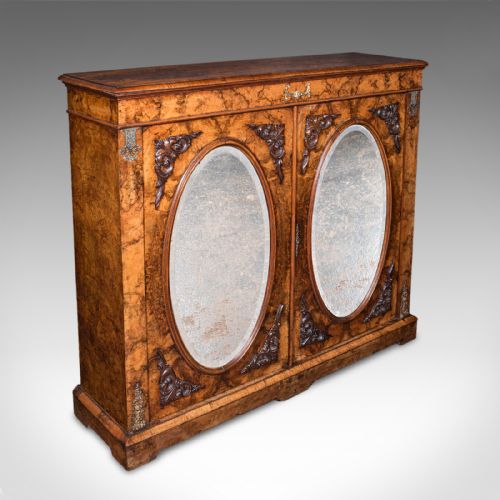
Glass doors and mirrored fronts appeared on display variants, while marble tops provided durable and cool surfaces on specific side cabinets. Skilled joiners constructed these units with precision, incorporating ebony stringing and delicate boxwood details to define the architectural lines.
Listings feature walnut, mahogany, and rosewood cabinets alongside marble top and glazed bookcase variants.
Evaluating Quality
The standard of timber selection largely dictates the caliber of a piece, separating rich flame veneers and figured rosewood from plain secondary woods. Depth of colour and the crispness of brass inlay or carved mouldings demonstrate the original maker's hand and ambition.
Structural integrity and the survival of original mounts, grilles, and glass distinguish superior examples from standard workshop output. Refined proportions and secondary timbers of matching quality indicate high-grade construction throughout the carcase.
Gillows·S Jamar
The English Regency Credenza Glossary
- Chiffonier
- A low cabinet featuring shelves enclosed by doors, typically fitted with a raised shelf or mirrored superstructure at the back. These units evolved from sideboards to serve smaller spaces in Regency dining and drawing rooms.
- Breakfront
- A piece of furniture whose central section projects forward from the flanking wings. This configuration creates visual depth and allowed cabinetmakers to emphasise different timber panels.
- Ormolu
- Gilt-bronze ornamentation applied to furniture for decorative contrast. It added bright metallic highlights against dark rosewood and mahogany surfaces.
- Flame mahogany veneer
- A thin slice of timber cut from the fork of the mahogany tree, showing a distinctive flickering flame pattern. Cabinetmakers laid this material over stable secondary woods to create dramatic visual movement.
- Pedestal sideboard
- A heavy dining room sideboard flanked by architectural pedestals or cupboards on either side of a central recess. These grand pieces provided extensive storage for silver and linen.
English Regency Credenza: Frequently Asked Questions
Where did they place these cabinets?
These cabinets stood against dining room and library walls to store silver, linen, and glassware. Their low profiles allowed paintings and mirrors to hang comfortably above them.
In grander houses, they occupied prominent wall spaces in drawing rooms as display surfaces for porcelain and decorative objects.
How do I spot a revival piece?
Revival pieces from the later nineteenth or early twentieth centuries often display machine-cut veneers and different secondary wood choices inside the carcase. The timber finishes can also appear more uniform than those found on authentic early nineteenth-century work.
Examining the drawer linings and backboards helps reveal the true period of construction.
What woods were used most?
Mahogany and rosewood dominate the surviving record, prized for their rich natural dark tones and suitability for high-polish finishes. Cabinetmakers also utilised walnut, pollard oak, and burr yew for specific decorative commissions.
Flame mahogany veneer provided dramatic figuring across large door panels.
Are brass grilles original?
Fine brass wire grilles backed with pleated fabric were common on Regency library and display cabinets to protect delicate book bindings. Many examples retain their original brass work, though some underwent later restoration.
Close inspection of the interior rebates reveals how the mesh was fitted into the door frames.